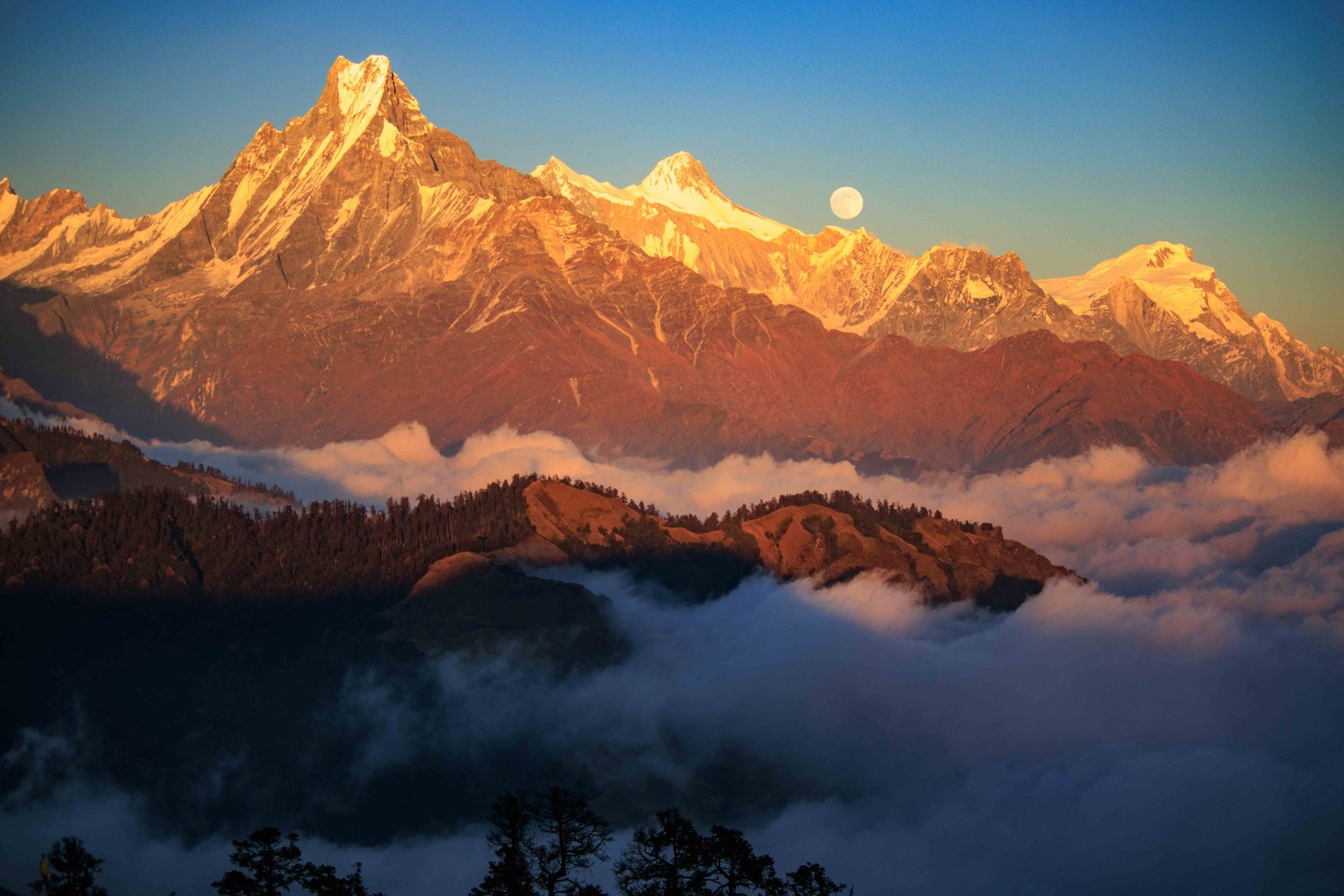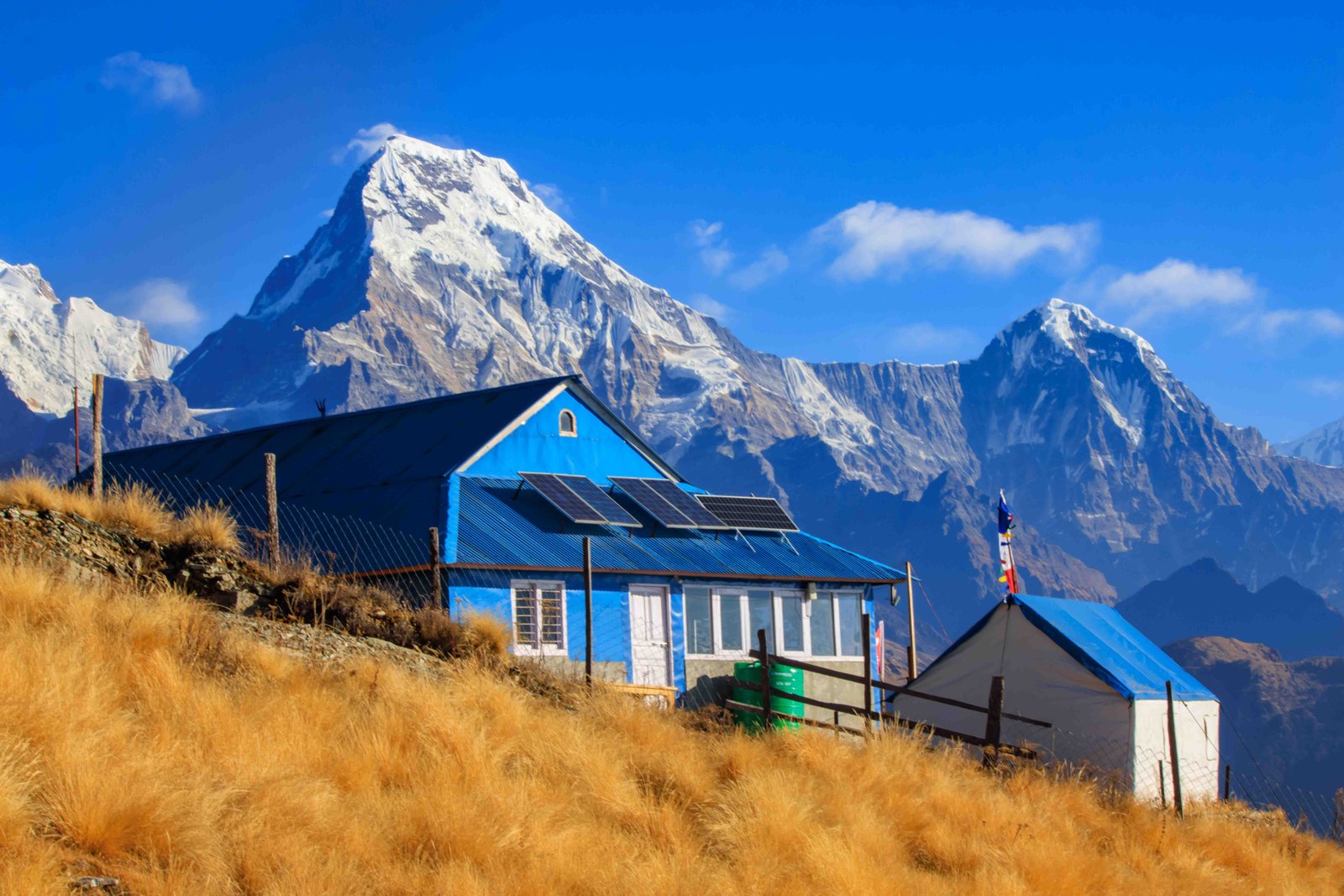
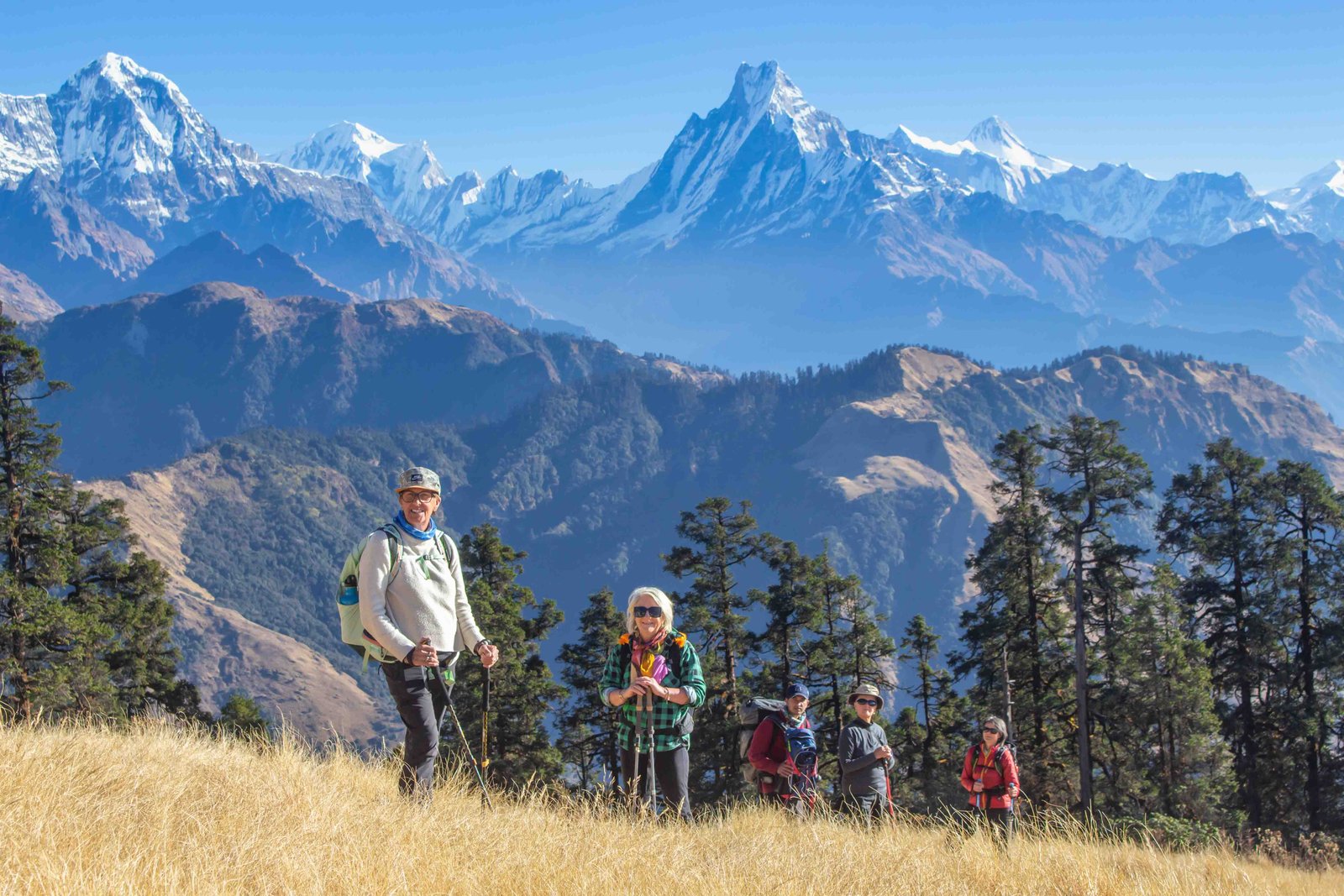
Before you pack
Kokhe Danda tops out at 3,309 m, but most of your nights are in family homestays in Parbat villages like Haljure and Magar-run Lespar, not in high mountain lodges. That changes what you need to bring. You need less than for a big Himalayan trek, and you need a few things a lodge trek never asks for.
This guide is only about your bag. For the route, day-by-day plan and price, see the Kokhe Danda Trek page. Below you will find the gear you need all year, a packing list for each season, extras for homestay life and for children, and a checklist you can tick off or print.
The short version
All year: broken-in boots, a fleece, a down jacket, a windproof layer, a rain poncho, a head torch, a water bottle and trekking poles. In winter (December to early March) add a thermal set, thicker gloves and a sleeping bag. In the monsoon, think dry before warm.
You don't need technical gear. Kokhe Danda rewards smart layering, not expensive kit.
Year-round essentials
These come with you in every month. The season lists further down change how warm the layers are and what you add on top.
Backpack
A 30 to 40 litre pack with a padded hip belt is plenty for a short homestay trek. If you trek with a porter, a 20 litre daypack is all you carry. Either way, bring a rain cover.
Four layers
Mornings at the top are cold in every season, and by midday on the climb you may be walking in a T-shirt. Four layers you can take on and off cover the whole range.
Down jacket and windcheater
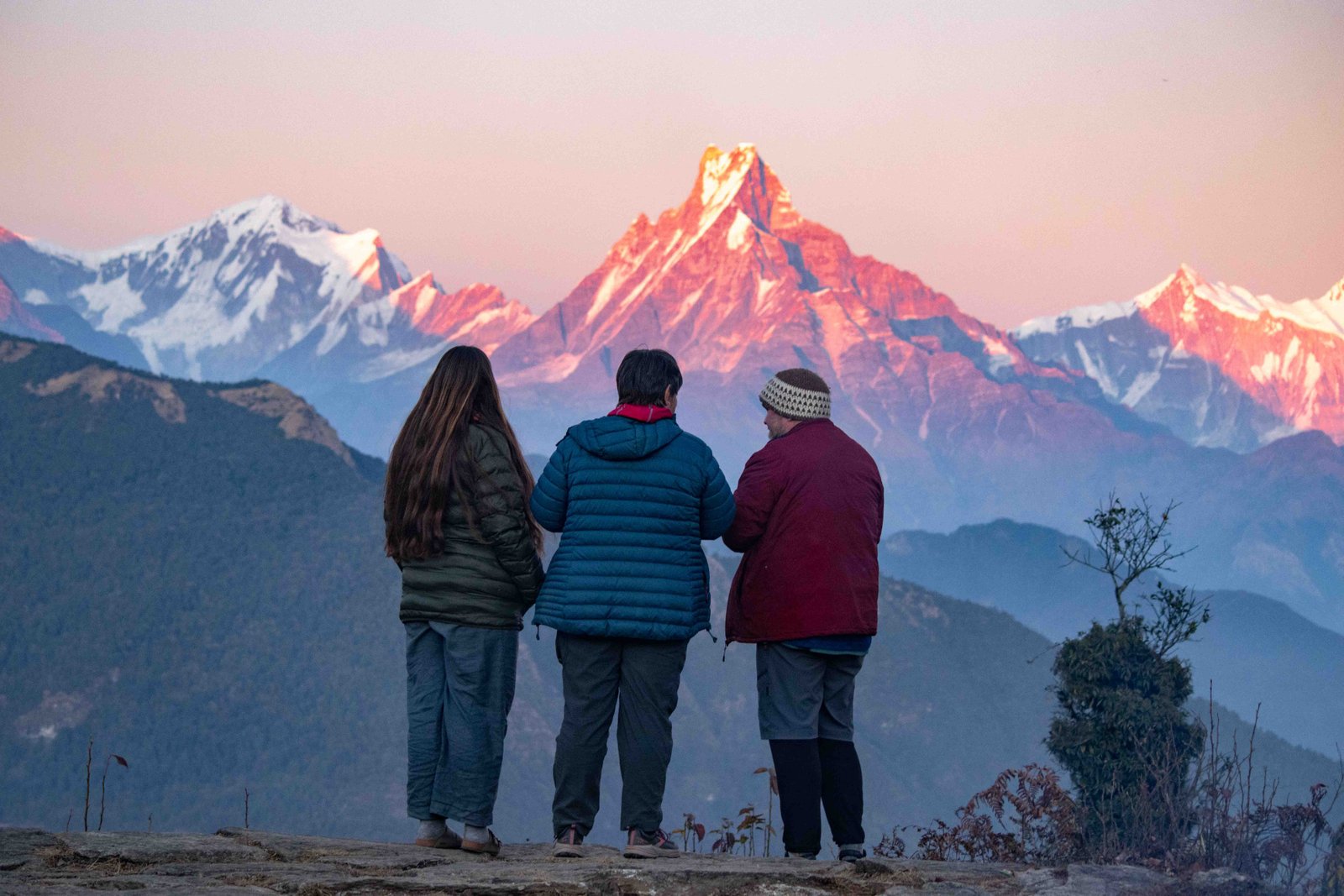
The down jacket is for evenings outside the homestay and for the early walk up to watch the sun rise behind the Annapurnas. The windcheater matters more than people expect: the top of Kokhe Danda is open grass, and the wind there makes a sunny morning feel much colder.
Pants and leggings
Two pairs of light, quick-dry trekking pants and one pair of leggings to wear underneath on cold mornings. Leave denim at home: it soaks up moisture and gets heavy.
Boots and camp shoes
Boots with good grip and ankle support for the stone steps and forest trails, broken in before the trip. Three or four pairs of wool or synthetic socks. Flip-flops or sandals to change into at the homestay, which you will also need because shoes come off at the door.
Gloves and cap
Thin liner gloves are enough in spring and autumn; bring a thicker insulated pair in winter. A beanie or fleece cap that covers your ears, plus a sun hat for the day.
Rain, sun and poles
A rain poncho that covers you and your pack in one go. Sunglasses, sunscreen and lip balm. Trekking poles are optional but highly recommended for the steep sections down from the ridge, where they take a lot of strain off your knees.
Water, light and power
A 1 litre bottle and purification tablets, since you refill along the way. A head torch with spare batteries for the sunrise walk and night trips to the toilet. A 10,000 mAh power bank: charging in the villages is limited and sometimes paid.
First aid and toiletries
Blister plasters, bandages, antiseptic, pain relief, oral rehydration salts and your own medicines. Toilet paper (more than you think), a small quick-dry towel, toothbrush and toothpaste in a zip bag, and hand sanitizer.
Medicines are your doctor's call. Our guides carry a pulse oximeter and a basic first-aid kit and check on you each morning, but they do not hand out medicine. Talk to your doctor before the trip if you have questions about altitude.
Pack by season
Kokhe Danda is walkable all year. What changes is how warm your layers need to be and how much rain gear you carry. For what each month looks like on the trail, read our best time to trek Kokhe Danda guide; this section is just the packing.
SpringMarch to May
Rhododendrons in bloom, warm days and lively villages. Afternoon showers are common, and early mornings at the top are still cold, especially in March.
Pack
- 2 to 3 T-shirts
- 1 fleece
- 1 light down jacket
- 1 windcheater
- 2 trekking pants, 1 leggings
- 3 to 4 pairs of socks
- Liner gloves and a cap
- Sun hat, sunglasses, sunscreen
- Rain poncho and pack cover
- Trekking poles
Month by month
March: early March still packs like winter. Bring a thermal top and a sleeping bag for the first half of the month.
April: the easiest month to pack for. Three layers and a light down jacket.
May: warmer and hazier, with pre-monsoon storms. Keep the poncho within reach.
MonsoonJune to August
Green, quiet and wet. Rain most days, slippery stone steps, leeches in the forest and the mountains often hidden. It is the hardest season to trek, but the villages are at their greenest and you will have the trail to yourself.
Pack
- Strong rain poncho or waterproof jacket
- Pack cover and dry bags inside
- 3 quick-dry T-shirts
- 2 quick-dry pants
- 1 fleece for evenings
- 5 to 6 pairs of socks
- Boots with deep grip
- Sandals for the homestay
- Leech socks or salt, insect repellent
- Trekking poles (essential this season)
Month by month
June: the rain usually arrives in the first half of the month. Early June can still give clear mornings.
July and August: the wettest weeks. Dry bags matter more than any jacket, because a wet fleece will not dry overnight.
AutumnSeptember to November
Clear skies, crisp air and the best mountain views of the year. Days are comfortable for walking, and evenings get properly cold from late October.
Pack
- 2 T-shirts, 1 thermal top
- 1 fleece
- 1 warm down jacket
- 1 windcheater
- 2 trekking pants, 1 leggings
- 3 to 4 pairs of socks
- Gloves and a warm cap
- Sunglasses and sunscreen
- Light rain poncho
- Trekking poles
Month by month
September: the monsoon tails off. Keep full rain gear for the first half of the month.
October: the classic month. Three layers by day, the down jacket every evening.
November: colder and clearer. Add thicker gloves and socks, and from late November think about a sleeping bag.
WinterDecember to February
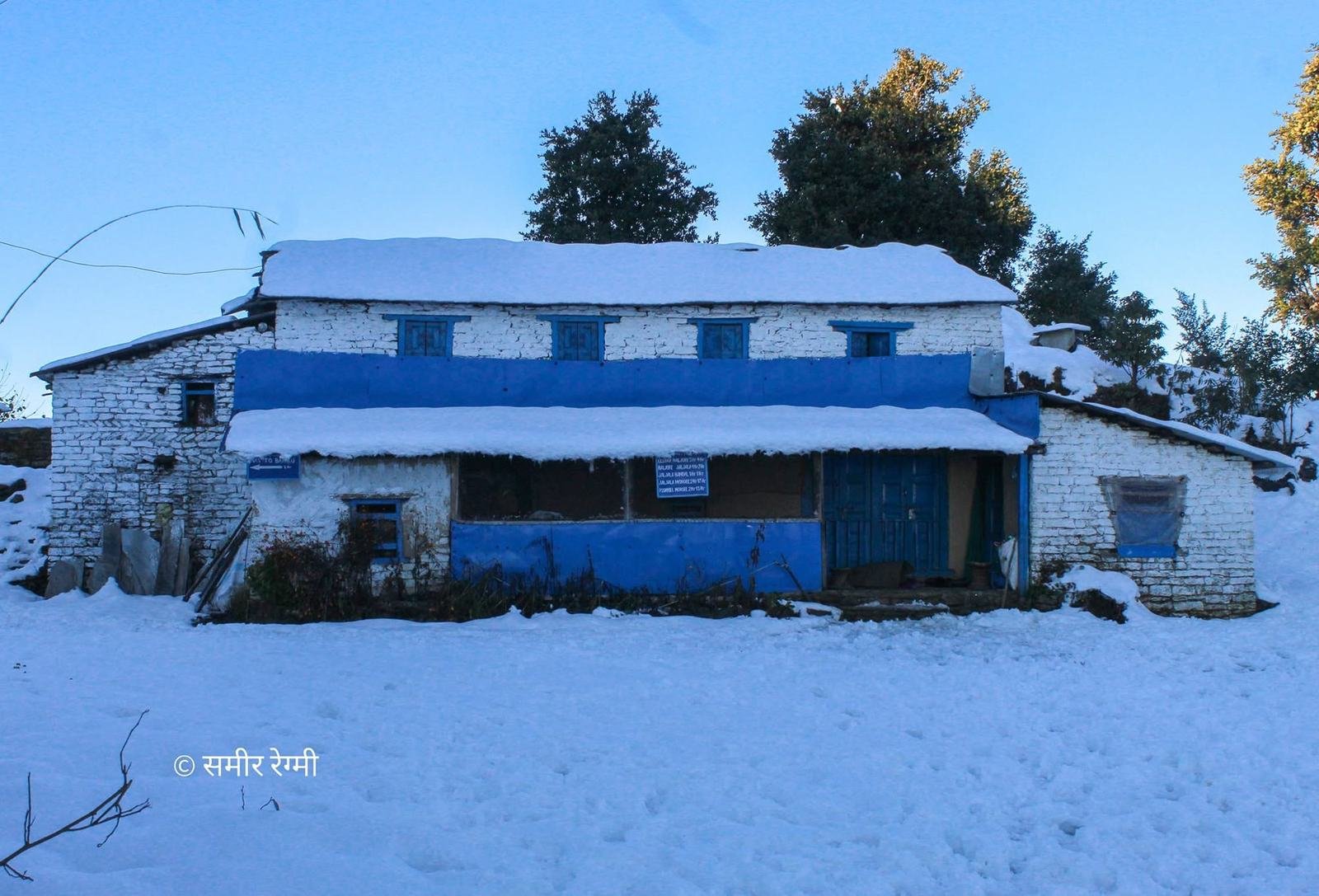
Our favourite surprise season. The skies are often the clearest of the year, the trail is quiet and the sunsets are sharp. It is cold, though: on clear nights Haljure drops to around -5 to -6°C, and the top is colder and windier. In recent winters snow has stayed above about 2,700 m, so the villages are usually clear.
Pack
- 1 to 2 thermal tops
- 1 to 2 thermal leggings
- 2 T-shirts
- 1 warm fleece
- 1 warm down jacket
- 1 windcheater
- 2 trekking pants
- Insulated gloves
- Warm cap covering the ears
- 3 to 4 pairs of warm socks
- Trekking poles
- Sleeping bag
Month by month
December: cold, dry and very clear. Full winter kit for nights; days are often T-shirt warm on the climb.
January: the coldest month. Don't skip the thermal bottoms or the sleeping bag.
February: days begin to warm, nights stay cold. Pack as for January.
Fresh snow on the top? It happens some winters. If it falls before your trek, we will tell you whether microspikes are worth bringing.
Homestay extras
Most nights on Kokhe Danda are spent with families in Haljure, Lespar, Sarga and Phalame Danda, with one night at a small private teahouse. Homestays are warm, simple and personal, and a few small things make them easier for you and your hosts.
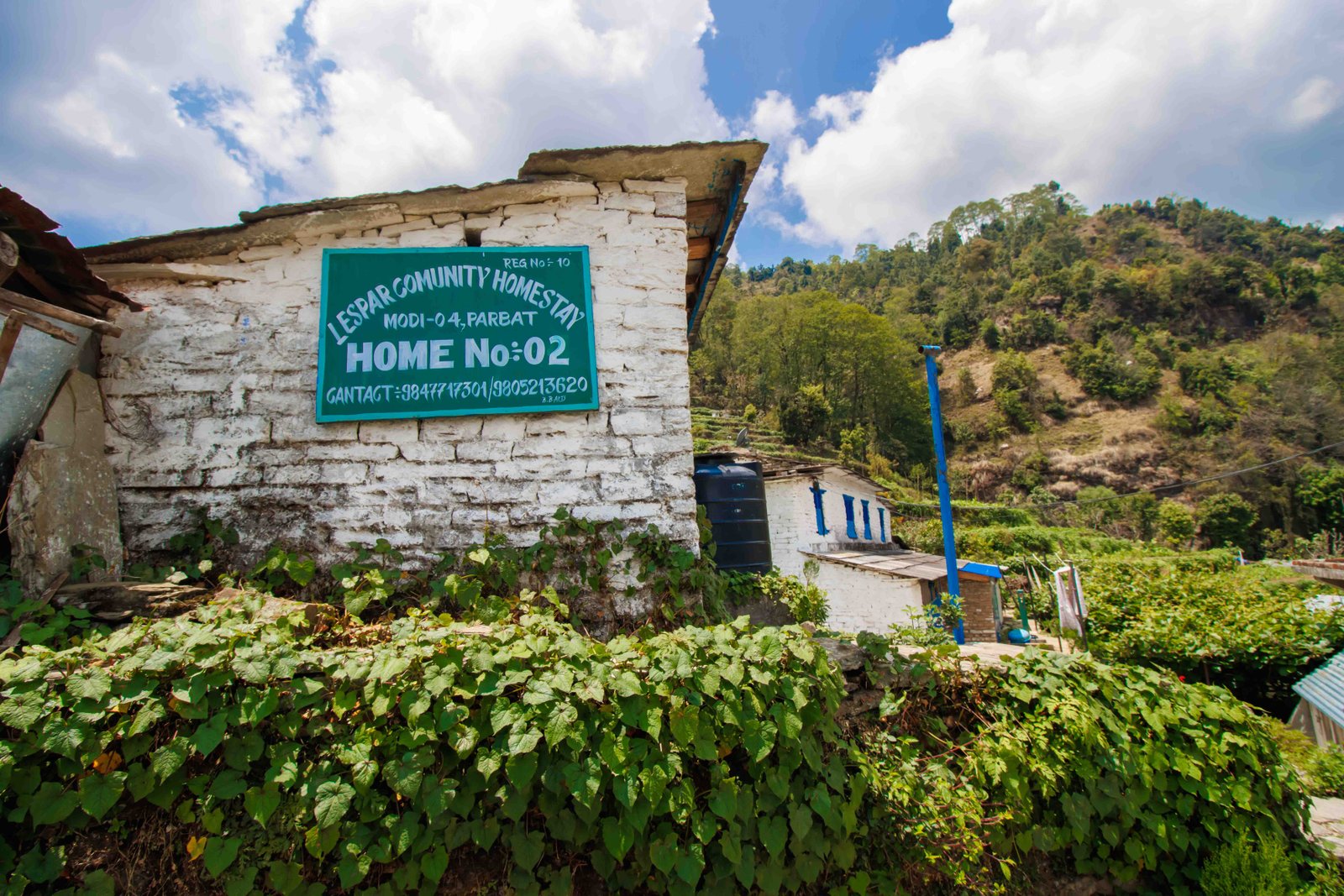
- Cash in small notes. For extra tea, snacks, charging and tips. Get it in Pokhara or Kushma before the trail, because the villages do not take cards.
- Sandals or slippers. Shoes stay outside the house.
- Modest clothes for the village. Something that covers shoulders and knees for evenings with the family.
- A small bag for your rubbish. Carry wrappers and batteries back out with you. The villages have no waste collection.
- A few words of Nepali, or a phrasebook. "Namaste" and "dhanyabad" (thank you) go a long way in Lespar and Haljure.
- Earplugs. Village roosters start early.
Want to know more about the villages themselves? Read about how our local team built this trail.
Packing for kids
Kokhe Danda is our favourite family trek. Children as young as five have walked it with us, and there is jeep access at Haljure, Lespar and Phalame Danda if little legs need a break. The best family months are mid-October to early January and mid-March to mid-June.
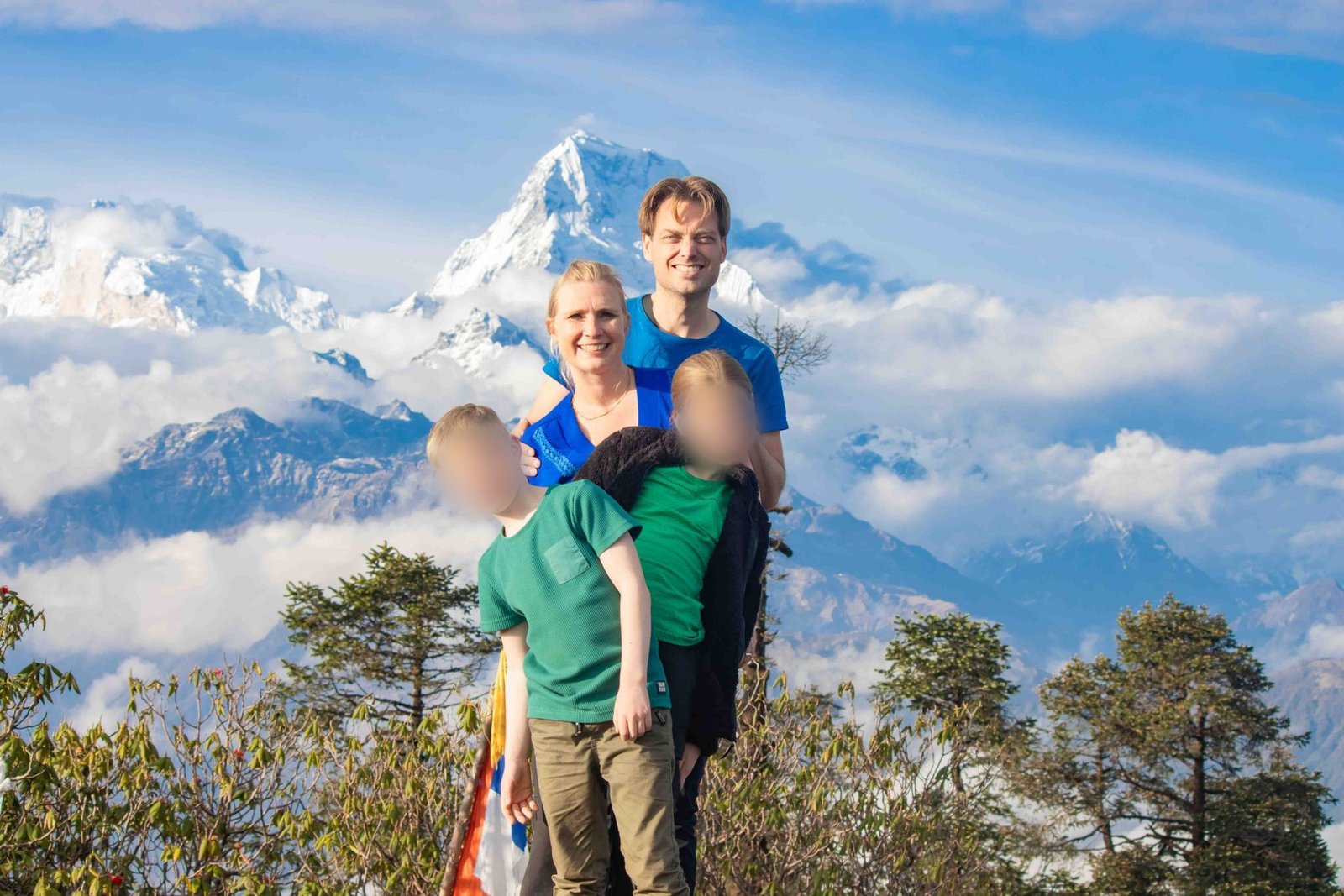
- The same four layers as adults, in child sizes
- One complete spare set of clothes in a dry bag
- A warm hat and mittens they will actually keep on
- Extra snacks they know and like
- A small daypack of their own for a water bottle and a toy
- Sunscreen made for children
For pacing, choosing a route and what to expect with kids, see our guide to family trekking in Nepal with kids.
Do you need a sleeping bag?
For most of the year, no. The homestays and the teahouse give you blankets, and evenings are spent in a warm kitchen or dining room.
From December to early March, nights drop below freezing, and a sleeping bag becomes a smart choice for extra warmth and a better night's sleep. A bag rated to around -5°C is enough for Kokhe Danda. You can rent one in Lakeside, Pokhara, the day before you start.
What to leave at home
This is a short, low trek. Packing light makes the stone steps much easier. You do not need:
- Jeans or heavy cotton sweaters
- Crampons, ice axes or other technical gear
- More than one pair of boots
- Several bulky jackets instead of layers
- A big towel or full-size toiletries
- Bottled water from Pokhara
Your Kokhe Danda packing checklist
Tick items as you pack. Your ticks are saved in this browser, and you can print the list. Add the winter group from December to early March.
Clothing
Gear
Personal and homestay
Winter extras (Dec to early Mar)
Frequently asked questions
Do I need a sleeping bag for Kokhe Danda?
For most of the year, no. The homestays and teahouse give you blankets and have warm kitchens or dining rooms for the evening. From December to early March nights drop below freezing (Haljure is around -5 to -6°C on clear winter nights), so a sleeping bag is a smart choice then.
How cold is Kokhe Danda in winter?
On clear winter nights Haljure drops to around -5 to -6°C, and the top of Kokhe Danda at 3,309 m is colder and windier. Days are often sunny and pleasant. Four warm layers, gloves, a beanie and a sleeping bag are enough for most trekkers.
Is packing for Kokhe Danda different from Khopra Ridge?
From spring to autumn the clothing is almost the same. Khopra Ridge is higher and more exposed, so it needs a warmer sleeping bag all year and one extra warm layer in winter. Kokhe Danda is lower, so four layers cover the coldest months.
What should children pack for Kokhe Danda?
The same layers as adults in child sizes, plus a spare full set of clothes, a warm hat they will actually wear, extra snacks and a small daypack of their own. Kids as young as five have walked the trail with us.
Do I need crampons for Kokhe Danda?
Usually not. Snow on Kokhe Danda is occasional, and the lower villages have had no snow in recent winters. If fresh snow has fallen on the top before your trek, we will tell you whether microspikes are worth bringing.
Travel light, stay warm
Kokhe Danda is not about carrying everything. It is about carrying the right few things, so you can enjoy the quiet trail, the evenings with families in Lespar and Haljure, and the red sun setting behind Ghumte hill.
Still deciding? Compare it with other short treks in Kokhe Danda vs Poon Hill and Kokhe Danda vs Mardi Himal.