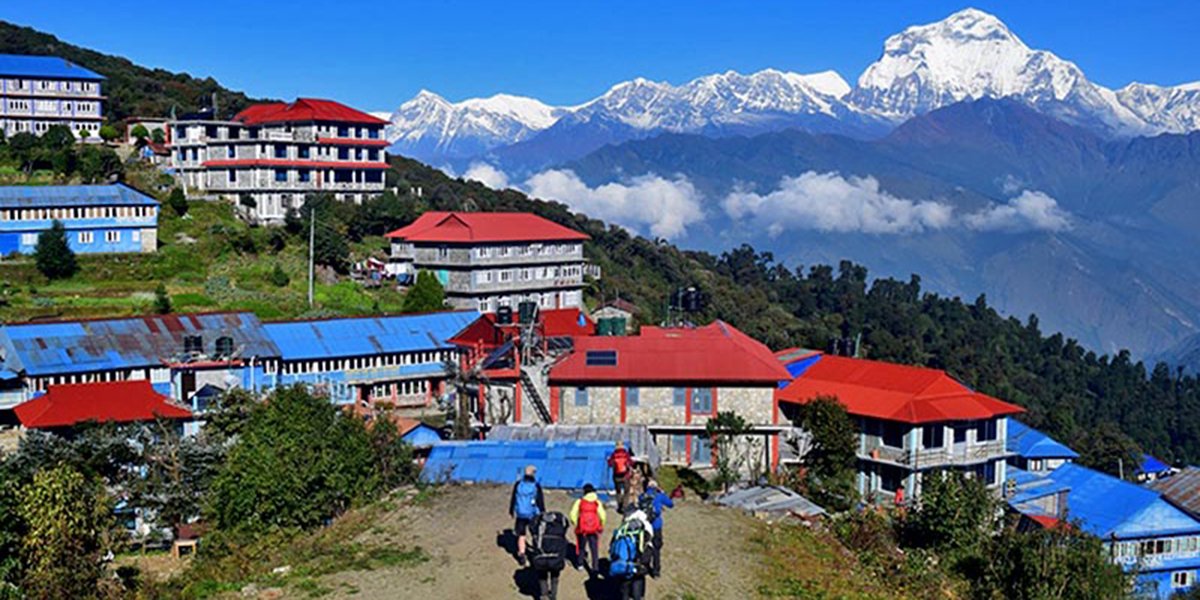
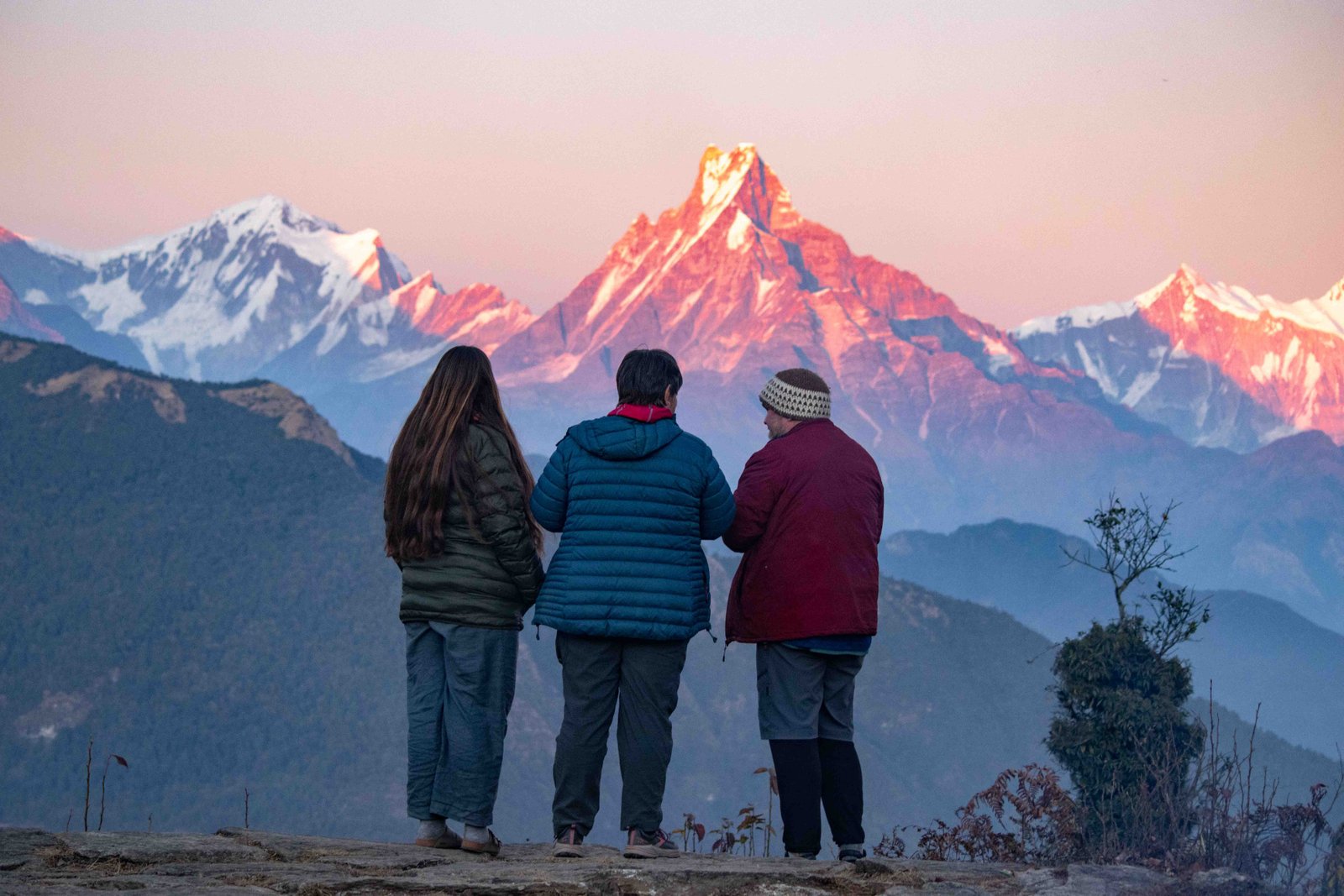
Most families who dream of trekking in Nepal with kids picture the same thing: mountains on the horizon, children running ahead on a stone path, and evenings spent somewhere warm and welcoming. Then the doubts set in.
Will the walking be too hard? Will the trails be crowded? What happens if a child gets tired halfway up a hill? These are fair questions, and the answer depends almost entirely on which trail you choose.
At Discover Parbat, our answer for families is the Kokhe Danda Trek, a quiet community trail in the hills of Parbat that we opened with our local guides. We have walked it with children as young as five, with young siblings from Austria and the Netherlands, and with a mother from the UK and her four children, aged eight to twenty. Each family found their own rhythm on the trail, and each left with stories that had little to do with altitude and everything to do with people, places and small adventures along the way.
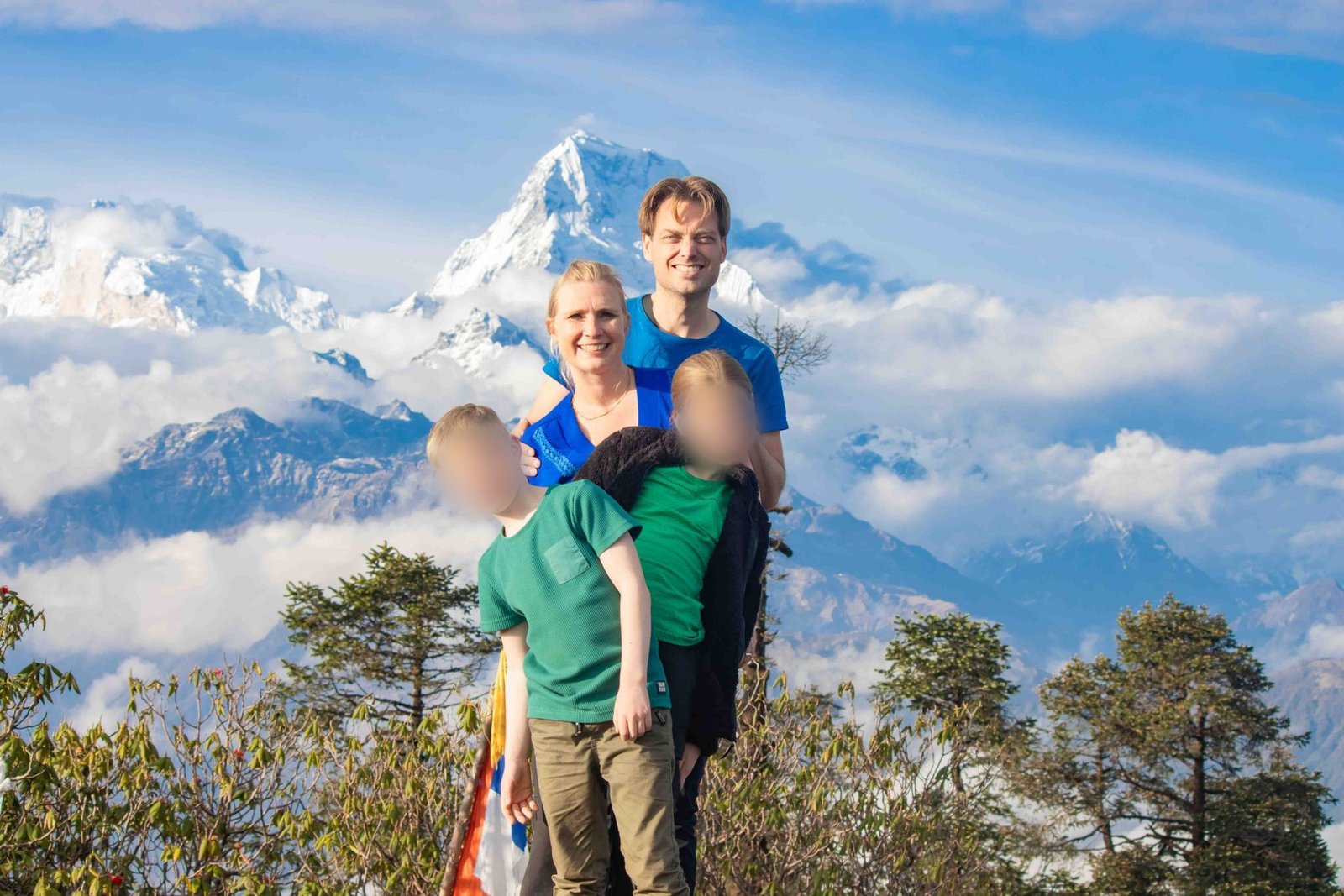
The trailWhy Kokhe Danda works so well for families
Children do not get much from a crowded trail. On Nepal's most popular routes, families often share narrow paths with long lines of trekkers and squeeze into busy teahouses at night. Kokhe Danda is different. It is a new trail that very few people have heard of yet, so families usually have the path, and often the homestays, entirely to themselves.
The route he took us on was free of any other tourists, we literally didn't come across anyone.Anna C., UK · trekked with her four children and niece
That quiet changes the whole experience for a child. Instead of keeping pace with strangers, kids can stop to look at a beetle, chat with a farmer or rest on a stone wall whenever they like. The trail feels less like an endurance test and more like a long walk through a living countryside, with villages, forests and ridgelines unfolding at a gentle pace.
Our adviceThe 5-day version is our family recommendation
Kokhe Danda can be walked in different lengths, but for families we always recommend the five-day version. It is not rushed, the daily walking distances are shorter, and there is time built in for breaks, play and simply enjoying each village. Children rarely struggle with the walking itself; what wears them out is being hurried. The five-day plan removes that pressure.
The trail reaches its high point of 3,309 metres at Kokhe Danda, high enough for sweeping Himalayan views but well below the altitudes where most families need to worry. For the full day-by-day route and what each stage involves, see our main Kokhe Danda Trek page.
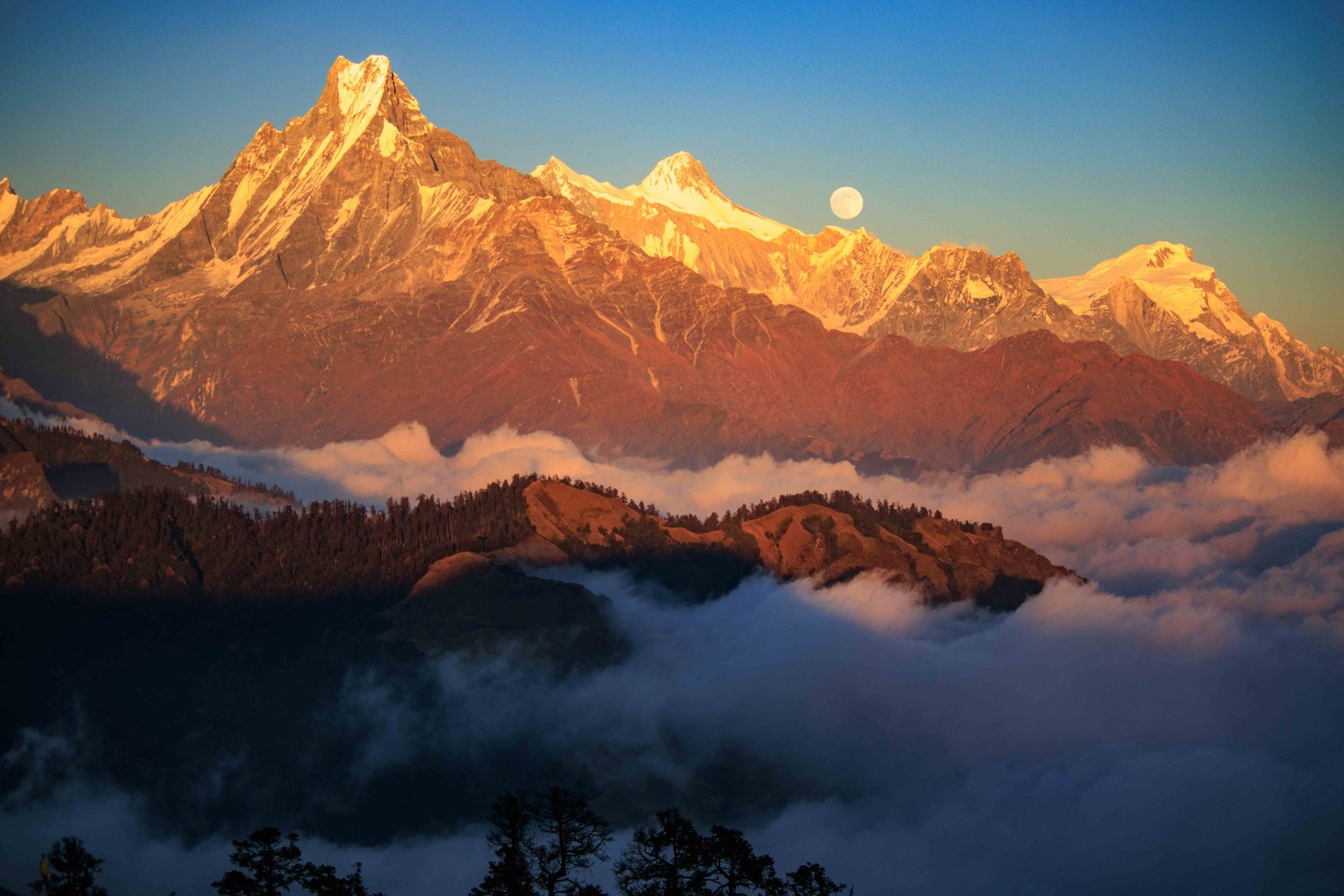
The fun partWhat kids love most on the trail
Ask the children who have done this trek what they remember, and mountains are rarely the first thing they mention. They talk about Max, the friendly dog at Haljure, who seems to have a special talent for finding young trekkers and following them around the village.

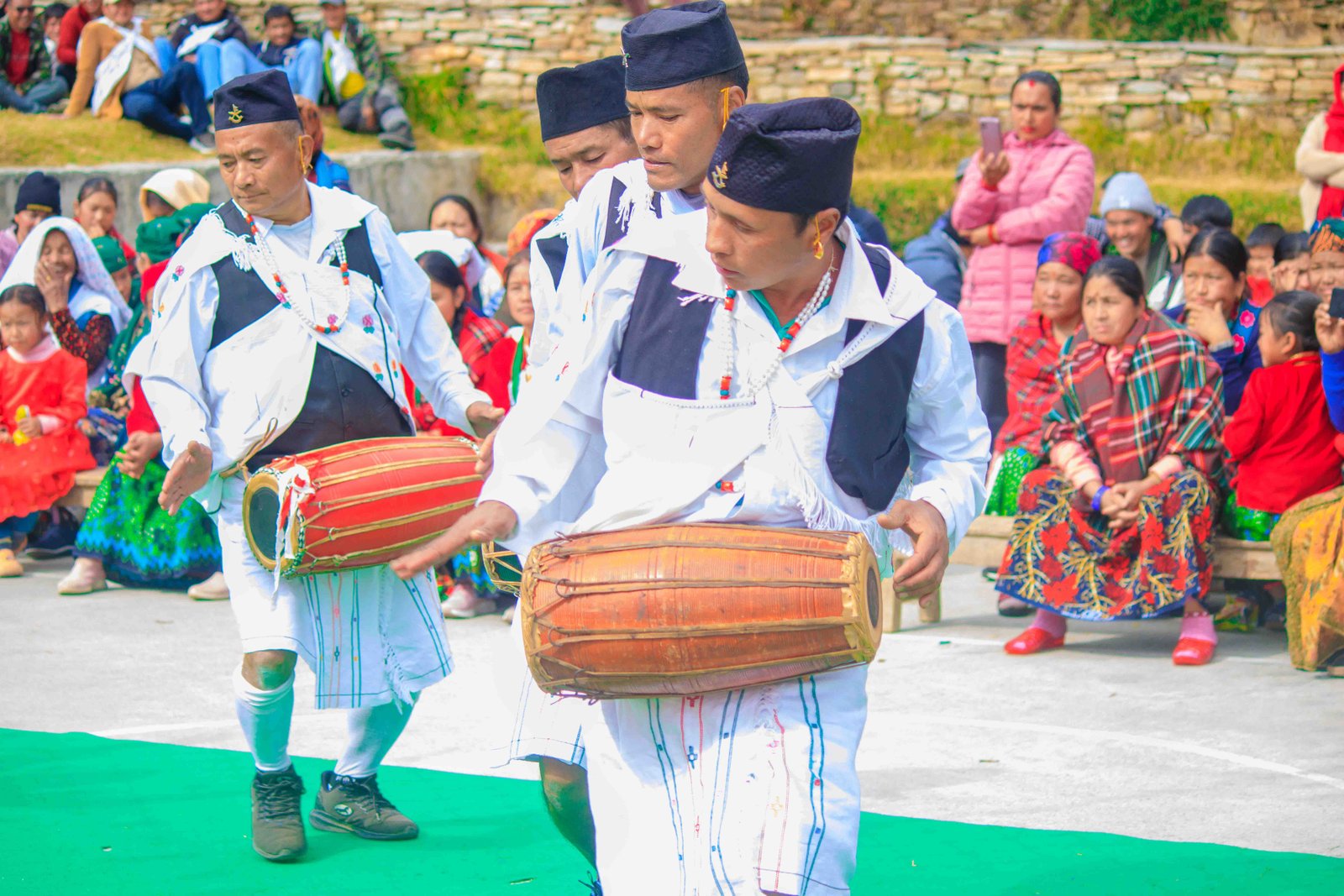
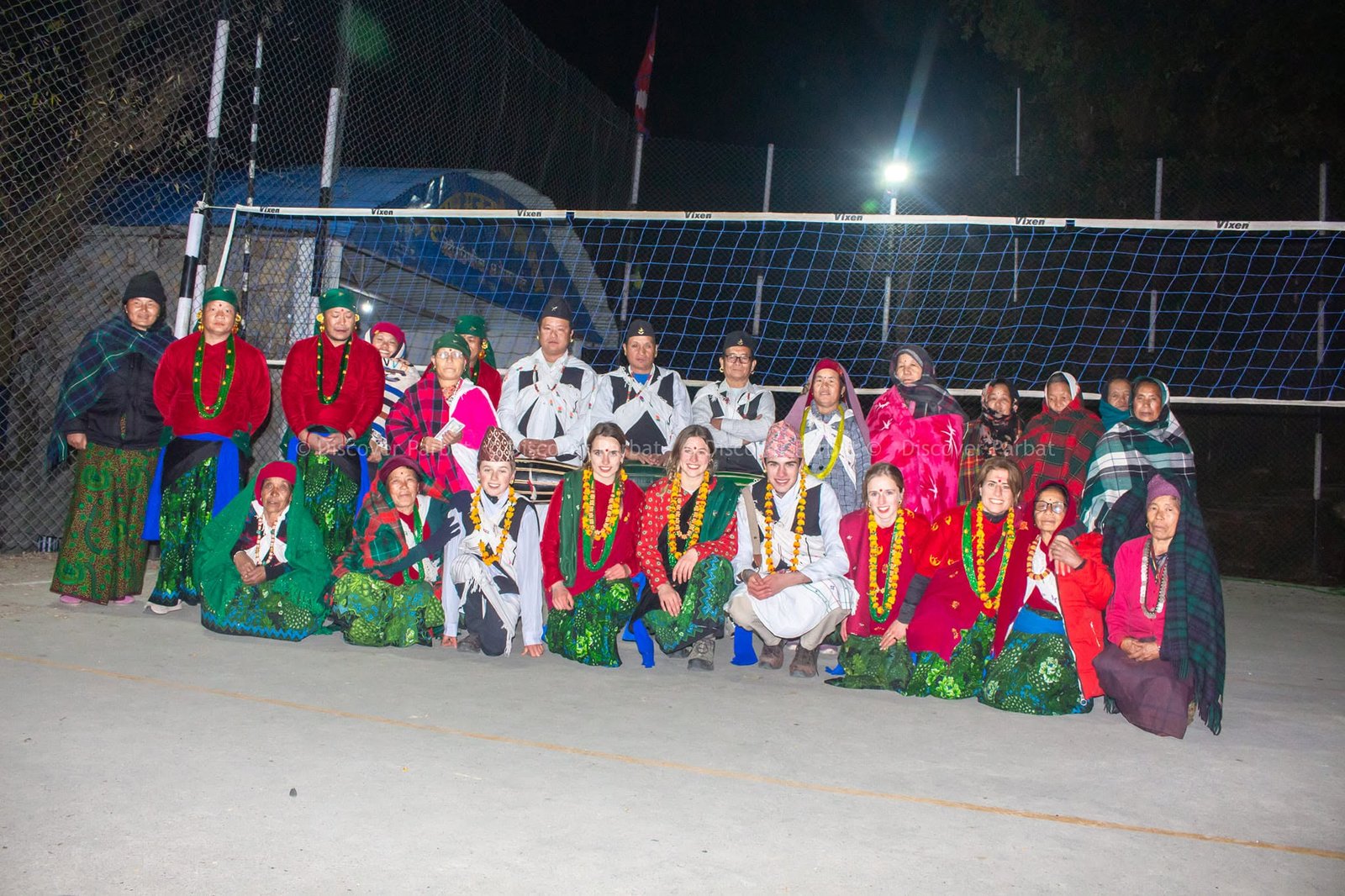
They talk about wandering through Lespar, a Magar village where daily life still revolves around fields, livestock and neighbours. Here children can watch farmers at work, meet local kids and see how families live in the hills of Parbat. When we can arrange it, villagers welcome families with a traditional Magar cultural dance, an evening that children and parents both talk about long after the trek.
The momo-making session is almost always a highlight. Folding dumplings alongside a local family, getting flour everywhere and then eating the results is the kind of hands-on moment children never forget. Evenings bring games in the homestays, and our guides and porters are known for joining in.

The adventure can even start before the trek. Near Kushma, families can try the zipline and walk across the famous suspension bridges, a thrilling warm-up that gets kids excited for the days ahead. For more ideas nearby, see our Parbat District travel guide.
The peopleA team that is good with children
A family trek is only as good as the people leading it. Our guides and porters are friendly and patient, and they treat children as part of the group rather than an add-on. If a younger child gets tired or needs help on a steep section, our porters can carry them for a while, so the whole family keeps moving together.
Sameer is a super good guide and knows a lot to tell. He knows how to handle everything.Suzanne D., Netherlands · 4-day Kokhe Danda trek with children aged 6 and 7
Peace of mindSafety, exits and backup plans
One of the biggest advantages of Kokhe Danda for families is how accessible it stays. Unlike remote trails where the only way out is on foot, this route has jeep access at several points along the way.
- HaljureJeep road reaches the village directly.
- LesparJeep access from the village.
- SargaAbout one hour's downhill walk to Lespar, then onward by jeep.
- Kokhe DandaAbout three hours downhill to the nearest jeep road.
- Phalame DandaJeep access directly.
In practice, this means that if a child feels unwell, gets too tired or the weather turns, there is always a sensible way to adjust the plan without cancelling the whole trip. Our guides also carry a basic first aid kit for cuts, scrapes and minor wounds, which covers most of the small bumps that come with active kids.
Where you stayHomestays and facilities: what to expect
Accommodation on the trail is in local homestays and simple lodges, which is a big part of the charm for children. They sleep in village homes, eat with local families and see a way of life very different from their own.

Facilities are simple but comfortable. Lespar and Sarga have western-style toilets, while the other stops use Asian-style squat toilets, so it helps to prepare younger children for that in advance. Hot bucket showers are available, and there is electricity at every stop, with solar power at Kokhe Danda. We recommend bringing a power bank to keep phones and cameras charged.
Food can be adjusted to your family's needs, which matters for picky eaters. The menu is a little more limited than on the busy teahouse trails, but in return you get far more home-cooked local food, including dal bhat, seasonal vegetables and, of course, the momos the kids helped make.
When to goBest time to trek in Nepal with kids
For families, we recommend two windows: mid-October to early January, and mid-March to mid-June. Autumn brings clear skies and crisp mountain views, while early winter stays bright and quiet, with cold nights that call for warm layers. Spring brings rhododendrons and milder temperatures, which many families find the most comfortable time to walk.
Before you goA few practical tips for parents
Pack layers rather than heavy single items, because mornings and evenings in the hills are much cooler than the middle of the day. Bring familiar snacks for younger children, a refillable water bottle each, sun hats, sunscreen and a power bank. Comfortable, broken-in shoes matter more than technical gear.
Our best tip: let your children set the pace. Families who treat the trek as a journey rather than a target almost always have the best time.
AlternativesWhat about Poon Hill?
Families often ask about Poon Hill, and our 4 Days Poon Hill Trek is a good option if you are short on time. It is worth knowing, though, that Poon Hill is one of the most popular and touristy trails in Nepal. Expect busy paths, crowded teahouses and a packed viewpoint at sunrise. If your family wants space, local culture and the chance to have a trail to yourselves, Kokhe Danda offers a very different experience. We compare the two in more detail in Kokhe Danda: the better alternative to Poon Hill.
PricingCost and child discounts
The trek costs the same for families as for other travellers, but we offer discounts for children under eight. You can find full pricing on the Kokhe Danda Trek page, or contact us directly for a quote tailored to your family.
Planning a trek with your children?
Tell us your children's ages, how much walking they are used to and when you would like to travel. We will shape the pace, stops and activities around your family.
Plan our family trek →Best holiday we have ever been on!Anna C., UK · 3-day family trek
FAQFrequently asked questions
What is the minimum age for trekking in Nepal with kids?
There is no official minimum age. We have trekked the Kokhe Danda trail with children as young as five, along with siblings aged six and seven and older children up to twenty. What matters most is choosing a quiet, low-to-mid altitude route with short walking days and easy exit options.
Which is the best trek in Nepal for families?
For families wanting a peaceful, cultural trek near Pokhara, we recommend the 5-day Kokhe Danda Trek in Parbat. Walking days are short, families usually have the trail and homestays to themselves, and jeep roads reach several points along the route.
Is the Kokhe Danda Trek safe for children?
Yes. The highest point is 3,309 m, jeep access is available from Haljure, Lespar and Phalame Danda, porters can carry younger children when needed, and our guides carry a basic first aid kit for cuts and minor wounds.
What are the toilets and showers like on a family homestay trek?
Lespar and Sarga have western-style toilets, while other stops use Asian-style squat toilets. Hot bucket showers are available and there is electricity at every stop, with solar power at Kokhe Danda. A power bank is recommended.
When is the best time to trek in Nepal with kids?
For families we recommend mid-October to early January and mid-March to mid-June, when trails are dry and the weather is settled.
Are there child discounts for family treks?
The trek price is the same for families, but we offer discounts for children under eight. Contact us for a quote based on your family's ages and dates.