

The short answer
If you want a short trek from Pokhara with big Annapurna and Dhaulagiri views, but without the crowds and the commercial feel, the Kokhe Danda Trek is a better alternative to Poon Hill.
Search for a short trek from Pokhara and Poon Hill will almost certainly come up first. It can be done in three to five days, it is easy to organize, and the sunrise from the viewpoint over Dhaulagiri and the Annapurna range is genuinely beautiful. But its popularity has changed the experience. Many trekkers now look for something quieter and more authentic, and that is exactly where Kokhe Danda fits.
Kokhe Danda at a glance
Duration: 5 days from Pokhara. Difficulty: easy. Highest point: 3,310 m. Stays: family-run homestays. Views: Annapurna, Dhaulagiri, and on clear days Manaslu and Langtang.
See the full itinerary on the Kokhe Danda Trek page.
Kokhe Danda vs Poon Hill: side by side
| Feature | Poon Hill Trek | Kokhe Danda Trek |
|---|---|---|
| Crowds | Very busy in peak season | Peaceful, often just a few trekkers |
| Views | Annapurna and Dhaulagiri | Wider Himalayan range, including Manaslu and Langtang on clear days |
| Authenticity | Increasingly commercialized | Local, village-based experience |
| Trek style | Short and busy | Scenic and immersive |
| Accommodation | Standardized teahouses | Family-run homestays |
| Trail | Some road sections near Ghorepani | Forests, ridgelines and villages |
Escape the crowds
In peak season, hundreds of trekkers can gather at the Poon Hill viewpoint before dawn. What should be a quiet moment with the Himalayas becomes a busy, noisy scene, with everyone jostling for the same patch of hillside.
The Kokhe Danda trail is a very different story. Only a handful of trekkers walk it, and you may well go the entire trek without meeting another foreign traveler. That solitude gives you room to take in the mountains at your own pace, which is the real reason many people go trekking in the first place.

A more authentic experience
As the Poon Hill route has become more popular, it has also become more commercial. Villages such as Ghandruk have seen rapid growth, and concrete buildings now stand where traditional homes once did. Truly local stays are harder to find.
On the Kokhe Danda Trek, genuine hospitality is still the norm. In Haljure and Sarga you stay with local families and eat traditional, locally grown food. In Lespar you can walk through the village, join a momo-making session with your host and even try on Magar cultural dress.
In Lespar, you are not a tourist passing through. You are a guest welcomed into a living culture.
Wider Himalayan views
Poon Hill is famous for its sunrise over Annapurna and Dhaulagiri, but the angle is limited, and the crowd on the viewpoint can take away from the moment.
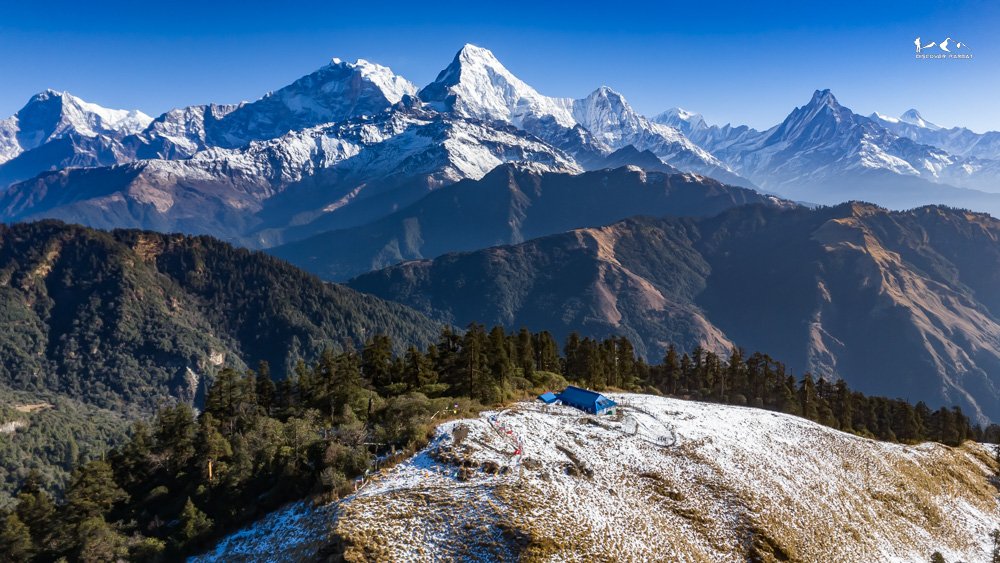
Kokhe Danda opens up the horizon. As well as Annapurna and Dhaulagiri, you can pick out peaks of the Manaslu and Langtang ranges on a clear day, with rolling hills in the foreground and sunrise and sunset colouring the whole panorama. The highest point on the trek is 3,310 m, so the views come without a demanding climb.
A more rewarding trail
Road construction has affected the approach to Ghorepani on the Poon Hill route, and some sections now follow dusty tracks shared with vehicles. That takes away much of the charm of walking in the hills.
The Kokhe Danda Trek is largely untouched. It follows forest paths, ridgelines and traditional villages, passing through rhododendron and oak forest on the way up, so the walk itself is as rewarding as the viewpoint at the end.
Authentic homestays and local connection
Where Poon Hill relies on standardized teahouses, many places on the Kokhe Danda route are still family homes. You eat what the family eats, hear their stories and learn how daily life works in the hills.
It is not unusual to have an entire homestay to yourself, which makes for relaxed, personal conversations that are hard to find on a busier trail. Facilities are simple, but the welcome is warm.
Cost and accessibility
Both treks are affordable and start easily from Pokhara. Poon Hill is a little more accessible and can be shorter, while Kokhe Danda gives you a richer, more immersive journey for similar money. Our Kokhe Danda Trek is priced per person by group size, from $350 for groups of five or more to $410 for a solo trekker, and includes private transport, meals, accommodation, guide and porter, and the TIMS and ACAP permits.
Kokhe Danda vs Poon Hill: which is right for you?
Choose Poon Hill if you want a short, easy trek with well-established infrastructure and do not mind sharing the trail and the viewpoint.
Choose Kokhe Danda if you want solitude, genuine local culture, wider views and a less commercial trek.
Our honest take: both are good introductions to the Annapurna region. But as trekking in Nepal grows, places like Kokhe Danda are becoming more valuable for people who want to see the Himalayas in their true form.
Why Kokhe Danda wins
- No crowdsOften the only trekkers on the whole trail.
- Wider viewsAnnapurna, Dhaulagiri, and Manaslu and Langtang on clear days.
- Genuine homestaysFamily-run stays in Haljure, Sarga and Lespar.
- An untouched trailForests, ridgelines and villages, not dusty roads.
- Real local cultureTrue insight into Himalayan community life.
Frequently asked questions
Is Kokhe Danda a good alternative to Poon Hill?
Yes. Kokhe Danda offers a similar short trek from Pokhara with Annapurna and Dhaulagiri views, but on a much quieter trail, with family-run homestays and a wider panorama that also reaches the Manaslu and Langtang ranges.
How long is the Kokhe Danda Trek?
The Kokhe Danda Trek takes 5 days from Pokhara back to Pokhara. It is graded easy, with a maximum altitude of 3,310 m at Kokhe Danda.
Is the Kokhe Danda Trek suitable for beginners?
Yes. It is rated easy and suits first-time trekkers. The longest day involves around 6 to 7 hours of walking, so basic fitness helps, but no trekking experience is needed.
How much does the Kokhe Danda Trek cost?
The price per person depends on group size, from $350 for groups of five or more to $410 for a solo trekker. It includes private transport, meals, accommodation, guide and porter, and the TIMS and ACAP permits.
What are the views like from Kokhe Danda?
On clear days you can see Dhaulagiri and the Annapurna range, and the wider panorama also takes in peaks from the Manaslu and Langtang ranges, with sunrise and sunset views over rolling hills.
