

Two five-day treks from Pokhara, two very different experiences
Nepal has countless trekking trails, but not all of them offer the same experience. Some take you through quiet forests, some bring you close to the giants of the Himalaya, and some let you experience traditional village life while enjoying panoramic mountain views.
The Kokhe Danda Trek and the Mardi Himal Trek are two of the best five-day treks from Pokhara. Both offer splendid mountain views, beautiful forests and memorable places to stay. But Mardi Himal gives you dramatic close-ups of Machhapuchhre (Fishtail) and Annapurna South, while Kokhe Danda is known for its peaceful trails, sweeping mountain panoramas and authentic homestay experiences.
So which one should you choose?
For nature lovers, for those who want peaceful trails and for anyone who wishes to experience the rural lifestyle of Nepal, Discover Parbat recommends the Kokhe Danda Trek. The Mardi Himal Trek is a good choice for trekkers who want to climb to a higher elevation and get closer to some of the most famous peaks of the Annapurna range.
Let's compare the two treks so you can decide which one is best for your next trip to the Himalayas.
Side by sideKokhe Danda vs Mardi Himal at a glance
| Feature | Kokhe Danda Trek | Mardi Himal Trek |
|---|---|---|
| Duration | 5 days | 5 days |
| Starting point | Banau, via Kushma | Kande |
| Highest point | 3,310 m | About 4,000 m at the Lower Viewpoint |
| Difficulty | Easy | Moderate |
| Mountain views | Wide panoramic views of Dhaulagiri and the Annapurna range, with Manaslu and Langtang on clear days | Close-up views of Machhapuchhre, Annapurna South and Hiunchuli |
| Crowds | Very few trekkers | Busier during peak trekking seasons |
| Accommodation | Family-run homestays and a teahouse | Teahouses along the trail |
| Village experience | Strong cultural immersion in traditional Magar villages | Limited village experience along the main route |
| Food experience | Home-cooked traditional Nepali meals and local cooking experience | Teahouse menus |
| Sunrise and sunset | Excellent sunrise and sunset views from quiet hills and ridgelines | Impressive sunrise views from the upper viewpoints |
| Best for | Nature lovers, solitude and authentic culture | Close-up mountain views and higher-elevation hiking |
| Estimated cost | $350–$410 per person | $360–$410 per person |
Prices are subject to change and depend on group size. Trail conditions and mountain visibility can vary with the weather.
1 · Mountain viewsPanoramic scenery vs close-up peaks
Mountain scenery is one of the main reasons people trek in Nepal, and both trails offer spectacular views. But the way you see the Himalaya is very different on each.
Kokhe Danda Trek: panoramic views of more Himalayan peaks
At 3,310 m, Kokhe Danda is the highest point of Parbat district. The ridge offers views of the Dhaulagiri and Annapurna ranges, and on clear days you can see as far as Manaslu and the Langtang range.
Instead of focusing on one or two towering peaks, the Kokhe Danda Trek gives you a wider view of the Himalaya. Along the way you pass forest-covered hills, scenic villages and rolling ridges, with snow-capped mountains on the horizon.
The views begin well before you reach the top. Haljure, Sarga, Jaljala, Hampal and Phalame Danda each add something to the journey, so the trek feels less like walking to a single destination and more like moving from one viewpoint to the next.
Sunrise from Kokhe Danda is especially rewarding as the first light touches the Himalayan peaks, and the surrounding hills offer stunning sunset views at the end of the day.
Kokhe Danda is a wonderful place for photographers, mountain lovers and anyone who wants to take in the full Himalayan panorama.
Mardi Himal Trek: closer to Fishtail and Annapurna South
Mardi Himal offers a different kind of mountain experience. As you climb along the forested ridge, the trail gradually opens up to views of Machhapuchhre (Fishtail), Annapurna South and Hiunchuli.
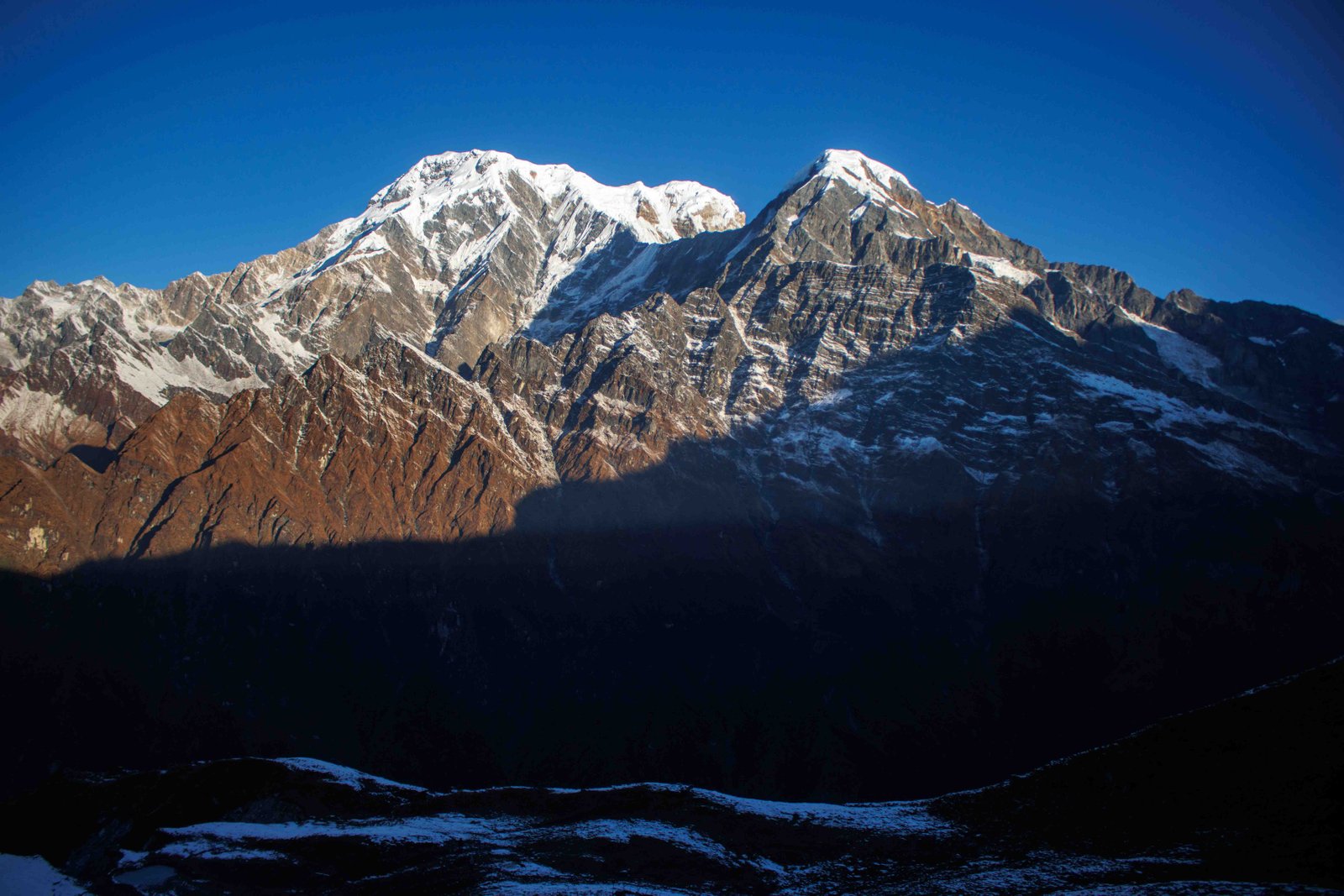
The higher you climb, the more imposing these mountains become, with Machhapuchhre standing tall ahead and forming a stunning backdrop for the ridge walk.
The Lower Viewpoint at about 4,000 m rewards you with a striking view of the surrounding Himalayan landscape. If you want to see the high peaks up close and feel their scale, Mardi Himal is the trek for you.
Which is better for mountain views?
Choose Kokhe Danda if you want sweeping panoramas of a wider range of Himalayan peaks and scenic views throughout the trip. Choose Mardi Himal if you want to get close to Machhapuchhre, Annapurna South and Hiunchuli.
Neither is better for everyone. The right choice depends on whether you prefer a wide mountain panorama or dramatic close-ups.
2 · CrowdsPeaceful trails: Kokhe Danda is the quieter choice
One of the biggest differences between the two treks is the number of people you share the trail with. If you want to get away from busy trekking routes, this matters a lot.
Kokhe Danda: escape the crowds
The Kokhe Danda Trek is a relatively new route created by Discover Parbat to share the landscapes and communities of Parbat district with visitors.
Compared with the popular routes of the Annapurna region, Kokhe Danda sees very few trekkers. On many trips you will have long stretches of the trail, and even the homestays, all to yourself.
There are no queues at viewpoints and no crowds competing for the best angle. You can walk at your own pace, stop whenever a view catches your eye and simply enjoy the peaceful surroundings.
The accommodation adds to this sense of solitude. Instead of staying in large trekking lodges, you stay with local families in traditional village homes.
Kokhe Danda is especially appealing to those who want to escape the hustle and bustle of everyday life, enjoy the sounds of nature and experience the Himalaya away from the usual tourist crowds.
Mardi Himal: beautiful, but busier in peak season
Mardi Himal is one of the most popular short treks in the Annapurna region. With excellent mountain views, a short duration and easy access from Pokhara, it attracts both domestic and international trekkers.
The trail can get crowded, especially during the peak season in October and November. Popular stops and teahouses can fill up with trekkers, and accommodation may be less private.
You will still find beautiful stretches of forest and quieter moments, especially outside peak hours. But Mardi Himal is a well-known route, and trekkers looking for complete solitude should keep this in mind.
Winner for peaceful trekkingKokhe Danda. For quiet trails, no crowds at viewpoints and peaceful nights in a village homestay, Kokhe Danda is the better option.
3 · Village lifeKokhe Danda offers an authentic village experience
For many travellers, trekking is about more than mountains. Meeting local people, learning about their customs and enjoying local food can be the highlights of a trip. This is another way Kokhe Danda stands apart.
Experience traditional Magar villages on Kokhe Danda
The Kokhe Danda Trek passes through villages where people still follow a traditional way of life. The route gives you the chance to experience Magar culture, explore rural settlements and learn about everyday life in the hills.
Your first night in Haljure is spent not in a tourist lodge but in a traditional family home.
Your host cooks your meal, often in a traditional Nepali kitchen over a wood fire. Sitting by the hearth while dal bhat, seasonal vegetables and fresh rotis are prepared gives you a glimpse into the rhythm of village life.
In the evening, a campfire and a sky full of stars complete the experience.
At Lespar, you can join your hosts to make momos, learning to fold the dumplings by hand before eating them together, then spend time exploring the village, its terraced fields and its traditional stone-and-mud houses.
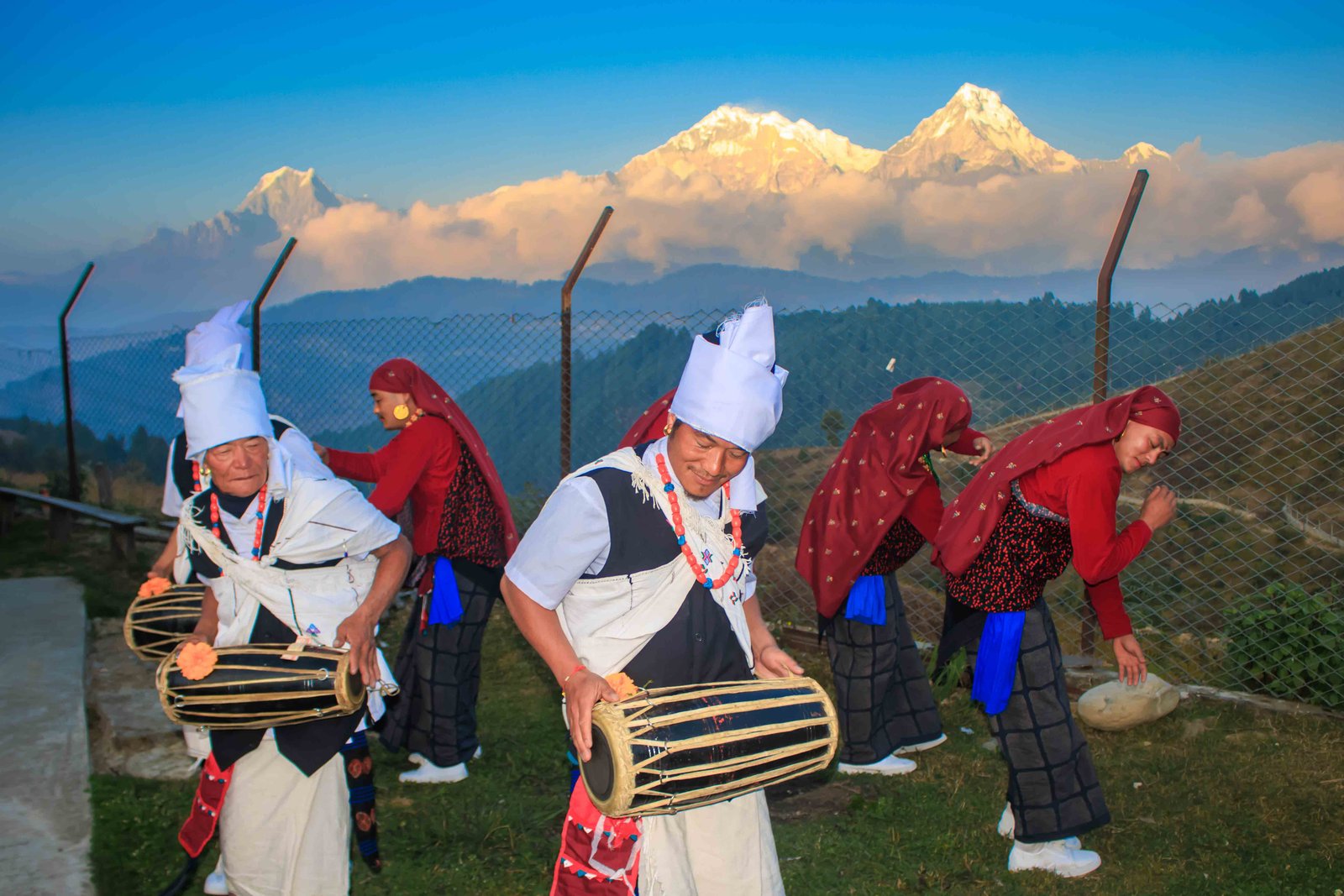
These are not just scheduled sightseeing stops. They are opportunities to connect with the people who live along the trail.
Because the route is not heavily trafficked, the homestay experience feels even more personal. On some trips, you will be the only trekkers staying with your host family.
What about village life on Mardi Himal?
Mardi Himal offers beautiful scenery, but very little exposure to village life along the way.
The main route focuses on forest camps, hillside teahouses and high viewpoints. Unlike Kokhe Danda, you are not passing through traditional villages day after day.
The only real village on the route is Siding, at the very end of the trek. From there, trekkers drive straight back to Pokhara rather than continuing through a series of villages.
That is a significant difference for travellers who are mainly interested in local life, local food and local hospitality.
Winner for authentic cultureKokhe Danda. If you want a more immersive experience of rural Nepal than a mountain walk alone, Kokhe Danda is the trek for you.
4 · AccommodationHomestays vs teahouses
When you spend several days in the mountains, where you sleep shapes the character of your trek.
Stay with local families on Kokhe Danda
On the Kokhe Danda Trek, you stay in family-run homestays, with one night in a teahouse.
The focus is on traditional village homes, warm hospitality, home-cooked meals and time spent with your hosts. You get to understand local customs, taste local food and be welcomed into a family's home.
The peaceful setting is another advantage. The trail is still relatively unknown, so the homestays are never as busy as those on well-trodden routes.
These homestays offer a simple, no-frills stay with genuine hospitality and real cultural insight, which can become a highlight of your trip.
Good to know: a traditional homestay is not a hotel. Facilities are basic, and travellers who want hot showers, Wi-Fi and extensive facilities every night may find it less comfortable.
Mardi Himal: an established teahouse trek
Mardi Himal has teahouses along its main route, which will feel familiar to anyone who has trekked in Nepal before.
You eat and sleep in mountain teahouses and follow a well-established trail. It suits trekkers who want a structured trekking experience with regular accommodation stops.
The downside is that popular teahouses can get busy in peak season. You may share mealtimes with many other trekkers, and there is less emphasis on traditional village hospitality.
WinnersPersonal hospitality and homestays: Kokhe Danda. A classic teahouse trek: Mardi Himal.
5 · Difficulty and altitudeEasy walk or bigger challenge?
Your choice should also depend on your fitness, trekking experience and comfort with altitude.
Kokhe Danda: an easy five-day trek
The Kokhe Danda Trek is graded easy and reaches a maximum height of 3,310 m. It is a good fit for first-time trekkers and for travellers who want Himalayan views without taking on a demanding high-altitude trek.
Each day is spent walking through forests, villages and scenic ridges, with time to enjoy the countryside.
Kokhe Danda generally suits those who don't want long, steep climbs at high altitude. The trail still involves uphill and downhill walking, though, so a reasonable level of fitness helps.
Mardi Himal: a moderate trek to about 4,000 m
Mardi Himal is usually rated moderate, with a long, sustained climb up the ridge.
The trail climbs through forest and then onto open ridgeline at higher elevations. Reaching the Lower Viewpoint at about 4,000 m is a real achievement, but the climb is more demanding than anything on Kokhe Danda.
It is popular with trekkers who want to reach 4,000 m without committing to a long trek.
Altitude note: altitude affects everyone differently, and even fit hikers can feel its effects at 4,000 m.
WinnersAn easier trek: Kokhe Danda. Higher elevation and a moderate challenge: Mardi Himal.
6 · Sunrise and sunsetWhich trek is better for golden hour?
Watching the first rays of sunlight touch snow-capped peaks is one of the great moments of trekking in Nepal.
Both treks offer a stunning sunrise, but Kokhe Danda adds the bonus of beautiful sunsets in a peaceful setting.
Kokhe Danda: golden light from morning to evening
Kokhe Danda and its surrounding ridgelines are wonderful places to watch the light change over the Himalaya.
From Haljure and Kokhe Danda, the snow-covered peaks glow against the morning sky at sunrise. Later in the day, the hills and mountains frame a stunning sunset.
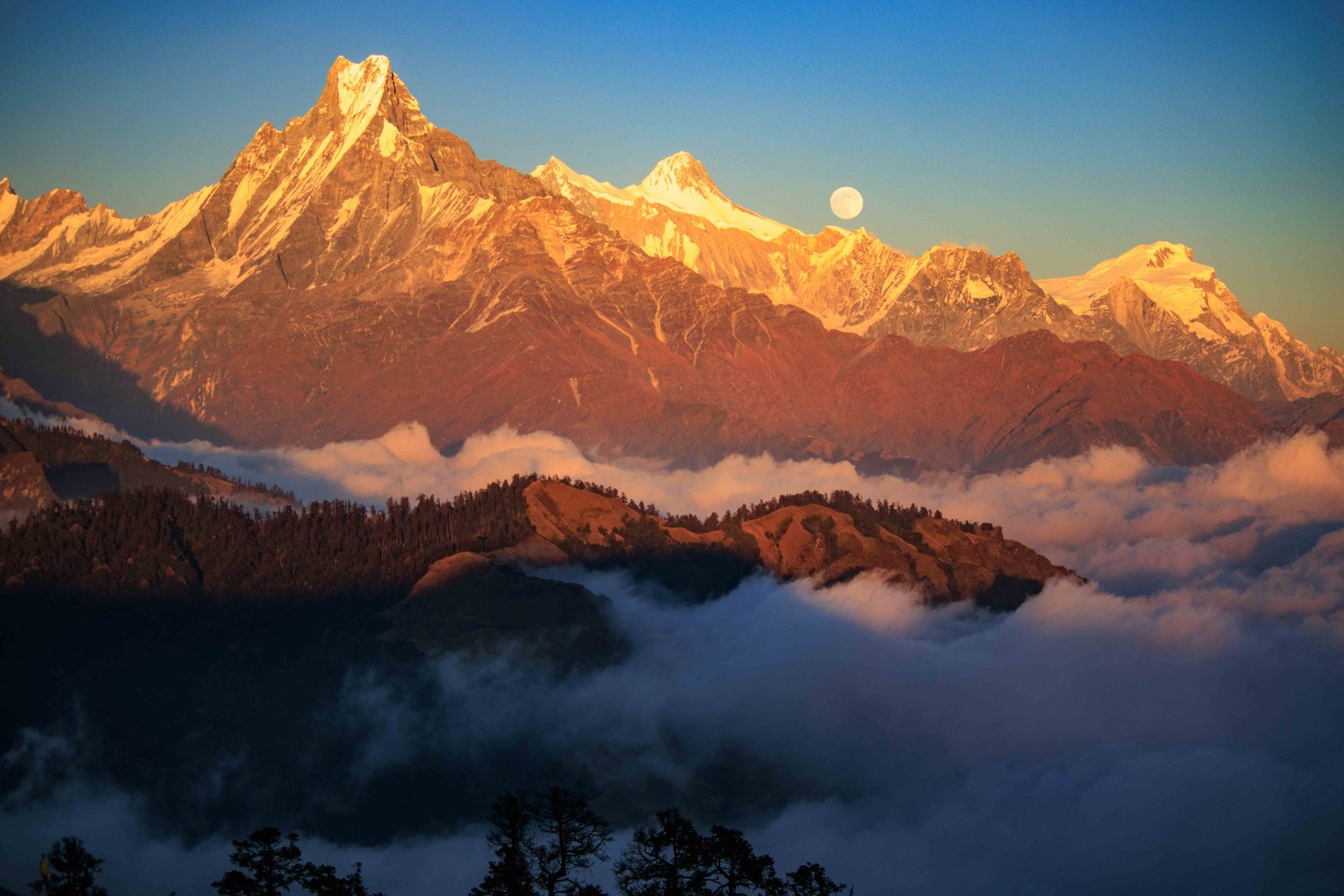
Because the route is quiet, you can enjoy these moments without the crowds found at well-known viewpoints.
You also have several scenic spots along the way, each with a different landscape, rather than just one famous viewpoint.
Mardi Himal: spectacular sunrise over the Annapurna region
Watching Machhapuchhre and the surrounding peaks catch the first light at sunrise is especially rewarding on Mardi Himal.
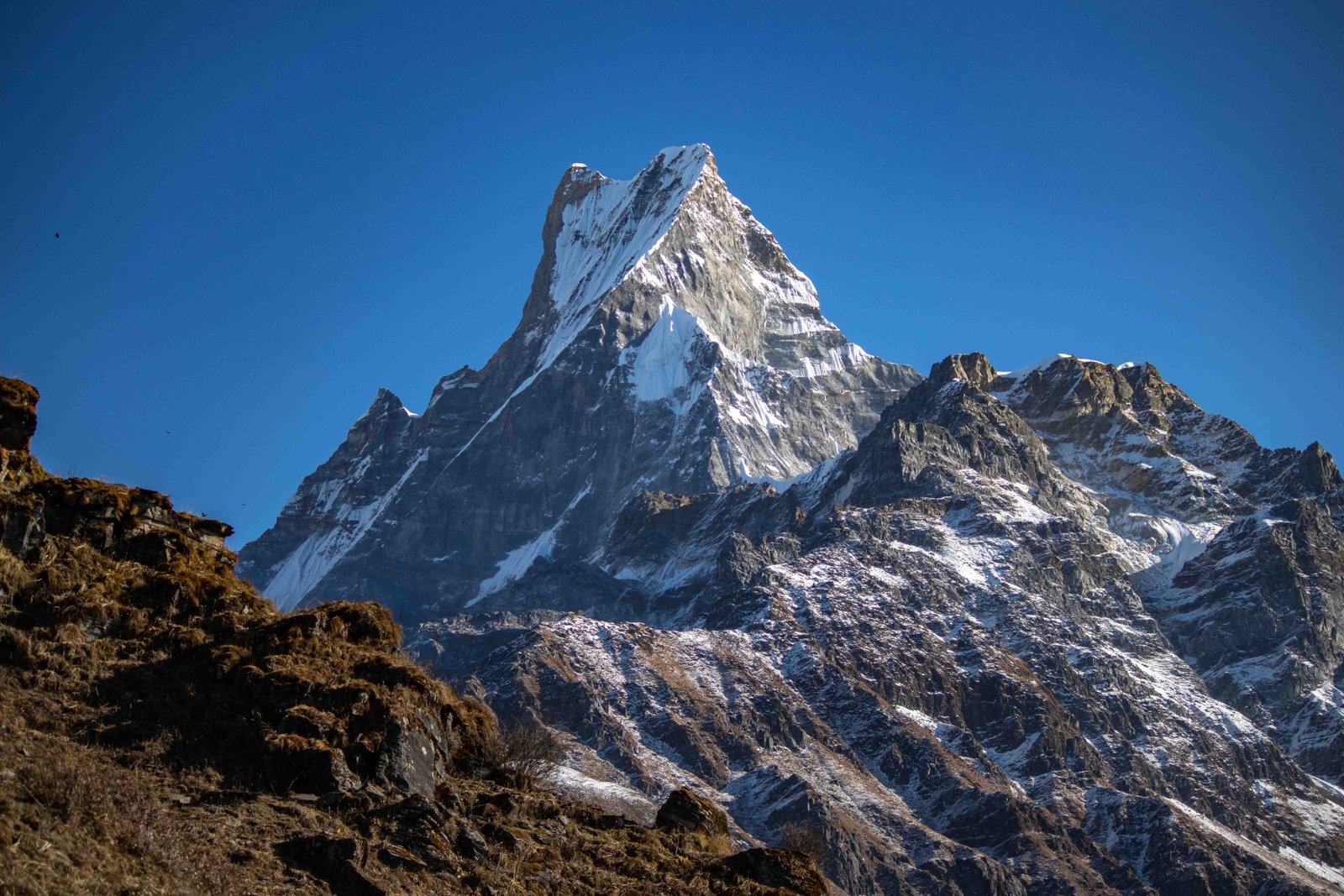
The views from the upper ridge are dramatic, and the contrast between the ridgeline, the valleys and the snowy summits makes for great photography.
But during the busy season, you will likely share this experience with many other trekkers.
WinnersPeaceful sunrise and sunset: Kokhe Danda. Close-up sunrise photos of Machhapuchhre and Annapurna South: Mardi Himal.
7 · CostKokhe Danda vs Mardi Himal cost comparison
Both treks take five days from Pokhara and cost about the same.
The final cost depends on group size and the services included in your package. Discover Parbat packages include a guide, a porter, the required TIMS and ACAP permits, meals and accommodation, as listed for each trek.
Since the prices are so similar, price shouldn't be the deciding factor. Think about the kind of experience you want instead. Kokhe Danda offers peaceful trails, village homestays and cultural immersion, while Mardi Himal offers higher-altitude trekking and close-up mountain scenery.
For current prices and inclusions, see our trek pages: Kokhe Danda Trek and Mardi Himal Trek.
8 · Best timeBest time to trek Kokhe Danda and Mardi Himal
Both treks are best during Nepal's main trekking seasons, spring and autumn.
Spring: March to May
Spring brings warmer weather, and rhododendrons bloom through the forested sections of both routes. It is a great season for nature lovers and photographers.
If you want mountain views, peaceful forest walks and a traditional village experience, Kokhe Danda is a wonderful choice in spring.
Autumn: October to November
Autumn is one of the best seasons for Himalayan views, with stable trekking conditions and a good chance of clear mountain skies.
Kokhe Danda is the more relaxed option at this popular time of year, while Mardi Himal is busier with trekkers on its well-established trail and teahouses.
Conditions vary from year to year, so check the latest weather and trail conditions before you go. For a month-by-month breakdown, see our guide to the best time for the Kokhe Danda Trek.
So, which trek is better: Kokhe Danda or Mardi Himal?
The answer depends on what you want from your time in the Himalayas.
Choose Kokhe Danda Trek if you…
- Want a peaceful, less-crowded trekking experience.
- Love nature, forests, open ridgelines and panoramic Himalayan views.
- Want to see a wide range of peaks, including Dhaulagiri and Annapurna, with possible views towards Manaslu and Langtang on clear days.
- Want to explore traditional Magar villages and learn about local life.
- Prefer family-run homestays over busy trekking lodges.
- Enjoy home-cooked Nepali food and want to experience traditional cooking.
- Want to enjoy both sunrise and sunset in quiet surroundings.
- Prefer an easier five-day trek that does not require reaching 4,000 metres.
Choose Mardi Himal Trek if you…
- Want dramatic, close-up views of Machhapuchhre (Fishtail).
- Want to see Annapurna South and Hiunchuli rising prominently above the trail.
- Want to reach a viewpoint at around 4,000 metres.
- Enjoy a moderate trekking challenge with a sustained ascent.
- Prefer established trekking routes with teahouse accommodation.
- Don't mind sharing the trail and popular teahouses with other trekkers during peak season.
- Want a short trek that combines forest walks, exposed ridgelines and high-altitude scenery.
Our verdictKokhe Danda is the better choice for nature lovers
Both Kokhe Danda and Mardi Himal are rewarding five-day treks from Pokhara, and each offers a distinct way to experience the Himalayas.
Mardi Himal is an excellent choice for trekkers who want to get close to Machhapuchhre and Annapurna South, climb to a higher viewpoint and experience the dramatic landscapes of a well-established Annapurna trekking route.
But if you want more than a mountain viewpoint, we believe the Kokhe Danda Trek offers a more personal and rewarding experience for nature lovers.
Its appeal lies in the combination of panoramic Himalayan scenery, quiet forest trails, traditional villages and the chance to stay with local families. You can enjoy home-cooked meals, learn about Magar culture, explore rural settlements and spend time in the mountains without the crowds of Nepal's more popular trekking routes.
The chance to have a homestay almost entirely to yourself, wake up to mountain views and watch the sun rise or set over the Himalaya makes Kokhe Danda particularly special.
At just five days from Pokhara, it is an accessible way to discover a quieter side of Nepal. Short on time? Try the Short Kokhe Danda Trek, or see the Multiple Viewpoints Trek for more viewpoints in one trip.
The Kokhe Danda Trek is also a route developed by Discover Parbat to share the natural beauty and cultural heritage of Parbat district with travellers. Our local guides know the villages, trails and families along the route, helping you experience the region beyond its scenery. Read why trekkers choose Discover Parbat for the Kokhe Danda Trek.
If you are looking for peaceful trails, panoramic views, authentic village life and a genuine connection with nature, Kokhe Danda should be at the top of your list. Comparing it with other popular treks? See why Kokhe Danda is a better alternative to Poon Hill.