The short answerShould you book teahouses ahead?
In peak seasons and on popular trails, yes: it is best to book teahouses in advance, ideally three to four days ahead. In the monsoon and winter low seasons, you can usually turn up and find a room.
For years, the standard advice for trekking in Nepal was simple: just walk in. That still works for much of the year, but on the busiest routes in October, November and spring, it no longer holds.
Over the past few seasons, our guides have watched the same thing happen on trail after trail. Trekkers arrive at a high stop in the afternoon, every room is taken, and they spend the night on a bench in the dining hall. If that sounds like an adventure you would enjoy, go ahead and wing it. If not, a few phone calls a few days ahead will save you a cold and crowded night.
This guide is written from our experience running treks in the Annapurna region and on our own Kokhe Danda Trek in Parbat. It covers when you really need to book, where rooms run out first, how trekking companies handle bookings, and how independent trekkers can book teahouses themselves.
Peak seasonWhy October and November are the busiest months
Autumn is Nepal's main trekking season. Once the monsoon withdraws, skies clear, the mountains show up and international trekkers arrive in large numbers. Spring, from March to April, is the second busy window, when rhododendrons bloom across the middle hills.
What many visitors do not realise is that the October–November window is also festival time in Nepal. Dashain and Tihar, the country's biggest festivals, bring long holidays for schools, offices and businesses. Thousands of Nepali trekkers use that time to head into the hills, and domestic trekking has grown enormously in recent years.
So in autumn, teahouses are not only serving international trekkers. They are also hosting large groups of Nepali friends, families and college students, often travelling on the same short, popular routes and arriving on the same holiday weekends. The result is fuller trails and fuller teahouses than many guidebooks prepare you for.
Our recommendation: if you are trekking a popular route between late September and late November, or in March and April, book your teahouses three to four days ahead. Book the high, small stops first.
Where rooms run outThe trails and stops that fill up first
Not every night on a trek needs a booking. Big villages with dozens of lodges rarely run out of beds completely. The problem is the high, small stops near a viewpoint, pass or base camp, where everyone wants to sleep on the same night and only a handful of teahouses exist.
Based on what our guides see each season, these are the places where booking ahead matters most:
- Annapurna Base Camp (ABC): The trail is very busy at the moment. From Himalaya upwards, through Deurali, Machhapuchhre Base Camp and ABC itself, trekkers without bookings regularly end up sleeping in dining halls. This has become a clear trend over the past few years.
- Manang to Tilicho Base Camp: Tilicho Base Camp has only a few lodges, and almost everyone sleeps there before the early climb to Tilicho Lake. It fills quickly in autumn, especially during the Dashain and Tihar holidays.
- Mardi Himal Trek: High Camp is the bottleneck. Space is limited, and on busy nights the dining room becomes the overflow dormitory.
- Poon Hill (Ghorepani): Ghorepani has many lodges, but it is one of the most popular short treks for both international and Nepali trekkers, and the better rooms go early in peak season.
- Kokhe Danda and Mohare Danda: The teahouses on these ridges have limited rooms. During festival holidays, groups of Nepali trekkers can fill them in one go.
- Annapurna I (North) Base Camp: The camps on this route are basic and few, so space is limited even when the trail is not crowded.
- Everest region: The busiest stretch of the Everest Base Camp route, where the higher stops have far fewer beds than the number of trekkers passing through in peak season.
Quick guide: do you need to book?
| Situation | Book ahead? | Why |
|---|---|---|
| High stops in peak season (ABC, MBC, Tilicho Base Camp, Mardi High Camp) | Essential | Few lodges, everyone sleeps there the same night |
| Popular short treks during Dashain and Tihar | Essential | Large numbers of Nepali trekkers on holiday |
| Big villages in peak season | Recommended | Beds usually exist, but the better rooms go early |
| Groups of 10 or more | Essential | You may need most of a teahouse's rooms |
| Monsoon (June–September) and winter (December–February) | Not needed | Plenty of rooms, but check which lodges are open |
Low seasonWhen you can simply turn up
In the low seasons, the monsoon from June to September and winter from December to February, you can generally walk into a village and find a room without any booking. Many teahouses will be delighted to see you.
The one thing to check is whether lodges are open. On higher routes, some teahouse owners close for winter and move down to their home villages, and some reduce their services in the monsoon. Before you set off, ask in the last village or at your current teahouse which lodges further up are operating.
With a trekking companyHow local trekking companies book teahouses
If you trek with a licensed guide or through a trekking company, the booking is handled for you. On most popular routes, a guide is optional, so many visitors still trek independently and book their own rooms. The exception is Nepal's restricted areas, where trekking with a licensed guide is still mandatory and the special permit must be arranged through a registered trekking agency. On those routes, the agency handles the accommodation as part of the trip.
At Discover Parbat, the process looks like this. During the major seasons, we book around a month before the trek, as soon as a client's booking is confirmed. Our team contacts each teahouse directly by phone, confirms the number of rooms and the dates, and then reconfirms with the owners as the trek gets closer.
There is no central booking system behind this. It runs on phone calls and long-standing relationships between guides and teahouse families. That is one of the real advantages of trekking with a local team: when a trail is crowded, a guide the owner has known for years is more likely to get your room held.
Booking it yourselfHow to book teahouses as an independent trekker
Most teahouses in Nepal are not listed on hotel booking websites, and you will not find a single platform that covers a whole trail. Booking yourself is still straightforward, though. It just happens by phone.
Before your trek: find numbers on Google Maps
- Search the stop on Google Maps. Look up the village or camp, for example "Tilicho Base Camp" or "Machhapuchhre Base Camp", and browse the teahouses and lodges listed there.
- Note the phone numbers. Many teahouse listings include a mobile number. Most owners also use that number on WhatsApp.
- Call or send a WhatsApp message. Give your name, the date, the number of people and the number of rooms. Keep it short and clear, as signal can be patchy higher up.
- Get a confirmation. Ask the owner to confirm by message, and save the conversation so you can show it when you arrive.
On the trek: ask your teahouse to call ahead
This is how most experienced trekkers and guides do it. Once you are on the trail, ask the owner of the teahouse where you are staying to call the teahouse at your next stop and book for you. Owners along a route usually know each other, have each other's numbers and can arrange it in a few minutes.
It also keeps your plans flexible. Rather than locking in every night of a two-week trek before you arrive, you can book two or three nights ahead as you go, adjusting for weather, acclimatisation and how your legs feel.
If you skip booking in peak season: aim to arrive at high stops by early afternoon. Rooms at busy stops are often gone by mid-afternoon, and late arrivals are the ones who end up in the dining hall.
PaymentsDo teahouses ask for a deposit?
Generally, no. For individuals, couples and small groups, a teahouse booking is a promise made over the phone, and you pay when you check out.
The exception is large groups. If you are a group of more than ten people and your booking would take up the majority of a teahouse's rooms, the owner may ask for an advance payment. This is fair. If a large group cancels at the last minute in peak season, the teahouse has turned away other trekkers and is left with empty rooms. The deposit covers that risk.
Whatever the group size, if your plans change, call or message the teahouse to cancel. In peak season, someone else will be very glad of that room.
HomestaysTeahouses vs village homestays
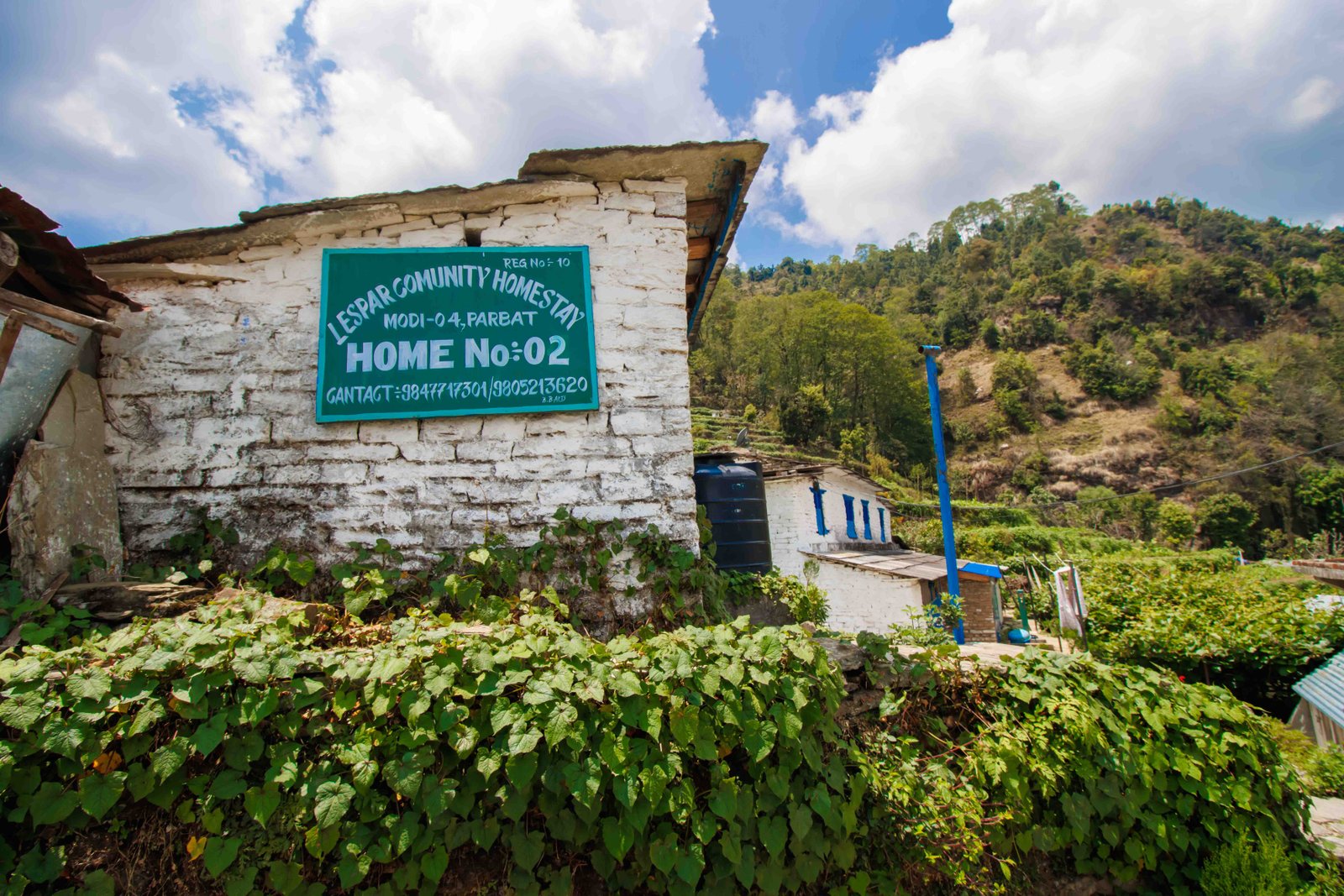
On community-based routes, you may stay in family homestays rather than commercial teahouses. Homestays are booked a little differently. Each family usually has only a few rooms, and the village spreads its guests between households, so arranging them in advance matters even more than with teahouses.
On the Kokhe Danda Trek, we arrange homestays in Magar villages such as Lespar ahead of time, so families know how many guests to expect and can prepare meals. Staying with a family means sharing dal bhat in their kitchen and seeing everyday village life, something a teahouse cannot really offer.
Prefer homestays to crowded teahouses?
The route, itinerary and costs are on our Kokhe Danda Trek page, where we handle every homestay and teahouse booking for you.
See the Kokhe Danda Trek →Practical tipsTips for booking and staying in teahouses
- Book the bottlenecks first: If you only book a few nights, make them the high, small stops below a pass, lake or base camp.
- Check the festival dates: Dashain and Tihar dates change each year. If your trek overlaps with them, expect busier trails and book earlier.
- Eat where you sleep: Teahouses keep room prices low because guests eat their meals there. Eating dinner and breakfast at your teahouse is expected and helps the family business.
- Carry a local SIM: A Nepali SIM card makes calling and messaging teahouses much easier than relying on Wi-Fi.
- Confirm the day before: A quick message the day before you arrive helps the owner hold your room.
- Cancel if plans change: Let the teahouse know so they can give your room to someone else.
- Check openings in low season: In winter and the monsoon, confirm that lodges further up are open before setting off.
- Carry cash: Most teahouses work on cash only, especially higher up.
The bottom line
Do you need to book teahouses in advance in Nepal? In peak season on popular trails, yes. Book three to four days ahead, prioritise the high and small stops, and remember that October and November bring Nepal's festival crowds as well as international trekkers. In the monsoon and winter, you can relax and simply walk in.
Booking is easier than it sounds. A phone call, a WhatsApp message or a favour from your current teahouse owner is all it takes, and it is the difference between a warm bed and a night on the dining hall bench.
FAQFrequently asked questions about booking teahouses
Do you need to book teahouses in advance in Nepal?
In peak seasons (October to November and March to April) and on popular trails, it is best to book teahouses in advance, ideally three to four days ahead. In the monsoon and winter low seasons, you can usually walk in and find a room.
How far ahead should I book teahouses in Nepal?
Independent trekkers should book three to four days ahead during peak season. Trekking companies usually book around a month before the trek, once a client's booking is confirmed.
Can I book Nepal teahouses online?
Most teahouses are not on hotel booking websites. The usual method is to find the teahouse on Google Maps and call or message the owner on WhatsApp, or to ask the teahouse where you are staying to call ahead to your next stop.
Do teahouses in Nepal ask for a deposit?
Generally no. Teahouses may ask for an advance payment when a group of more than ten people books the majority of their rooms, so that a last-minute cancellation is covered.
What happens if a teahouse is full?
At busy high stops, trekkers who arrive without a booking often sleep on benches or the floor of the dining hall. This has become common in recent peak seasons above Himalaya on the Annapurna Base Camp trail, at Mardi Himal High Camp and at Tilicho Base Camp.
Which Nepal treks get busiest in October and November?
October and November coincide with Dashain and Tihar, when many Nepali trekkers join international visitors. Manang to Tilicho Base Camp, Annapurna Base Camp, Mardi Himal, Poon Hill, Kokhe Danda, Mohare Danda, Annapurna North Base Camp and the Everest region all get very busy.
Do I need to book teahouses in the monsoon or winter?
Usually not. In the low seasons you can generally arrive and find a room, but some higher lodges close, so check which teahouses are open before you set off.
Are homestays booked the same way as teahouses?
Village homestays usually have only a few rooms per family, so they are best arranged in advance. On the Kokhe Danda Trek, Discover Parbat arranges homestays in villages such as Lespar for its trekkers.