The Khopra Ridge Trek (also called the Khopra Danda Trek) is an 8-day, moderate trek from Pokhara to Khopra Ridge at 3,660 m, one of the finest Dhaulagiri viewpoints in Nepal. It follows the quiet Annapurna Community Eco-Trail through Tadapani, Dobato and the Muldai Viewpoint, then continues past Poon Hill into Parbat district for Kokhe Danda and a final night with a Magar family in Lespar. Community-run lodges, Gurung and Magar villages and long ridgeline trails take the place of the crowded teahouse corridors most trekkers know.
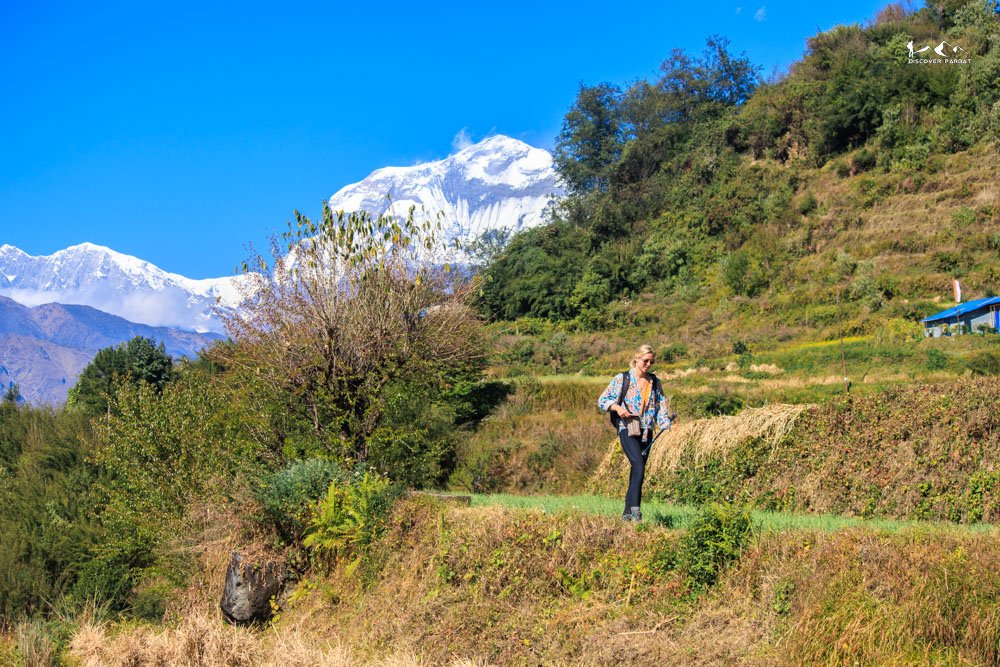
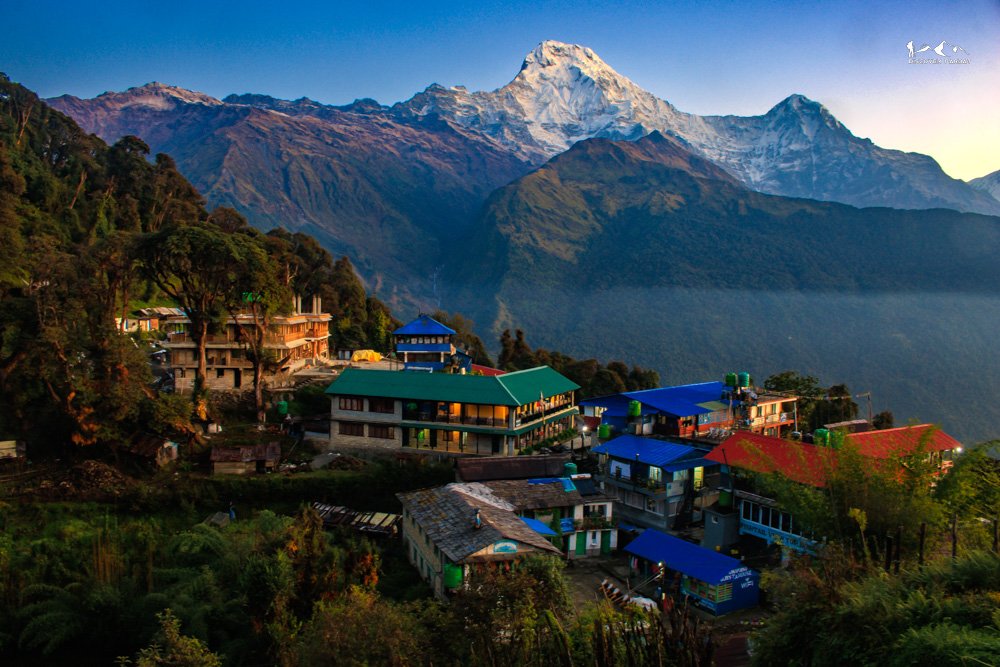
The trek begins with a drive from Pokhara to Ghandruk, the large Gurung village spread across the hillside at around 1,940 metres. Its slate-roofed stone houses, flagstone lanes and terraced fields have been home to Gurung families for generations, and a walk through the village before setting off is the best introduction to the culture you will meet along the way. From Ghandruk the trail climbs through oak and rhododendron forest to Tadapani, a small ridgetop settlement at about 2,630 metres where the evening light falls on Annapurna South and Machhapuchhre.
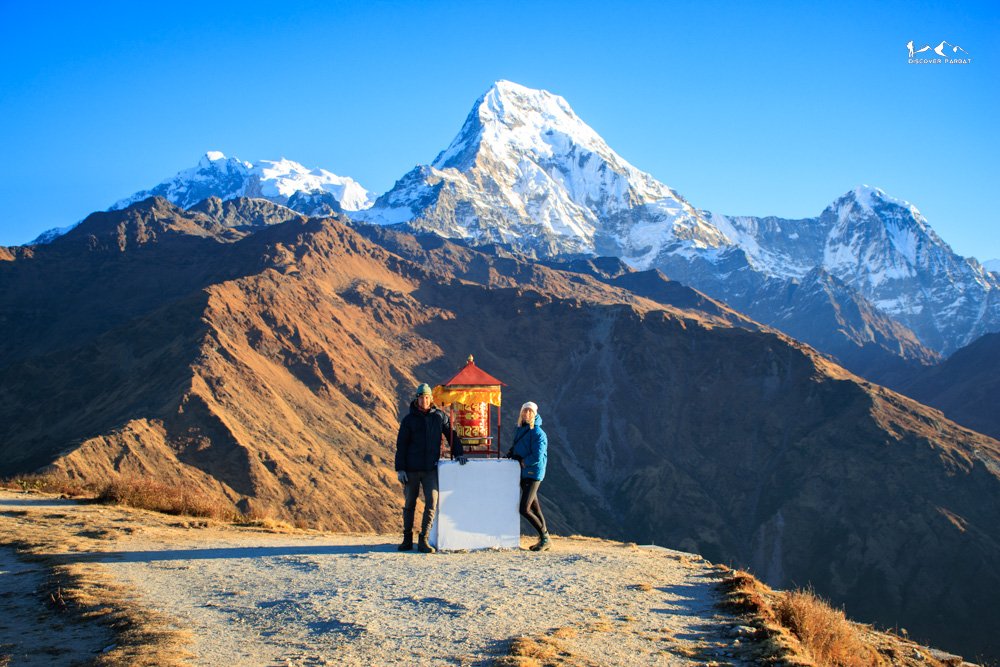
Beyond Tadapani the route leaves the main trekking trail behind. The path to Dobato passes through Isharu, climbing through some of the densest forest of the trek, where moss hangs from the branches and the only sounds are birdsong and the creak of old trees in the wind. Dobato sits on an open ridge with a wide view across the Annapurna massif, and a short climb above it leads to the Muldai Viewpoint at around 3,650 metres, where sunrise lights up Dhaulagiri, Annapurna and Manaslu. The small lodges here feel far removed from the busier routes only a day's walk away.
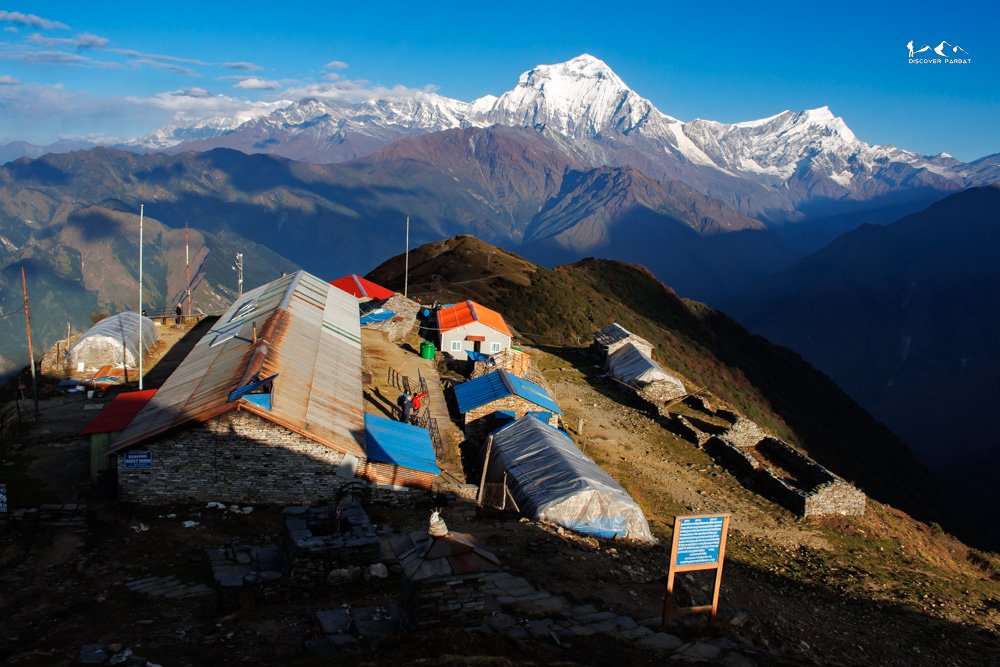
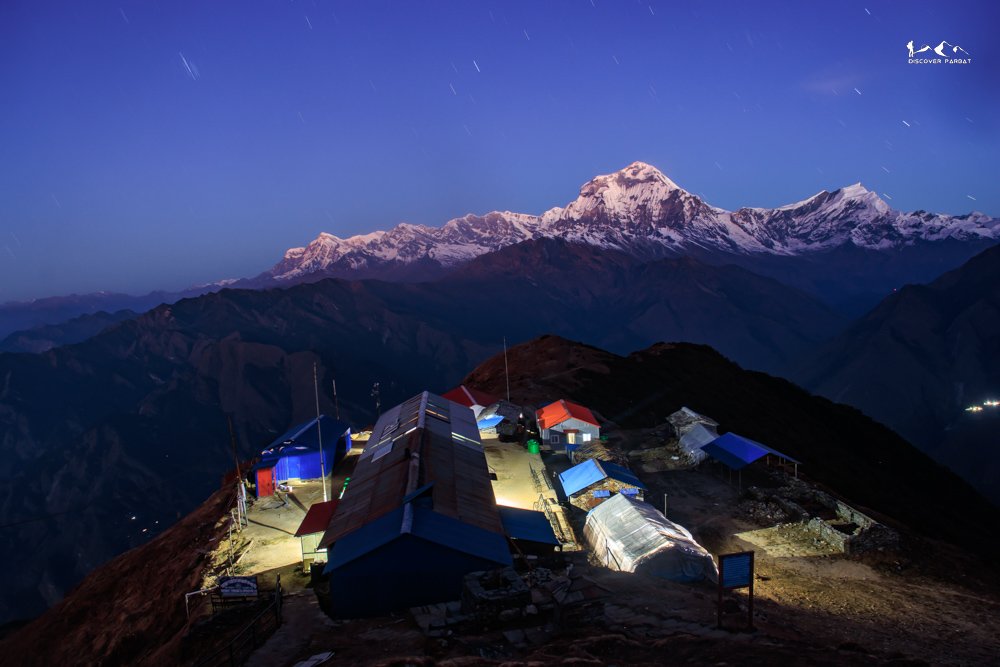
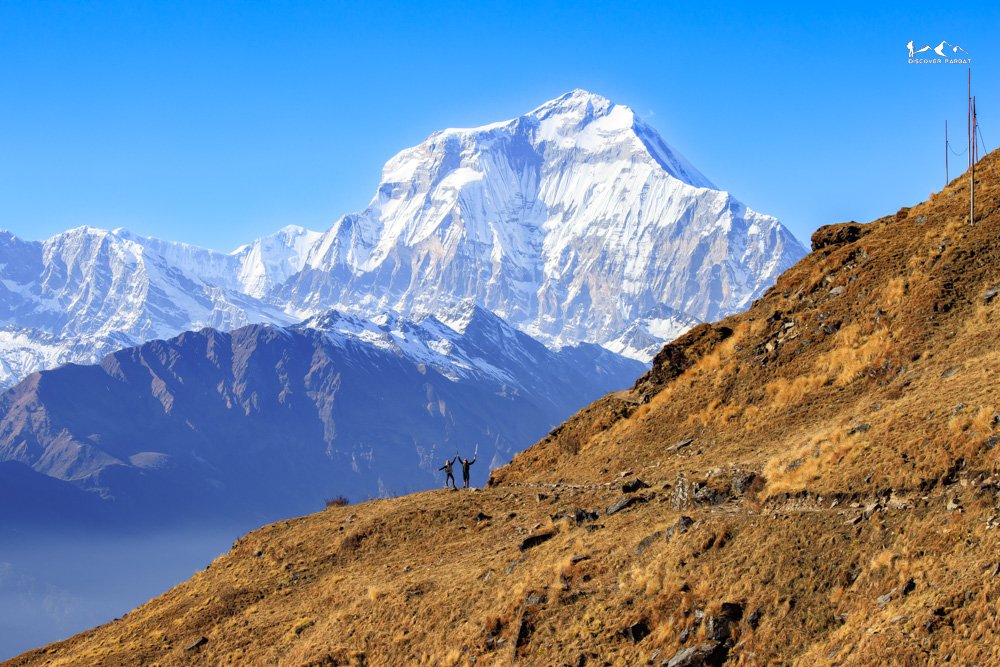
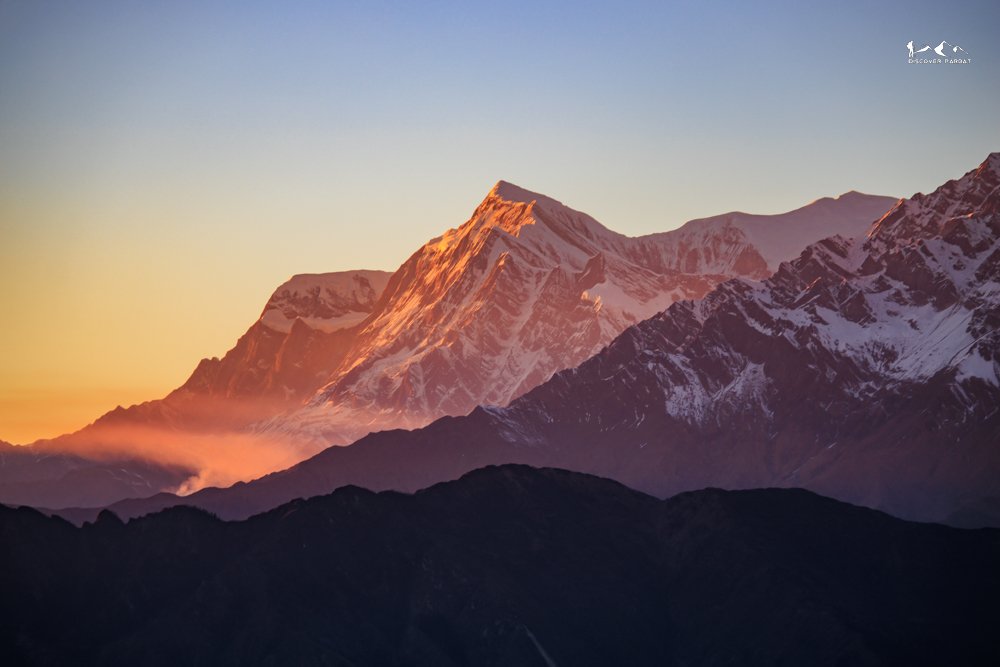
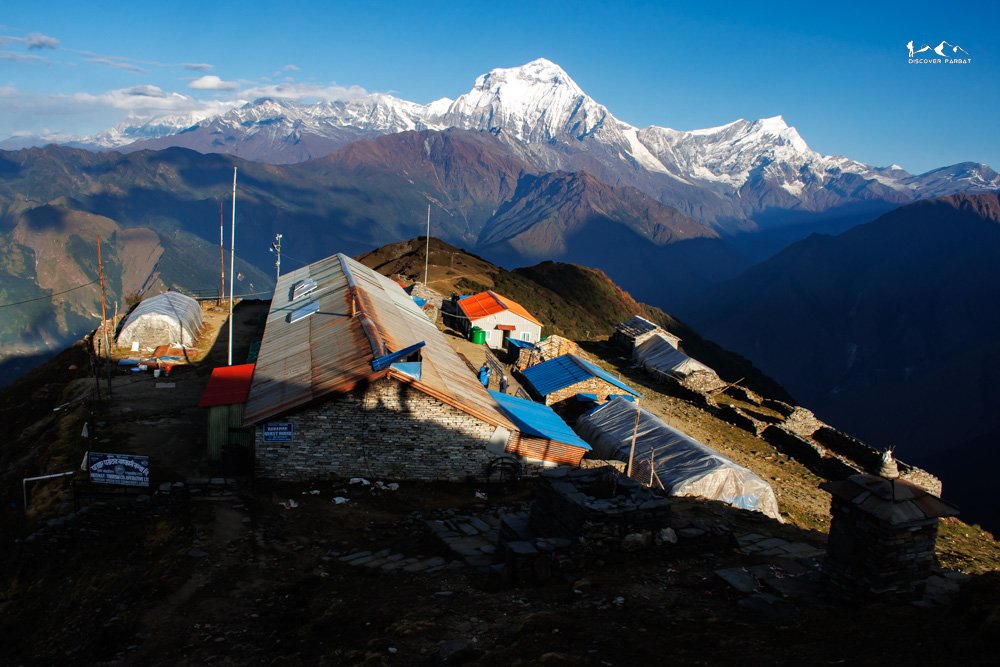
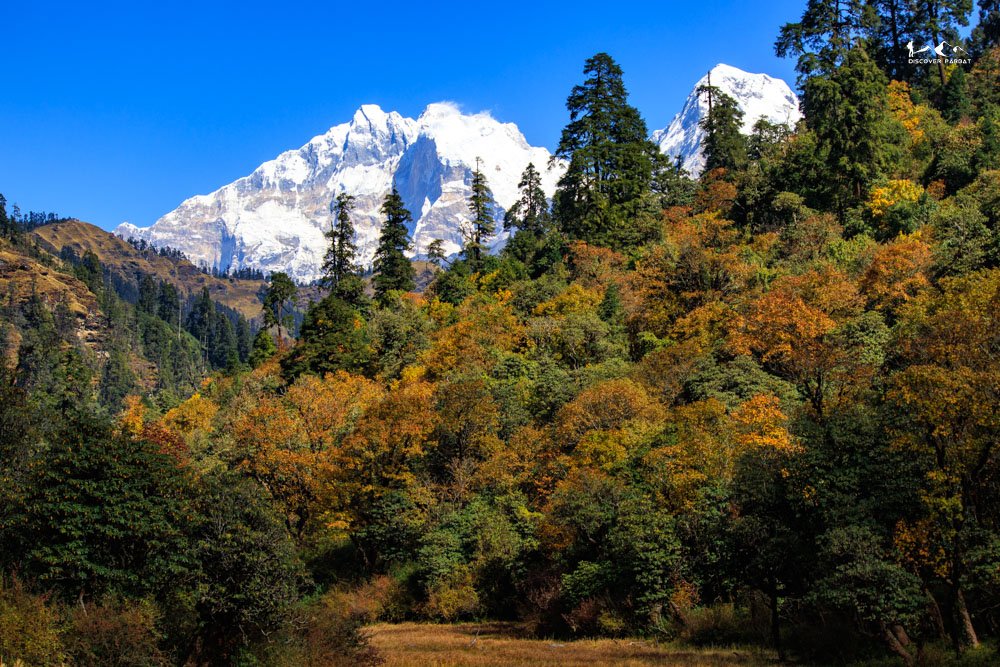
From Dobato the trail traverses high pastures to Chhistibung before rising onto Khopra Ridge itself. The lodge on the ridge is run by the local community, with its income supporting villages and schools in the area, so staying here directly benefits the people who look after this trail. The view from Khopra is the visual peak of the trek. Dhaulagiri rises almost directly opposite across the Kali Gandaki gorge, one of the deepest valleys on earth, while Annapurna South, Nilgiri and Tukuche fill the skyline on either side. Watching the evening light turn these peaks gold, and seeing them again close and clear the next morning, often with no one else in sight, is an experience few trekkers in Nepal ever have.
The descent from Khopra leads back through Chhistibung and down to Swanta, a Magar farming village set among terraced fields and orchards. Life in Swanta follows the seasons rather than the trekking calendar: families work their fields, tend livestock and welcome the occasional trekker with a cup of tea and genuine curiosity. The next day the trail climbs through Chitre, another small settlement surrounded by rhododendron forest, before reaching Ghorepani at 2,860 metres. After several quiet days, the busy lodges and international trekkers of Ghorepani make a lively change of pace.
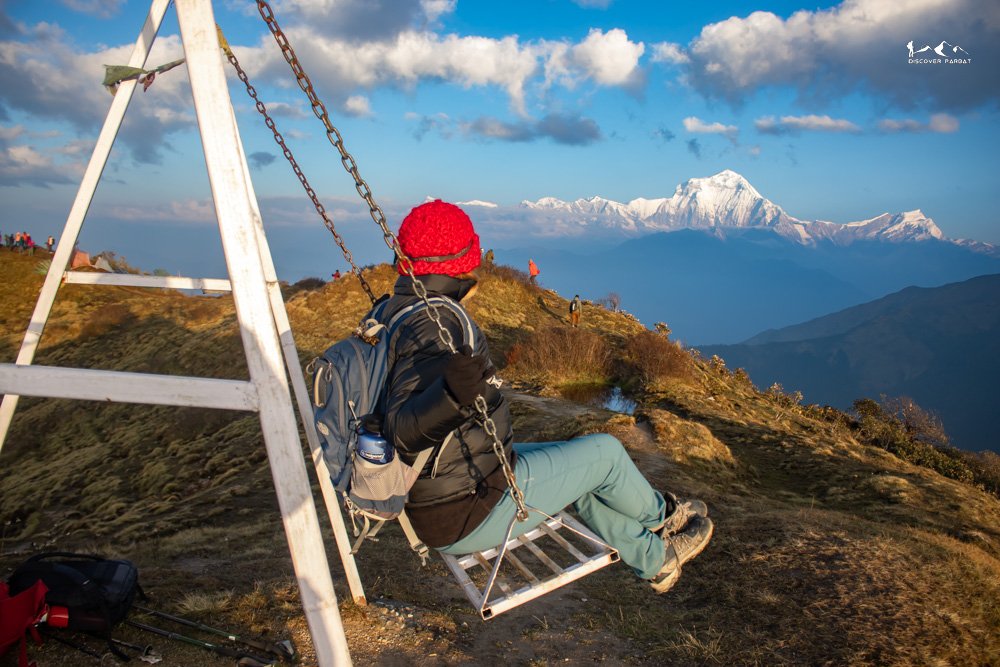
On day six, rather than joining the pre-dawn crowd, we climb Poon Hill at 3,210 metres after breakfast. By the time we reach the top, most trekkers have already gone back down, and we often have the classic panorama of Dhaulagiri, Annapurna South and Machhapuchhre almost to ourselves. The trail then heads somewhere most Poon Hill trekkers never go, crossing into Parbat district to Kokhe Danda. At 3,310 metres, Kokhe Danda is the highest point in Parbat, and its viewpoint looks out over the Annapurna and Dhaulagiri ranges as well as the layered green hills rolling south toward Pokhara. Opened to trekkers only in recent years by local people, the trail here is quiet and the welcome is personal.
From Kokhe Danda the route descends past Jaljala to Lespar, a Magar village where the trek's final night is spent in a homestay with a local family. Stone paths link farmhouses and terraced fields, meals are cooked over the family hearth, and the evening includes a momo-making session with your hosts. For many trekkers, this night in Lespar becomes the most memorable part of the journey. On the last morning the trail continues through Haljure and down to Banau, followed by a drive back to Pokhara via Kushma.
The Khopra Ridge Trek suits trekkers who want more than a checklist of viewpoints. It combines one of the finest Himalayan panoramas in Nepal with community lodges, Gurung and Magar villages and the quiet ridge trails of Parbat, all in eight days from Pokhara.
Plan Your Trek
Best Time, Cost and Getting There
Best time: October and November give the clearest views of Dhaulagiri from Khopra Ridge, and March to May brings rhododendrons into bloom in the forests between Ghandruk and Dobato. December is quiet and clear, but nights on the ridge are close to freezing.
Cost: the trek costs $590 to $650 per person depending on group size. It includes private transport, permits, meals, accommodation, and guide and porter. See the cost table.
Khayer Lake add-on: you can add one extra day to the Khopra Ridge Trek for the round-trip hike from Khopra Ridge to sacred Khayer Lake (over 4,600 m), one of the most rewarding day hikes in the Annapurna region. The extra day is charged separately and added to the trek price, and it makes this a 9-day Khopra Ridge and Khayer Lake Trek.
Getting there: we drive from Pokhara to Ghandruk in about 2.5 hours and start walking the same day. The trek ends at Banau, with a drive back to Pokhara via Kushma.
What to bring: nights at Dobato and Khopra Ridge get cold, so pack proper layers. See our Khopra Ridge Trek packing list.
Planning Langtang? Read why Khopra Ridge is the best alternative to the Langtang Trek after the 2026 flood. Want more time in Parbat? Extend your trip with the Multiple Viewpoints Trek, or stay shorter on the Kokhe Danda Trek.