Ghorepani is one of the best-known overnight stops in Nepal's Annapurna trekking region. Situated in Myagdi District at approximately 2,860 metres above sea level, this mountain settlement is famous for its traditional trekking trails, forested hills, mountain views and proximity to Poon Hill, one of Nepal's most popular sunrise viewpoints.
However, there is more to Ghorepani than the sunrise at Poon Hill. Long before trekking became an international tourism industry in Nepal, the area served as a resting place for travellers, traders and people moving between the lower valleys and Mustang. Its name reflects this earlier role, when horses carrying supplies stopped here to drink water during their journeys through the mountains.
Today, Ghorepani is a busy trekking stop filled with teahouses, lodges and restaurants. Although modern roads have changed parts of the surrounding landscape, the settlement remains an important gateway to the Annapurna and Dhaulagiri mountain ranges.
This local guide explains where Ghorepani is, what its name means, how the settlement developed, how to reach it from Pokhara, where to stay and when to visit.
LocationWhere is Ghorepani in Nepal?
Ghorepani lies in Myagdi District of Gandaki Province, in the western part of Nepal. It sits along the traditional trekking route connecting the lower foothills around Pokhara with the Annapurna region's higher mountain trails.
The settlement is generally situated at around 2,860 metres (9,383 feet) above sea level. Its elevated position gives visitors access to cool mountain air, rhododendron forests and views towards the Dhaulagiri range and the upper part of Annapurna South.
Ghorepani is commonly associated with the Poon Hill Trek because it provides the main overnight base for visitors heading to the viewpoint. It is also a stop on longer trekking routes, including the Khopra Ridge Trek.
From Pokhara, travellers usually drive towards Nayapul or higher up the mountain road towards Banthati, depending on the route they choose. The traditional approach involves walking through settlements such as Tikhedhunga and Ulleri before reaching Ghorepani.
Although the destination is often called Ghorepani Village, it is not quite like a traditional Nepali village with a large residential community, agricultural fields and closely connected neighbourhoods. Much of what visitors see today is a collection of trekking lodges and teahouses established to serve travellers.
The nameWhat does Ghorepani mean? The story behind the name
The name Ghorepani is commonly explained through two Nepali words: ghoda, meaning horse, and pani, meaning water.
Locally, the place is also referred to as Ghode Pani, often understood as "horse water". Over time, Ghorepani became the widely used spelling in trekking maps, guidebooks and tourism publications. The spelling Gorepani is also sometimes used.
The name is closely connected with the area's history as a resting point for horses and pack animals.
Before roads reached the surrounding mountain settlements, people relied heavily on horses and other pack animals to carry salt, food, household supplies and trade goods between different parts of the region. Travellers moving towards Mustang and people from the lower valleys travelling north needed places to rest during these journeys.
Ghorepani provided a suitable stopping point where horses could drink water and travellers could take a break before continuing their journey. The place's association with horses and water is reflected in its name.
This explanation also helps visitors understand why Ghorepani developed as a stopping place long before it became famous for trekking. Its importance originally came from its position along traditional movement and trade routes rather than from mountain tourism.
HistoryGhorepani before trekking tourism
Before modern teahouses and trekking lodges appeared, the Ghorepani area was primarily used as grazing land for livestock.
Local people brought goats, sheep, buffaloes and cows to graze in the surrounding forests and open areas. People from Khibang, a village lower down the mountain, used to travel to the area and construct temporary huts when staying there to look after their animals.
These huts provided basic shelter for the people who spent time in the grazing grounds. They were not the permanent accommodation facilities that travellers find in Ghorepani today.
As trekking through the Annapurna region became more common, these simple shelters also provided places where early trekkers could rest and spend the night with local people. Travellers often depended on the hospitality and practical knowledge of residents rather than the organised lodge services available today.
Gradually, the growing number of visitors created demand for food, beds and other basic facilities. Local people began establishing teahouses and lodges, transforming the area into a recognised trekking destination.
Many of the families operating Ghorepani's accommodation businesses today have connections to Khibang and other nearby communities. Their role in welcoming trekkers has helped shape the destination's development.
The history of Ghorepani is therefore not simply a story of tourism. It reflects the transition from a seasonal grazing area and traditional resting point into one of Nepal's best-known trekking settlements.
How Ghorepani became famous for trekking
Ghorepani's popularity is closely connected to the development of the Poon Hill viewpoint as a major attraction for visitors to the Annapurna region.
Poon Hill, at approximately 3,210 metres, offers a broad panorama of Himalayan peaks, including Dhaulagiri and Annapurna South, with other prominent mountains visible in favourable conditions. Its relatively accessible location made it attractive to trekkers who wanted impressive mountain scenery without undertaking a long, high-altitude expedition.
The establishment of trekking lodges in Ghorepani allowed visitors to spend the night nearby and walk to Poon Hill early the following morning. This arrangement helped turn Ghorepani into a natural base for sunrise excursions.
Local tourism entrepreneurs, guides and lodge owners played an important role in promoting the destination. Tek Bahadur Pun is a name associated in some local accounts with the promotion of Poon Hill and the development of tourism in the area. However, detailed historical documentation of individual contributions is limited, so the growth of Poon Hill tourism is best understood as the result of efforts by local people and the wider trekking industry rather than attributed solely to one person.
As Nepal's trekking industry expanded, Poon Hill appeared more frequently in guidebooks, travel itineraries and trekking recommendations. Ghorepani consequently became a regular overnight stop for visitors travelling through the Annapurna foothills.
Today, it attracts international trekkers, Nepali visitors, photographers and people seeking accessible mountain views.
Is Ghorepani an actual village?
Although commonly called Ghorepani Village, the settlement is better understood as a trekking hub made up largely of teahouses, lodges, restaurants and related visitor facilities.
Unlike nearby traditional settlements where agriculture and permanent residential life remain central, Ghorepani's present-day character is strongly shaped by trekking tourism.
During the main trekking seasons, many families stay in the settlement to operate their businesses and serve visitors. During quieter months, some owners and family members return to their home villages, while lodge staff and people responsible for maintaining the businesses may remain.
Visitors should not expect a large traditional village centre filled with everyday village activities. Instead, they will find a mountain settlement designed around the needs of trekkers, with accommodation, dining rooms, shops and places to rest between walking days.
Nevertheless, Ghorepani remains closely connected to the lives and livelihoods of the local communities who established and continue to operate its tourism businesses.
ViewsWhat can you see from Ghorepani?
One of Ghorepani's attractions is that the mountain scenery is not limited to the Poon Hill viewpoint.
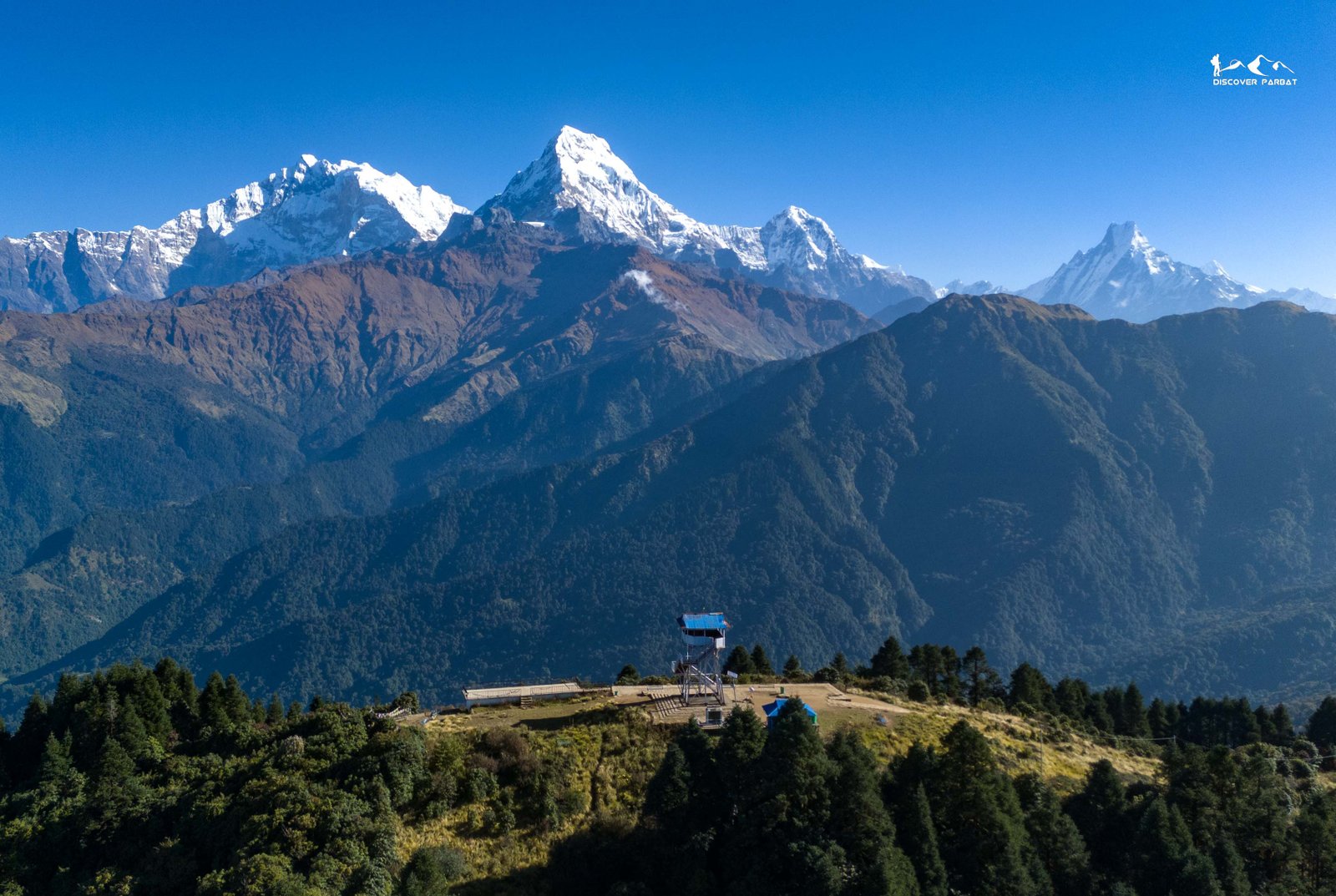
From suitable open areas around the settlement, visitors can see the Dhaulagiri range and the upper part of Annapurna South. The surrounding hills, forested slopes and changing mountain light also make the area rewarding for people who enjoy landscape photography.
Views vary according to the exact location, weather and season. Buildings and trees may obstruct parts of the panorama from some lodge courtyards, so it is worth asking your accommodation host where the best nearby viewing spots are.
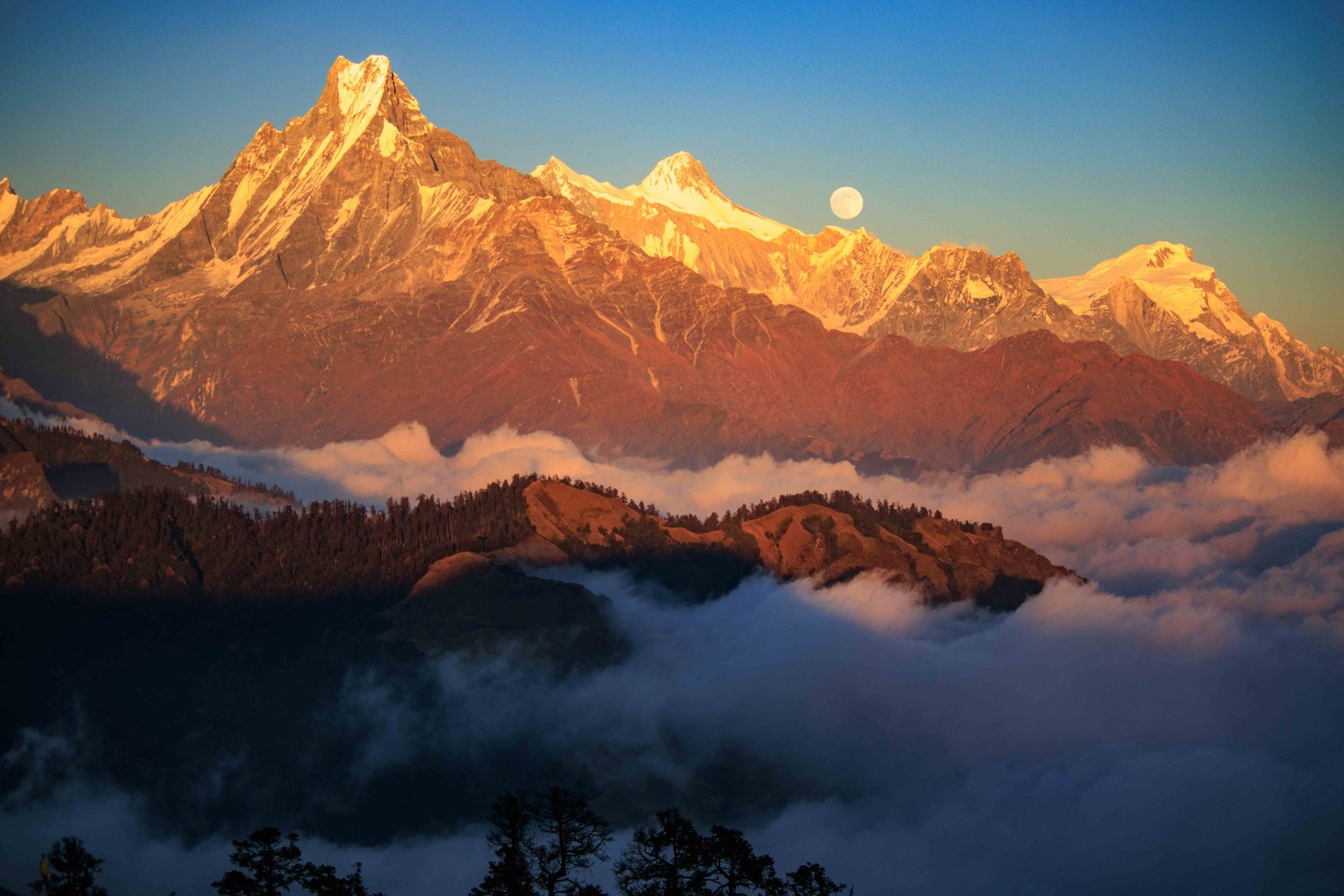
The early morning and late afternoon often offer rewarding opportunities to observe changing light on the mountains. During periods of clear weather, the peaks can appear especially distinct against the sky.
Ghorepani is also surrounded by extensive rhododendron and oak forests. During spring, rhododendrons add colour to the walking trails, while autumn is known for generally favourable conditions and clear mountain views.
The combination of forest scenery, mountain panoramas and a comfortable overnight stop makes Ghorepani a destination in its own right, even for visitors who do not want to focus exclusively on Poon Hill.
Getting thereHow to get to Ghorepani from Pokhara
There are two main approaches to Ghorepani: walking from the lower trailhead around Nayapul or driving higher up the mountain road towards Banthati and continuing on foot.
The best option depends on how much time you have, your preferred walking experience and the current condition of the roads.
1. Trek from Nayapul via Tikhedhunga and Ulleri
The traditional trekking approach begins with a drive from Pokhara towards Nayapul. From there, trekkers follow the trail through the lower settlements and climb towards Ghorepani. The route generally passes through the following places:
- Nayapul: The traditional access point for the lower trekking trail.
- Tikhedhunga: A recognised stopping point along the route, with accommodation and food facilities in the wider area.
- Ulleri: A hillside settlement known for its long stretches of stone steps and steep ascent.
- Banthati: A smaller stopping point further up the mountain, surrounded by forest.
- Ghorepani: The main trekking settlement, where visitors can stay overnight and explore the surrounding area.
This approach offers a longer walking experience through the foothills, forests and mountain settlements. However, the climb from the lower trail involves substantial uphill walking, particularly around Ulleri.
Road construction has altered sections of the traditional route. In places, vehicles can travel along roads that once required trekkers to walk on forest paths and stone steps. Depending on the exact section, this can mean walking beside traffic or sharing stretches of road with vehicles.
For visitors who value the journey as much as the destination, it is worth checking the latest trail and road conditions before departure.
2. Drive to Banthati and hike to Ghorepani
A shorter alternative is to arrange a vehicle from Pokhara towards Banthati and begin walking from there.
This approach avoids much of the long climb from Nayapul through Tikhedhunga and Ulleri. From Banthati, the trail continues uphill through forest towards Ghorepani.
The walking section typically takes around four hours, although the actual time depends on the starting point, pace, weather and trail conditions.
This is a practical option for travellers with limited time or those who want to reach Ghorepani without completing the full lower approach on foot. It is also how our 4 Days Poon Hill Trek begins.
However, the mountain road can be rough, and access may change with weather and road maintenance. It is important to confirm whether a vehicle can reach the intended starting point before travelling.
Have roads changed the Ghorepani trek?
Yes. Road construction has changed the character of parts of the traditional approach to Ghorepani.
Road access can make mountain destinations easier to reach and reduce the amount of time needed to travel between settlements. At the same time, it has affected the continuity of some walking trails and reduced the feeling of remoteness in places where trekkers previously walked through quieter forests and traditional paths.
For visitors who specifically want a journey dominated by natural footpaths, forest trails and village experiences rather than road sections, it is worth considering alternatives.
The Kokhe Danda Trek in Parbat District is one option for travellers seeking quieter trails, traditional Magar villages and a more peaceful walking experience away from the busiest trekking corridors.
Where to stayWhere to stay in Ghorepani
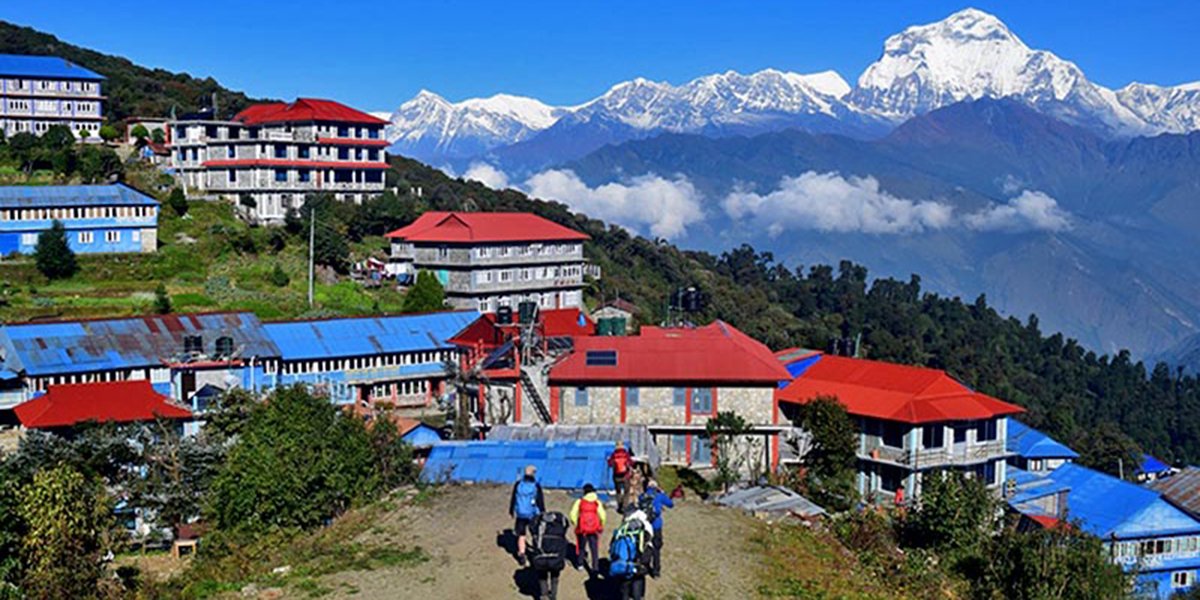
Ghorepani offers a wide selection of teahouses, guesthouses and trekking lodges. Accommodation is one of the main reasons the settlement developed into such an important overnight stop.
Most lodges are designed to accommodate trekkers who arrive in the afternoon, have dinner, sleep overnight and leave for Poon Hill or their next destination the following morning.
Teahouses and guesthouses
Teahouses are the most common type of accommodation in Ghorepani. Many provide private rooms with beds, blankets and shared or private bathroom facilities, depending on the property.
Facilities vary between lodges, so visitors should not assume that every room has an attached bathroom, continuous hot water or heating.
Most establishments offer meals, including traditional Nepali dal bhat, noodles, soups, rice dishes, eggs, potatoes and other common trekking foods. Hot drinks are widely available, making the dining areas useful places to relax after a day of walking.
During the main trekking seasons, accommodation can become busy. Booking ahead is sensible for travellers arriving in larger groups or visiting during particularly popular periods.
What is accommodation like in the low season?
Outside the main trekking seasons, Ghorepani becomes considerably quieter. Some lodges may close temporarily or operate with reduced services, and fewer staff may be present.
Visitors travelling during these months should confirm accommodation availability before setting out rather than assuming that every lodge will be open.
The quieter atmosphere can appeal to travellers who prefer fewer visitors, but weather conditions and reduced services need to be considered when planning a trip.
Should you book accommodation in advance?
Advance booking is particularly useful during October and November, when clear weather attracts many trekkers, and during the spring rhododendron season.
For independent travellers visiting at quieter times, it may be possible to arrange a room on arrival. However, availability depends on which establishments are operating.
If you have a particular room type or facility in mind, contact the lodge before travelling. Our guide on whether you need to book teahouses in advance in Nepal explains how to find teahouse numbers and book by phone or WhatsApp.
The viewpointPoon Hill sunrise: the famous viewpoint near Ghorepani
Poon Hill is the best-known attraction associated with Ghorepani. Located at approximately 3,210 metres, the viewpoint offers a wide panorama of the Annapurna and Dhaulagiri ranges.
Most visitors staying in Ghorepani walk uphill to Poon Hill early in the morning to watch the sunrise illuminate the Himalayan peaks. The viewpoint is particularly popular because it offers impressive scenery without requiring a multi-day journey to a high-altitude base camp.

The climb involves uphill walking, including stone steps, and typically takes around 45–60 minutes from the main settlement, depending on your starting point and pace. An entry fee may apply, so check the current arrangements locally.
During clear conditions, visitors may see Dhaulagiri, Annapurna South, Machhapuchhre and other surrounding peaks. The exact views depend on visibility and weather.
Poon Hill is popular, especially during the main trekking seasons, so visitors should expect other people at the viewpoint around sunrise.
Although the sunrise is a major reason to visit Ghorepani, the destination also offers forest walks, mountain views from the settlement and access to longer routes through the Annapurna region.
Planning a short visit to Ghorepani and Poon Hill?
The day-by-day itinerary, prices and inclusions are on our 4 Days Poon Hill Trek page.
See the 4 Days Poon Hill Trek →CultureMagar and Gurung culture around Ghorepani
Ghorepani is closely connected to the wider cultural landscape of the Annapurna foothills, where Magar and Gurung communities have long maintained villages, agricultural livelihoods and local traditions.
Many of the families who operate Ghorepani's teahouses have roots in Khibang, and the surrounding region includes settlements where visitors can experience everyday rural life.
The history of grazing land, temporary huts and traditional travel routes provides a glimpse into how people used the mountain landscape before tourism became a major source of income.
Today, trekking has created employment in accommodation, cooking, guiding, portering, transport and other services. Local families have adapted their businesses to welcome visitors while maintaining connections with their home villages.
Travellers interested in cultural experiences should remember that Ghorepani itself is primarily a tourism settlement. Those hoping to explore traditional village life more deeply may enjoy extending their journey into nearby communities rather than treating the area only as a place to sleep before sunrise.
Respectful travel includes asking permission before photographing people, supporting locally run businesses and recognising that the mountains are also people's homes and working landscapes.
Best timeBest time to visit Ghorepani
Ghorepani can be visited at different times of the year, but autumn and spring are generally the most popular seasons for trekking.
Autumn (October and November) is an excellent time to visit Ghorepani. Following the monsoon, skies are often clearer, mountain visibility is generally good and daytime conditions are suitable for walking. October and November are busy months, particularly around Poon Hill, so travellers should plan accommodation accordingly.
Spring (March to May) is another rewarding season. Rhododendron forests along the approach to Ghorepani can bloom in shades of red, pink and white, adding colour to the walking experience. March and April are especially popular for forest scenery, although temperatures and visibility can vary with weather conditions.
Winter (December to February) brings colder nights and mornings, and temperatures can fall below freezing. Snow and icy conditions are possible, particularly during or after winter weather systems. Ghorepani can be peaceful during this period, but visitors should check forecasts, confirm which lodges are open and carry suitable warm clothing.
Monsoon (June to September) brings rain, cloud, slippery paths and an increased risk of landslides along mountain roads and trails. Mountain views can be obscured for extended periods, and road access may be disrupted. Although the landscape becomes lush and green, this season requires more careful planning.
Overall, October–November and March–April are strong choices for most visitors, especially those prioritising mountain views and comfortable trekking conditions.
Quieter optionsQuieter alternatives to Ghorepani
Ghorepani is an excellent introduction to trekking in the Annapurna region, but its popularity means the main trails and lodges can become crowded during peak periods. Travellers who want a quieter experience may want to explore less-frequented routes in the wider region.
Khopra Ridge
Khopra Ridge offers a different perspective on the Annapurna region, with expansive views of Dhaulagiri and Annapurna South from a high mountain ridgeline.
The route combines forest trails, mountain scenery and community lodges, making it an appealing alternative for trekkers who want more time away from the busiest trekking corridors.
The Khopra Ridge Trek by Discover Parbat is an eight-day journey that also includes Poon Hill and continues towards Kokhe Danda and traditional villages in Parbat District. If you are weighing it against a bigger trek, see our comparison of Khopra Ridge vs Annapurna Base Camp.
Kokhe Danda
Kokhe Danda is a quieter viewpoint in Parbat District, reaching approximately 3,310 metres above sea level. It offers panoramic mountain scenery and access to forested ridgelines and Magar villages.
Unlike the established trekking hub of Ghorepani, the surrounding area offers a more village-focused experience, with local homestays and quieter walking routes.
For travellers who value natural footpaths, traditional settlements and fewer crowds, the Kokhe Danda Trek is worth considering. Its trails provide a different kind of Himalayan experience, away from the busier sections of the Annapurna trekking network. We compare the two viewpoints in Kokhe Danda as an alternative to Poon Hill.
Practical tipsPractical tips for visiting Ghorepani
A little preparation can make your visit more comfortable, particularly if you are travelling during the busy season or approaching from the lower trail.
- Allow time for the climb: The traditional route from Nayapul includes a substantial ascent, especially around Ulleri. Choose your starting point according to your available time and fitness.
- Check road conditions: Road access towards Banthati can vary. Confirm the latest conditions and vehicle access before leaving Pokhara.
- Bring warm clothing: Ghorepani is nearly 2,900 metres above sea level, and temperatures can drop considerably at night.
- Carry rain protection: Weather can change quickly in the mountains, including during the main trekking seasons.
- Book ahead during peak months: October, November and the spring rhododendron season can be busy.
- Prepare for the Poon Hill walk: A headlamp, suitable footwear and warm layers are useful for an early-morning ascent.
- Carry some cash: Do not assume that every lodge or small business accepts card payments.
- Respect local communities: Support locally operated accommodation, follow trail etiquette and ask before photographing residents.
- Check current conditions: Rain, landslides, snow and road repairs can affect access, so seek local advice before departure.
Is Ghorepani worth visiting?
Ghorepani is worth visiting for its combination of Himalayan scenery, accessible mountain walking, forest landscapes and historical significance.
Its story stretches from a traditional resting point for horses and travellers to a grazing area used by local herders, then to a settlement of simple shelters and eventually a busy trekking destination.
Poon Hill has brought international recognition, but Ghorepani's identity also comes from the local families who established its teahouses and continue to welcome visitors.
The settlement has changed considerably as roads and tourism have expanded. Some sections of the traditional walking route have lost part of their former quiet character, but the destination remains a convenient base for exploring the surrounding mountains.
For first-time visitors to Nepal's Annapurna region, Ghorepani provides an accessible introduction to Himalayan trekking. For those seeking a less crowded experience, nearby routes such as Khopra Ridge and Kokhe Danda offer opportunities to explore quieter trails and traditional village life.
Whether you visit for Poon Hill, the surrounding forests or the history of the old mountain routes, Ghorepani is more than a stop on a trekking itinerary. It is a place where Nepal's older patterns of travel and rural life meet the modern trekking industry.
FAQFrequently asked questions about Ghorepani
Where is Ghorepani located?
Ghorepani is located in Myagdi District, Gandaki Province, Nepal, in the Annapurna region. It is a popular overnight stop for trekkers visiting Poon Hill.
What is the altitude of Ghorepani?
Ghorepani sits at approximately 2,860 metres (9,383 feet) above sea level. Elevations may vary slightly depending on the specific location within the settlement.
Why is Ghorepani called Ghorepani?
The name is commonly associated with the Nepali words ghoda, meaning horse, and pani, meaning water. The place is locally referred to as Ghode Pani in connection with its historical role as a resting point where horses could drink water.
Is Ghorepani a village or a trekking settlement?
Ghorepani is commonly called a village, but much of the settlement today consists of teahouses, lodges and restaurants serving trekkers. Many of the families operating these businesses have roots in Khibang and nearby communities.
How do I get to Ghorepani from Pokhara?
You can drive from Pokhara to Nayapul and trek via Tikhedhunga, Ulleri and Banthati. Alternatively, you can arrange transport towards Banthati and hike the remaining trail to Ghorepani, subject to road conditions.
Can I drive directly to Ghorepani?
Road access has expanded in the surrounding region, but conditions and vehicle access can vary. Many visitors drive to Banthati and continue on foot. Confirm the current road situation locally rather than assuming vehicles can reach Ghorepani itself.
Where should I stay in Ghorepani?
Ghorepani has numerous teahouses and guesthouses offering rooms and meals. Facilities vary, so confirm bathroom arrangements, hot water and room availability before arrival, especially during peak trekking seasons.
What is the best time to visit Ghorepani?
October and November generally offer favourable autumn trekking conditions, while March and April are popular for rhododendron blooms and spring scenery. Winter is colder, and monsoon conditions can bring rain, cloud and travel disruption.
Is Ghorepani only worth visiting for Poon Hill?
No. Ghorepani also offers mountain views, forest walks, insight into the region's traditional travel history and access to longer trekking routes. Visitors seeking quieter alternatives can explore Khopra Ridge and Kokhe Danda.
Is Ghorepani suitable for beginner trekkers?
The route can suit beginners who are comfortable with sustained uphill walking and have enough time to adjust to the altitude. The traditional approach includes steep stone steps, particularly around Ulleri. Starting from Banthati reduces the amount of walking required, but the remaining trail still climbs to nearly 2,900 metres.
What is the difference between Ghorepani and Poon Hill?
Ghorepani is the overnight settlement, while Poon Hill is a nearby mountain viewpoint at approximately 3,210 metres. Most visitors stay in Ghorepani and walk to Poon Hill for the panoramic mountain views.
Are there quieter trekking options near Ghorepani?
Yes. Khopra Ridge and Kokhe Danda are alternatives for travellers looking for mountain views and quieter walking experiences. Kokhe Danda also offers access to traditional Magar villages and homestays in Parbat District.