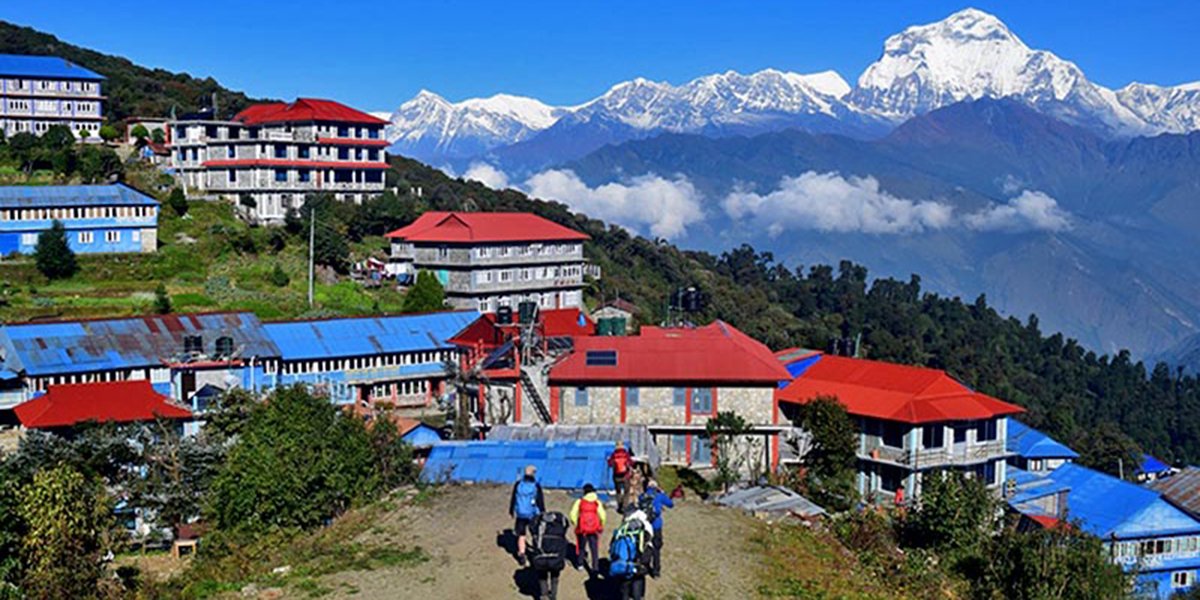
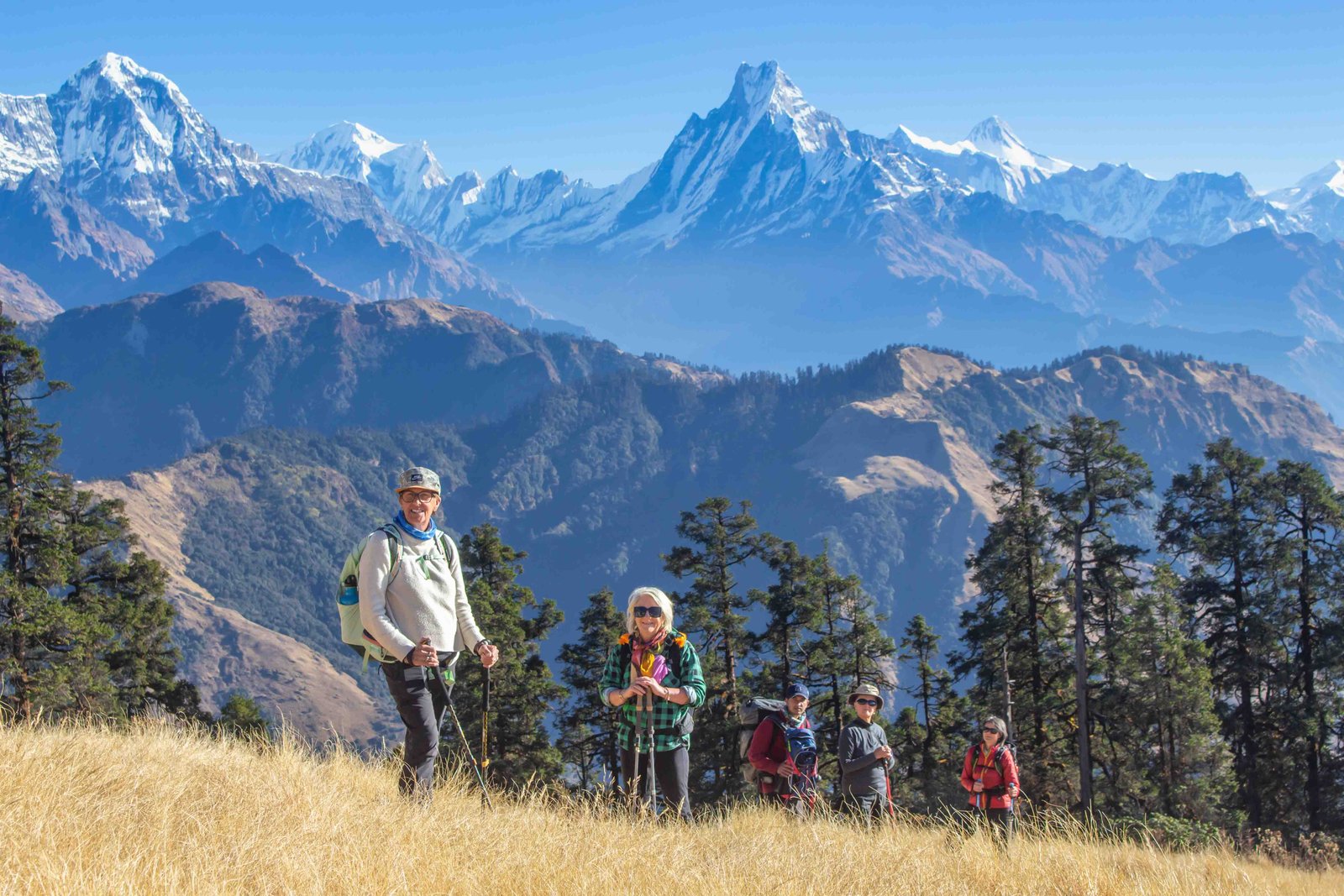
If you have been reading about the Mohare Danda trek, you have probably found a good short trek from Pokhara: a high ridge, a big sweep of Himalaya, community lodges and no permit. All of that is true. What most guides don't tell you is that its neighbour across the ridge offers the same mountains on a much quieter trail.
Mohare Danda sits at about 3,313 m in Myagdi District. Kokhe Danda is 3,309 m, in Parbat District, and the two high points are only about a 30-minute walk apart. So this isn't really a comparison of viewpoints. From the top, you are looking at the same Himalaya. It is a comparison of trails: the villages you pass through, the people you stay with, how many other trekkers you meet, and how the walk feels from the first day to the last.
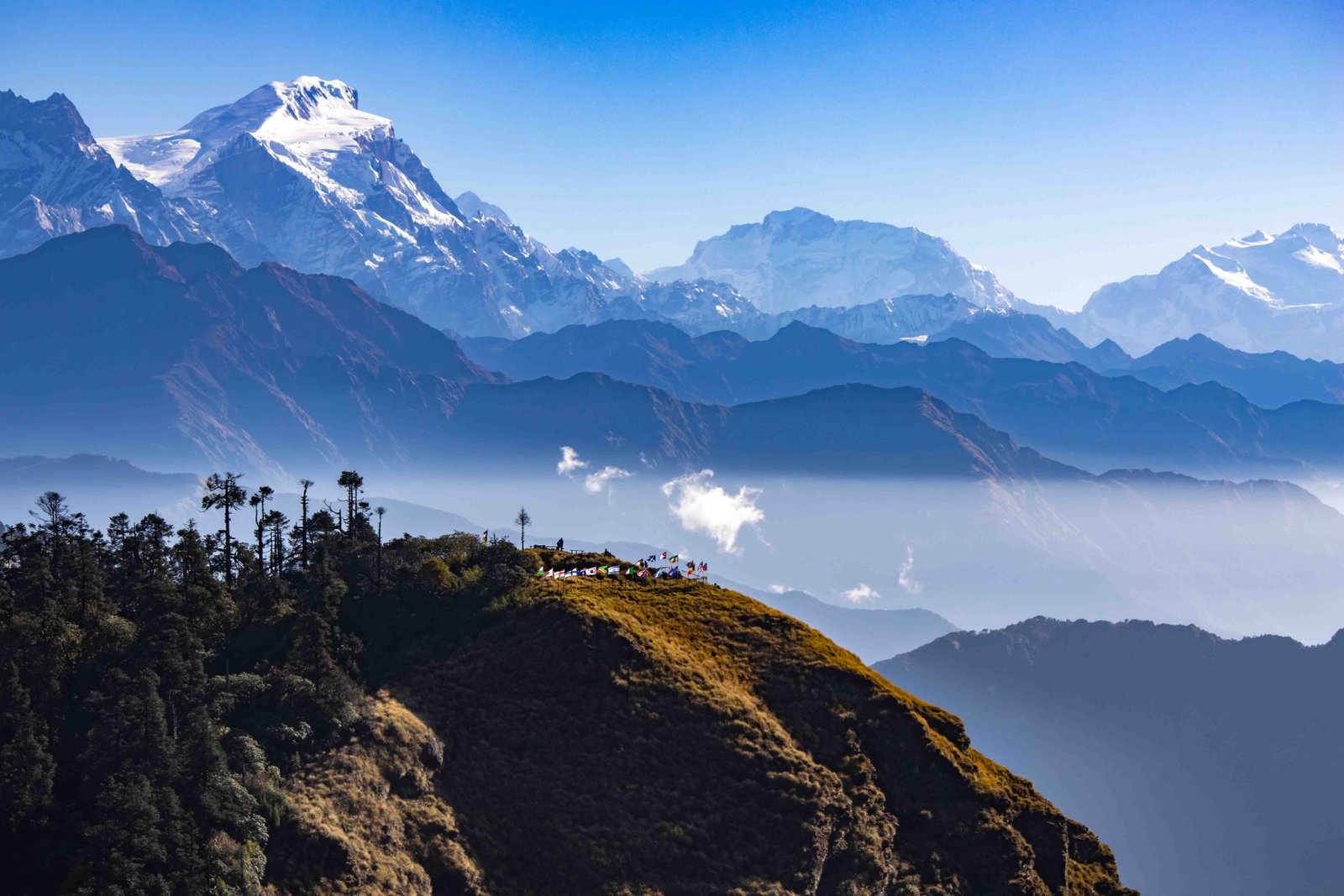
We are a trekking team from Parbat, and we opened the trail to Kokhe Danda ourselves, so we are not neutral, and we won't pretend to be. But we know both ridges well, and Mohare Danda is a good trek. Here is an honest look at both, so you can choose the one that fits you. If you already know you want the quieter side, everything about the route, days and prices is on our Kokhe Danda Trek page.
Side by sideMohare Danda and Kokhe Danda at a glance
| Mohare Danda | Kokhe Danda | |
|---|---|---|
| Highest point | About 3,313 m | 3,309 m |
| District | Myagdi | Parbat |
| Usual length | 5 days from Pokhara | 5 days from Pokhara |
| Permits | None for the usual 5-day route | None for the usual 5-day route |
| Mountain views | Dhaulagiri, Annapurna range, Machhapuchhre | The same, plus a sunset behind Ghumte hill |
| Trail since | Established community trail since the 2010s | New trail, opened by our team |
| Crowds | Quiet, but more trekkers than Kokhe | Very quiet |
| Where you sleep | Community homestays and community lodges | Family homestays and one private teahouse |
| Best for | A Poon Hill alternative on an established network | Silent trails and real family homestays |
From the topThe views: the same mountains, a different sunset
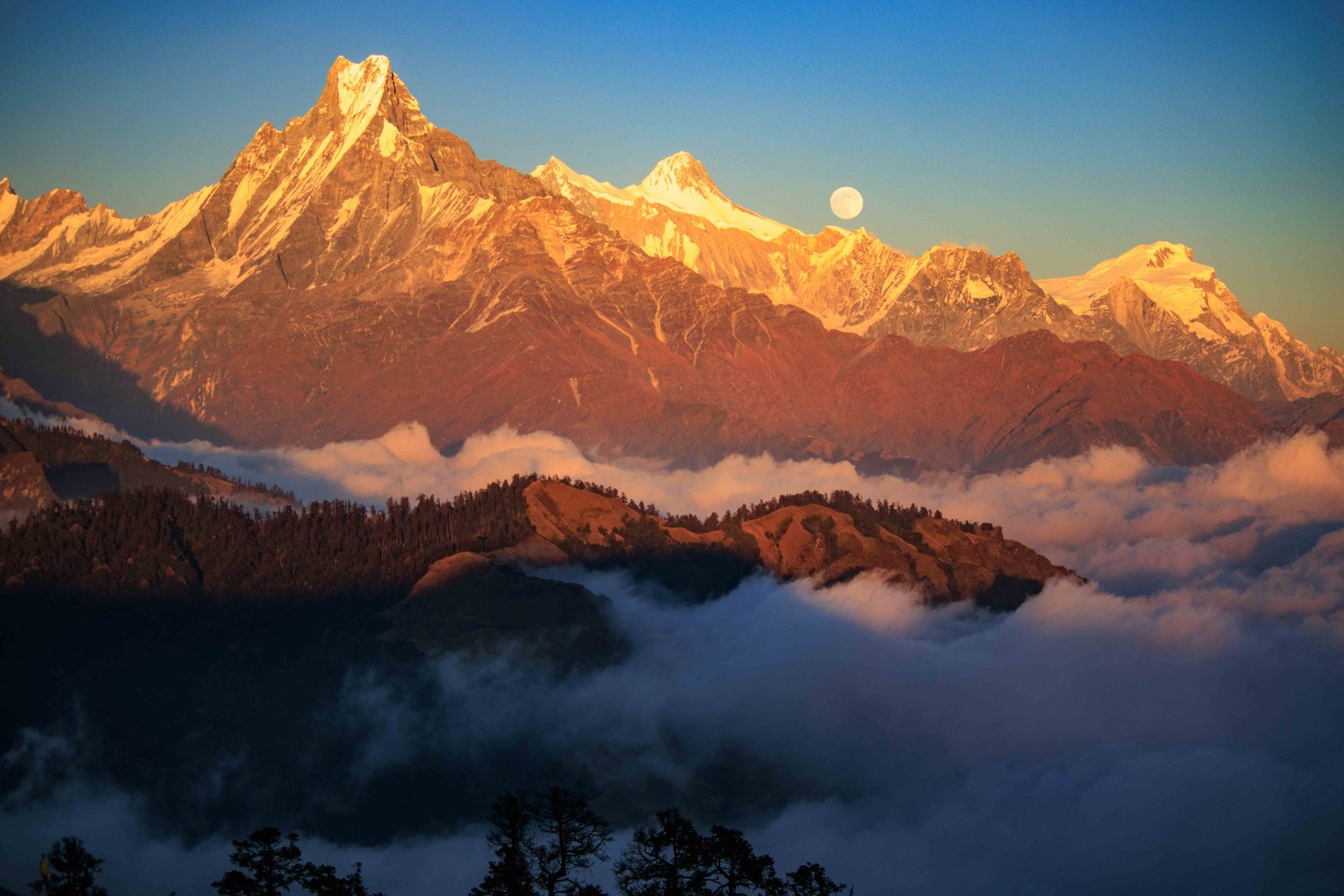
Because the two high points are so close, the view of the mountains is effectively the same. From either ridge you see Dhaulagiri rising to the west and the Annapurna range stretching east to the fishtail of Machhapuchhre, with the deep valleys of Myagdi and Parbat falling away below. Anyone who tells you one ridge has a dramatically better mountain view than the other is selling something.
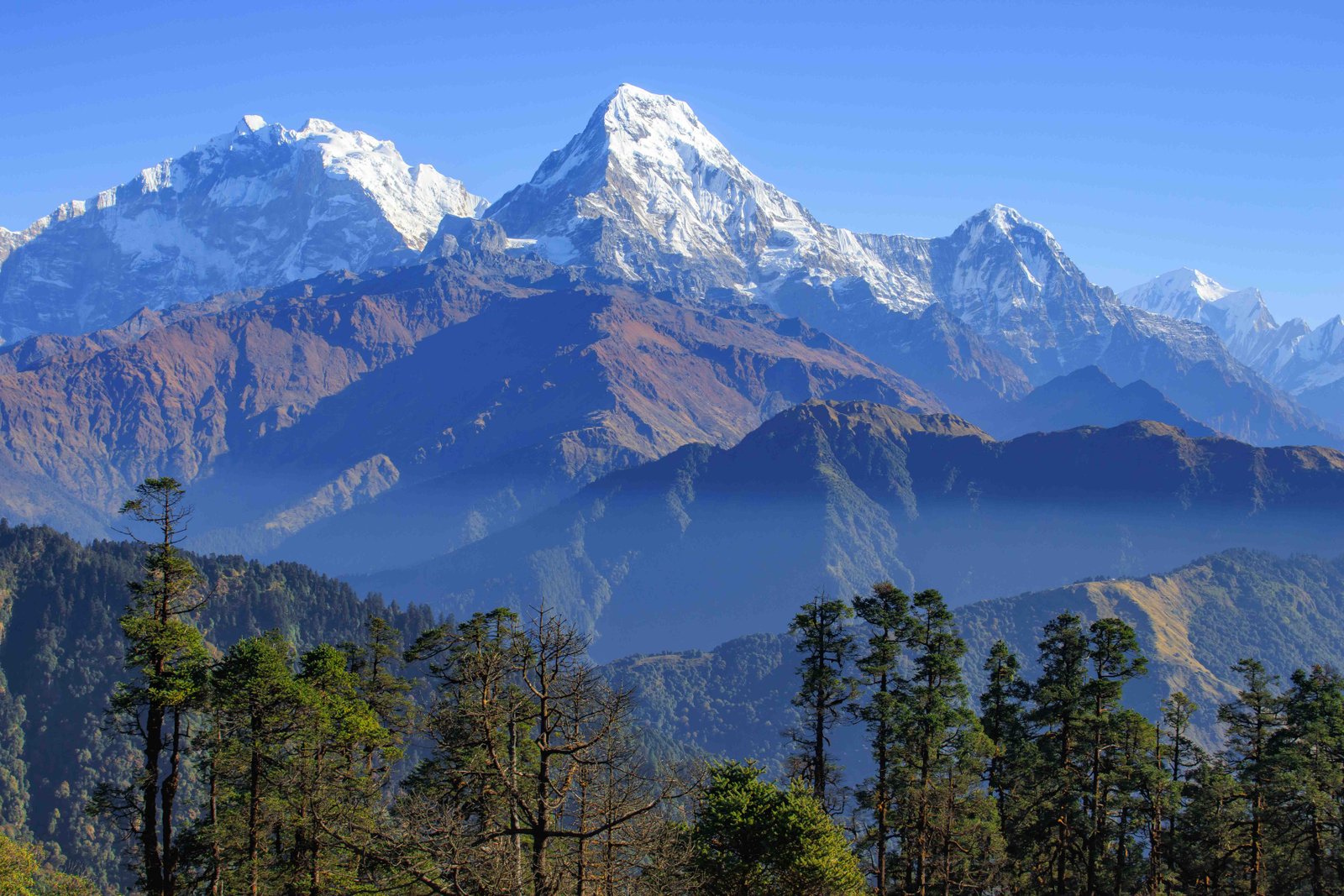
Where Kokhe Danda wins is the evening. From the top of Kokhe, the sun goes down behind Ghumte hill, turning deep red as it drops, while the snow peaks on the other side catch the last light. It is the moment our guests talk about most, and it is the main reason we like being on Kokhe at the end of the day rather than on Mohare.
Who else is thereCrowds and development
Neither ridge is busy in the way Poon Hill is. If your main worry is queuing at a viewpoint at dawn, both will feel like a relief.
The difference is age. Mohare Danda has been a community trekking route since the 2010s, promoted by Mahabir Pun of Nangi, the man who brought wireless internet to these hills, and it has been written about and recommended for more than a decade. That has brought a steady stream of trekkers, and the trail and lodges are set up to receive them. It is still a quiet trek, but you will usually share it with a few other groups.
The Kokhe Danda trail is new. Our team found the route in 2020, and it is only now beginning to appear in trekkers' plans. Most days, the forest trails between Haljure, Lespar and the ridge are completely silent apart from birds, cowbells and the people who live there. For many of our guests, that silence is the point.
The peopleVillage life: shared dining halls or family kitchens
This is where the two trails feel most different, and it is the part that matters most to us.
On the Mohare route, the community homestays are well organised. Guests sleep in different village homes but come together to eat in a shared dining hall. It works well, it's fair to the families involved, and it is a good way to support the villages. But it is a different experience from staying in a home: you meet the community, but you don't sit in a family's kitchen while dinner is cooked over the fire.
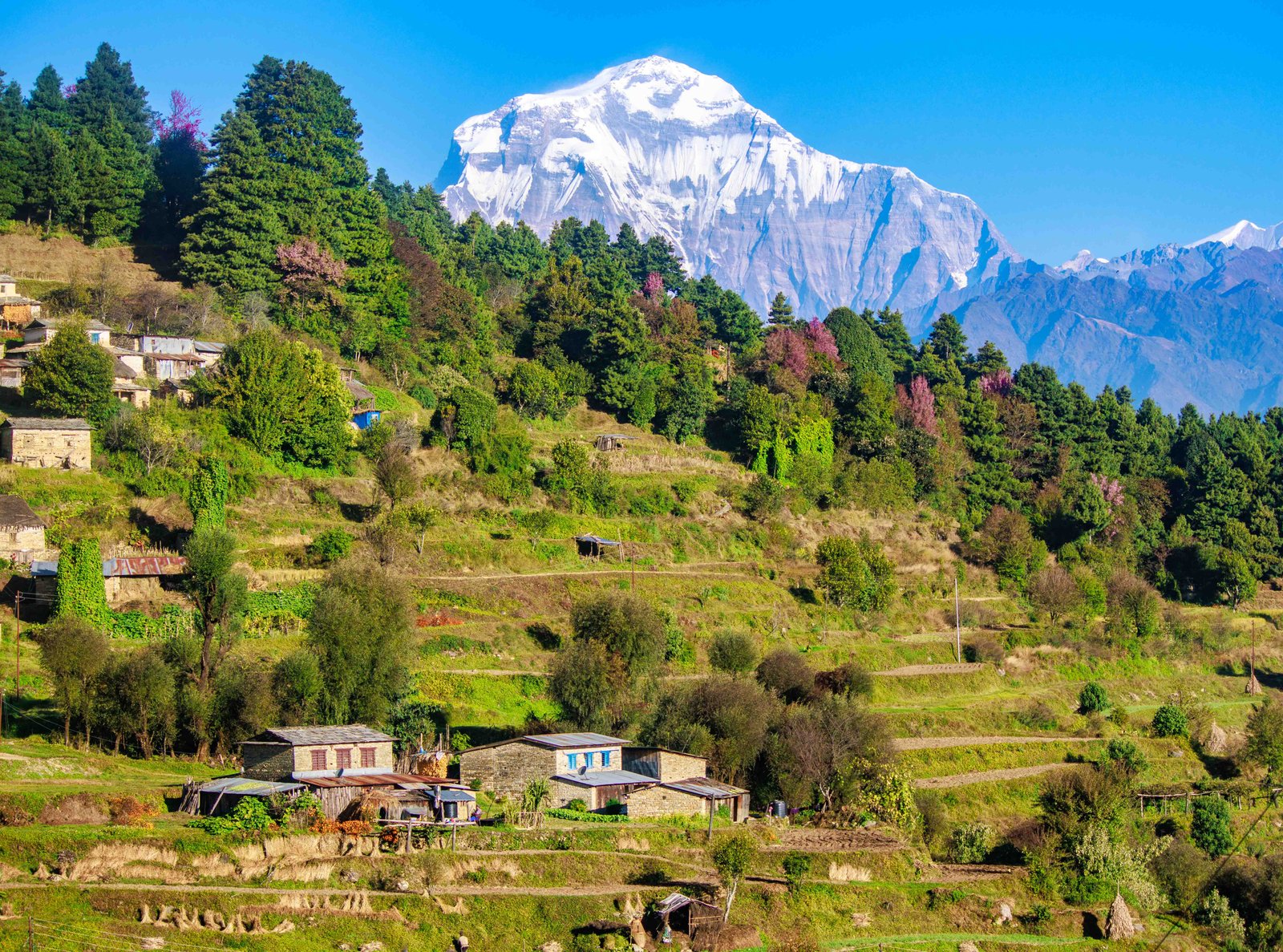
On the Kokhe side, the homestays are still genuinely family homestays. In Haljure, Lespar, Sarga and Phalame Danda, you stay with a family, eat what they eat, and spend the evening in their home. Lespar is a Magar village, and walking through it you see Magar farming life as it is lived, not staged for visitors. These villages are not commercialised yet. Nobody built a business around trekkers here; families simply open their homes. That won't last forever, which is one reason to go now.
ComfortWhere you stay on each trail
On the Mohare Danda trek
The usual route has a community homestay at Banskharka, community lodges at Nangi and on Mohare Danda itself, and a community homestay at Tikot on the way down. The lodge on top of Mohare is a big community lodge, run by staff on behalf of the community. It is reliable and well used to trekkers, and it gives you a bed right on the ridge for sunrise.
On the Kokhe Danda trail
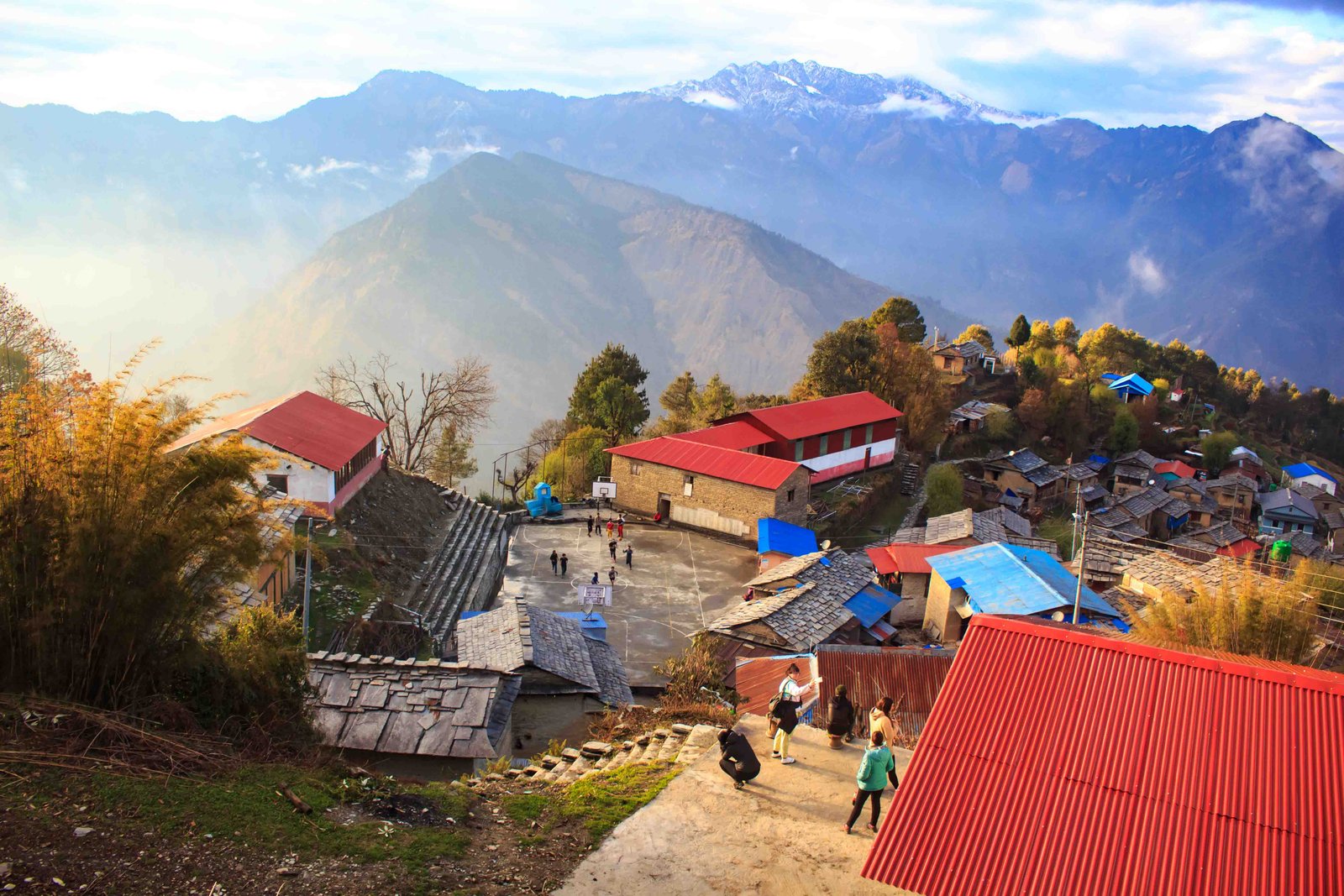
Most nights are in the family homestays above. Near the ridge there is a private teahouse, which we think is better run than a typical community lodge, simply because the people running it own it and care about every guest. And because Discover Parbat is run by its founders, who walk these trails themselves, you get much more first-hand information before and during your trek: which family you are staying with, what the trail is like this week, and what the weather is doing on the ridge.
Neither trail is luxurious. Both have simple rooms, warm blankets and Nepali home cooking. If you want hot showers and menus every night, a teahouse route like Poon Hill is easier. If you want to feel a village rather than pass through one, the simplicity is part of it.
Getting thereDays, difficulty and access
Both treks fit comfortably into five days from Pokhara, and both are moderate: steady climbs through forest and terraces, no technical sections, and no real altitude problem at around 3,300 m. Neither needs a permit on the usual five-day route.
The usual Mohare Danda route starts with a drive from Pokhara to Beni and on to Galeshwor, then climbs through Banskharka and Nangi to the ridge, coming down through Tikot. Many people also join it to Poon Hill or Khopra, which is one of its strengths.
The Kokhe Danda trail starts closer to home. On our five-day trek we leave Pokhara at around 8:30 in the morning and spend the afternoon exploring Kushma, the district town of Parbat, with its suspension bridges over the Kali Gandaki gorge. Then it's an hour's drive to Banau and a gentle hour and a half on foot up to Haljure for the first homestay night. There is also jeep access at Haljure, Lespar and Phalame Danda, which makes the trail unusually flexible for families and anyone who wants a shorter walking day. The full day-by-day plan is on the Kokhe Danda Trek page.
Guides: a guide is not enforced on either route; that rule is applied in restricted areas. We still recommend one. Both trails run through quiet forest where paths divide, and on both, a local guide turns a village stay from a bed for the night into a real conversation. You can talk to our guides about either ridge.
Your callWhich should you choose?
Choose Mohare Danda if…
- You want a Poon Hill alternative on an established trail with a proven lodge network.
- You like the idea of a community-run route promoted by Mahabir Pun.
- You plan to link your trek to Poon Hill or Khopra.
- You are happy to share the trail and dining hall with a few other groups.
Choose Kokhe Danda if…
- You want trails that are still silent, often with no other trekkers all day.
- You want to stay inside family homes in Haljure, Lespar, Sarga and Phalame Danda, not just in the village.
- You want to see Magar village life in Lespar before it changes.
- You want that red sunset behind Ghumte hill from the ridge.
- You are trekking with children or want jeep options along the way.
Prefer Mohare Danda? That's fine with us. Our guides know that side of the ridge too, so if the Mohare Danda trek suits you better, you can enquire about it with our team or message us on WhatsApp, and we'll plan it with you.
Our honest takeThe verdict
Mohare Danda is still a lovely trek, and if you are looking for a Poon Hill alternative, it is a good one. We would never tell anyone they made a mistake going there, and if it is the one you want, our team can arrange it for you.
But if you are choosing between the two, we think Kokhe Danda is slightly better, for one simple reason: it is new. The views are the same, the height is the same, and the effort is the same. What is different is that the Kokhe side hasn't been commercialised. There are no business-oriented homestays, the trails are quiet, and the families you stay with are still just families. That is the kind of trek that gets harder to find in Nepal every year.
See the full Kokhe Danda Trek
Day-by-day route, homestays, prices and best season, from the team who opened the trail.
Kokhe Danda Trek →FAQFrequently asked questions
How high is Mohare Danda?
Mohare Danda is about 3,313 m, in Myagdi District. Kokhe Danda, just across the ridge in Parbat District, is 3,309 m. The two high points are only about a 30-minute walk apart, so the height is effectively the same.
Do I need a permit for the Mohare Danda trek?
No permit is needed for the usual five-day Mohare Danda route, and none is needed for the five-day Kokhe Danda route either. Permits only come in if you extend towards Poon Hill, Ghorepani or Khopra.
Is a guide mandatory for Mohare Danda or Kokhe Danda?
A guide is not enforced on either route; that rule is applied in restricted areas. A local guide is still recommended, because both trails pass through quiet forest and villages where a guide makes the walk safer and the village stays far richer.
Is Mohare Danda crowded?
No. Both Mohare Danda and Kokhe Danda are far quieter than Poon Hill. Mohare has been an established community trail since the 2010s, so it sees more trekkers than Kokhe Danda, where the trails are still very silent.
Where do you stay on the Mohare Danda trek?
On the usual route there is a community homestay at Banskharka, community lodges at Nangi and on Mohare Danda itself, and a community homestay at Tikot. In the community homestays guests sleep in different homes but eat together in a shared dining hall, rather than with the family.
Are the views better from Mohare Danda or Kokhe Danda?
The mountain views are the same: Dhaulagiri, the Annapurna range and Machhapuchhre. The difference is the sunset. From Kokhe Danda you watch a red sun go down behind Ghumte hill, which we think is the better evening view.
Which is better for a short trek from Pokhara, Mohare Danda or Kokhe Danda?
Both work as five-day treks. Mohare Danda is a good Poon Hill alternative with an established community lodge network. Kokhe Danda suits people who want quieter trails and real family homestays in Haljure, Lespar, Sarga and Phalame Danda that are not yet commercialised.
Can Discover Parbat arrange the Mohare Danda trek?
Yes. Although we recommend Kokhe Danda, our guides know the Mohare side too. If the Mohare Danda trek suits you better, enquire with our team by email or WhatsApp and we will plan it with you.