Altitude sickness is the most common reason treks in Nepal end early, and it is also one of the most preventable. You cannot train your way out of it, and you cannot be "too tough" for it. What protects you is slowing down, listening to your body and being willing to turn around.
I have been guiding in Nepal for four years. My highest point so far is Thorong La on the Annapurna Circuit, at 5,416 metres, and most of my work is on the ridges above Pokhara and in our home district of Parbat. In that time I have seen trekkers do everything right and still feel the altitude, and I have seen people push on with a headache because they had a flight to catch.
This guide is the advice I actually give our guests, checked against the medical guidelines used by high-altitude doctors. It covers what altitude sickness is, the warning signs of its dangerous forms, how to avoid it, what to think about Diamox, and the myths that put people at risk, including the one I hear most often from fellow Nepalis.
The basicsWhat is altitude sickness (AMS)?
As you climb, the air holds less oxygen with every breath. Your body can adapt to this, by breathing faster and making changes in your blood, but it needs time. Altitude sickness happens when you go up faster than your body can adjust.
Doctors group altitude illness into three conditions. Acute mountain sickness (AMS) is the common, milder form. High altitude cerebral edema (HACE) is swelling of the brain and is usually the severe end of AMS. High altitude pulmonary edema (HAPE) is fluid building up in the lungs; it can appear with or without AMS.
AMS symptoms usually begin six to twelve hours after you arrive at a new altitude and normally ease within one to two days if you stop climbing. A small share of cases progress to HACE. HAPE tends to appear a little later, typically one to five days after reaching altitude, and it is the most common cause of death from altitude illness.
The key point for trekkers is that your sleeping altitude matters more than the highest point you touch. Walking up to a viewpoint and sleeping lower is far safer than sleeping at that height.
Warning signsSymptoms of AMS, HAPE and HACE
Learn these before you start walking. On the trail, tiredness, cold and a bad night's sleep can all feel similar, so the safest habit is to treat any headache above 2,500 metres as altitude sickness until proven otherwise.
| Condition | Main symptoms | What to do |
|---|---|---|
| AMS (mild) | Headache plus one or more of: nausea, loss of appetite, unusual tiredness, dizziness, poor sleep | Stop climbing. Rest at the same altitude until symptoms are fully gone. Descend if they get worse. |
| HAPE (lungs) | Early: unusually breathless on normal walking, a sudden drop in walking performance, chest tightness or congestion, a dry cough that won't go away. Later: breathless even when resting, cough bringing up frothy or pink sputum, fast heartbeat, extreme weakness, blue lips or fingertips | Emergency. Descend immediately and get medical help. |
| HACE (brain) | Confusion, strange behaviour, loss of balance or stumbling like a drunk person, severe headache not helped by painkillers, drowsiness | Emergency. Descend immediately, never alone, and get medical help. |
A warning sign to check for HACE: ask the person to walk heel-to-toe in a straight line, as if on a tightrope. If they cannot do it, stagger or need to hold on, treat it as a possible HACE emergency and start descending, even at night. Passing the test does not rule HACE out, so act on confusion, drowsiness or odd behaviour too. Someone with HACE is often the last person to realise they are ill.
Who is at riskWho gets altitude sickness? Everyone can
There is no reliable way to know in advance who will get altitude sickness. Fitness offers almost no protection, and very fit people are often at more risk because they walk fast and climb too much in a day. Age, strength and previous treks are no guarantee either. The best predictor is having had altitude sickness before, but not getting it on one trip does not mean you will not get it on the next.
The biggest myth among Nepali trekkers
This is something I want to say clearly to my fellow Nepalis: growing up in the hills does not protect you at high altitude. Living at 1,000 or 1,500 metres is very different from sleeping at 4,000.
The domestic trekkers I see on the trail are often short on time. They squeeze a long trek into a holiday, walk extra kilometres and gain far more height each day than is safe, believing AMS is something that only happens to foreigners. The pattern is the same with jeeps: roads now reach high places like Manang and Muktinath, and people drive straight up to 3,500 metres or more without walking in gradually.
The numbers show the result. According to the Annapurna Conservation Area Project (ACAP), 25 people died of altitude sickness in the Annapurna region in fiscal year 2025/26, up from 19 the year before and 21 the year before that. Twelve of the 25 were Nepali, including four guides and porters, and nine were Indian. Most deaths happened in Mustang (15) and Manang (8), the districts where roads let people reach high altitude in a single day.
Lodge owners at Annapurna Base Camp have told reporters the same story: many Nepali trekkers arrive with no preparation, sometimes without even a water bottle, and climb two or three thousand metres in one go. Even Nepali guides and porters, who work at altitude every season, are among those who die. Altitude does not care where you were born.
PreventionHow to avoid altitude sickness on a Nepal trek
Everything below comes down to one idea: give your body time. These are the rules we follow on every trek.
1. Go up slowly
Above 3,000 metres, aim to raise your sleeping altitude by no more than 300 to 500 metres a day. The Himalayan Rescue Association (HRA), which runs the aid posts at Manang and Pheriche, recommends about 300 metres a day above 3,000 metres. On longer high treks, plan a rest or acclimatisation day every three to four days. If an itinerary squeezes eight days into five, that is a warning sign, not a bargain.
2. Climb high, sleep low
Short hikes to a higher point in the afternoon, then sleeping lower, help your body adjust. On rest days, light activity such as a short walk above the village is better than lying in bed all day.
3. Walk slower than feels necessary
Above 4,000 metres especially, keep a pace at which you can still talk comfortably. Do not try to keep up with porters or with the fastest person in the group. They are not the ones you need to compare yourself to.
4. Never go higher with symptoms
This is the rule the HRA repeats to every trekker: if you have mild symptoms, do not climb higher; if they get worse, go down. Most altitude deaths happen to people who kept ascending while already sick.
5. Drink enough water
At altitude you lose a lot of water through fast breathing in dry air, and dehydration feels very similar to AMS. Drink regularly throughout the day rather than in large amounts at once. On a full walking day many of our guests end up drinking around 3 to 4 litres, but needs vary with your body size, the weather and how hard you are walking, and forcing down excessive amounts of water can be harmful too. A good check is the colour of your urine: pale is good, dark means drink more. To be honest, water alone does not prevent altitude sickness. It helps you feel better and stops dehydration confusing the picture, but it is no substitute for a slow ascent.
6. Eat well, even without appetite
Loss of appetite is common at altitude. Keep eating regular, carbohydrate-rich meals: dal bhat, potatoes, noodles, porridge and soups give you the energy your body needs to acclimatise.
7. Skip alcohol and sleeping pills
Alcohol dehydrates you and can hide early symptoms. Sedative sleeping pills slow your breathing at night, exactly when your body needs to breathe deeply. Avoid both above 3,000 metres. Smoking also reduces how well your lungs take in oxygen.
8. Tell your guide the truth
Hiding a headache so you don't slow the group is one of the most dangerous things you can do. A good guide will never be annoyed by honesty. Saying "I feel a bit off" early is what lets us fix the problem with a rest day instead of an evacuation.
Myth vs factCommon altitude sickness myths
"I'm fit, so I'll be fine"
False. Fitness makes the walking easier, but it does not speed up acclimatisation. It often makes people climb faster than they should.
"Garlic soup prevents altitude sickness"
Garlic soup is on almost every teahouse menu in Nepal, and we suggest it to our guests too. Many trekkers find it warming and say it helps them feel better, and it is a good way to get fluids and salt. But there is no scientific proof that garlic prevents altitude sickness. Enjoy it as part of a good routine, never instead of going slowly.
"Avoid tea and coffee because they dehydrate you"
This is advice you will hear on many trails. The research tells a different story: studies of tea drinkers at Everest Base Camp found their hydration was the same as people avoiding caffeine, and high-altitude doctors now say moderate amounts are fine. In fact, if you drink coffee every day at home, stopping suddenly on the trek can give you a withdrawal headache that feels exactly like AMS. Our advice: keep to your usual amount, don't drink it late in the day so you can sleep, and never let tea replace water.
"Diamox masks the symptoms"
Not really. Diamox works by speeding up your body's own acclimatisation process, so it isn't simply hiding symptoms. But feeling well on it does not guarantee you have acclimatised enough to keep climbing. It does not make a fast ascent safe, and any symptoms still mean stop.
"Altitude sickness only happens on big treks"
The risk is highest on routes like the Annapurna Circuit and Everest Base Camp, but AMS can affect people on moderate treks too, especially if they arrive quickly by jeep or climb a lot in one day. Any trek where you sleep above 3,000 metres deserves respect.
MedicationShould you take Diamox for a Nepal trek?
Diamox (acetazolamide) is the most commonly used medicine for speeding up acclimatisation and preventing acute mountain sickness, and many trekkers on higher routes use it. Other medicines are sometimes prescribed in specific situations, but they work differently, and none of them replace a gradual ascent.
As guides, we do not prescribe or recommend medicines ourselves. We are not doctors, and every person's health is different. What we ask every guest heading to higher altitudes is to speak to their doctor before the trip, get advice on whether Diamox suits them and carry their own supply along with basic medicines for headaches and stomach problems.
For your doctor's conversation, it helps to know what the Wilderness Medical Society guidelines say. The usual preventive adult dose is 125 mg twice a day, started the day before you ascend to altitude. Higher doses are used for treatment, and only on medical advice. People with a sulfa allergy should take extra care. Common side effects include tingling in the fingers and toes, needing to urinate more often and fizzy drinks tasting flat. Many doctors suggest a short trial at home before you travel.
If you do take Diamox, drink plenty of water, and remember that it supports acclimatisation; it does not replace it. You still need to ascend slowly and stop if you feel unwell.
Real experienceWhat we check every day on the trail
Licensed trekking guide training in Nepal includes basic first aid and how to recognise AMS, HAPE and HACE. Here is how that turns into daily habits on our treks.
- Every morning: we ask each guest how they slept and whether they have a headache, nausea or any loss of appetite. Poor sleep and a morning headache are often the first signs.
- Oxygen levels: we carry a pulse oximeter and check blood oxygen at higher elevations. The reading is supporting information only. It cannot diagnose altitude sickness or rule it out, so how a person feels and behaves always matters more. Everyone's reading drops as you climb, so we watch for someone who is much lower than the rest of the group or dropping over time.
- Walking pace: above 4,000 metres we watch how people walk. Someone suddenly much slower, stumbling or quiet is someone we stop and talk to.
- First-aid kit: our guides carry a basic kit for wounds and cuts, plus the oximeter. Guests carry their own medicines.
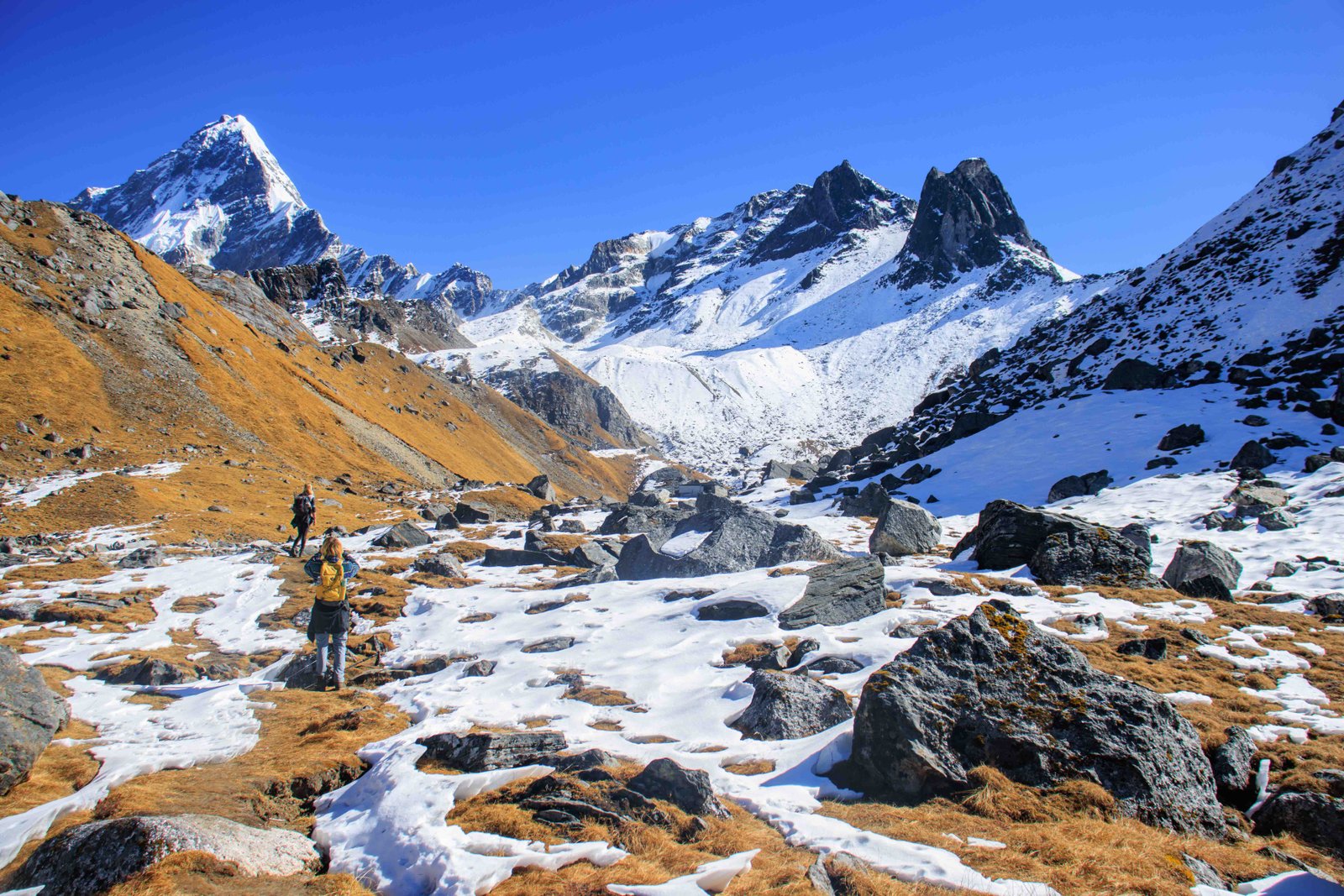
One of our guests, a trekker from the USA, was feeling completely fine on the evening we reached Khopra Ridge (3,667 m). We were planning to hike up to Khayer Lake the next day.
In the morning she woke up with a headache. Was it AMS or just a bad night's sleep? Honestly, we could not be sure. But it looked like AMS, and at altitude "not sure" is enough of a reason. We cancelled the Khayer Lake hike and walked down to Swanta instead. She took her own headache tablets that morning, and by evening at the lower altitude she felt fine again.
We continued the trek to Kokhe Danda and Kushma as planned, and she finished it happy and healthy. Missing one high side trip is a small price. That is the kind of decision I would make again every time.
Decision timeWhen to stop, and when to go down
Use this simple rule of thumb on any trek.
- Mild headache, otherwise OK: do not go higher today. Rest, drink, eat and see how you feel the next morning.
- Symptoms not improving after a rest day: go down. Do not wait another day hoping it passes.
- Symptoms getting worse: descend straight away, ideally 500 to 1,000 metres, until you feel better.
- Any sign of HAPE or HACE: this is a medical emergency. Start descending immediately, even at night, never alone, and call for urgent help at the same time. The person may need to be supported or carried down, given oxygen and evacuated by helicopter, so do not wait to see if it improves.
Going down almost always works. Symptoms often improve after descending only a few hundred metres, which is exactly what happened with our guest at Khopra. Turning back is not failure. The mountains will still be there next season.
If you are trekking on the Annapurna Circuit or in the Everest region, the HRA holds free altitude talks at its aid posts in Manang and Pheriche, and at its Kathmandu office, during the spring and autumn seasons. They are well worth attending.
Choosing a trekLower-risk treks near Pokhara
If you are worried about altitude, have limited time or are trekking with family, you do not have to go to 5,000 metres to see the Himalayas. These are the routes we run from Pokhara, from lowest to highest risk.
Panchase Trek: very low risk
Panchase peak, where Kaski, Parbat and Syangja districts meet, tops out at 2,517 metres. With sleeping altitudes lower still, it is generally a very low-risk trek for altitude sickness, which makes our 3-day Panchase Trek a good first trek, with Gurung homestays and a sunrise view over the Annapurnas.
Kokhe Danda Trek: low risk
The Kokhe Danda Trek reaches 3,309 metres at its highest point, but you spend most nights much lower, in family homestays in Magar villages such as Haljure and Lespar. In our experience running this trek, we have not had a confirmed case of altitude sickness among our guests so far. That is not a guarantee: everyone reacts to altitude differently, so it is still worth knowing the symptoms. For most people, though, the altitude is very manageable.
Khopra Ridge Trek: moderate risk
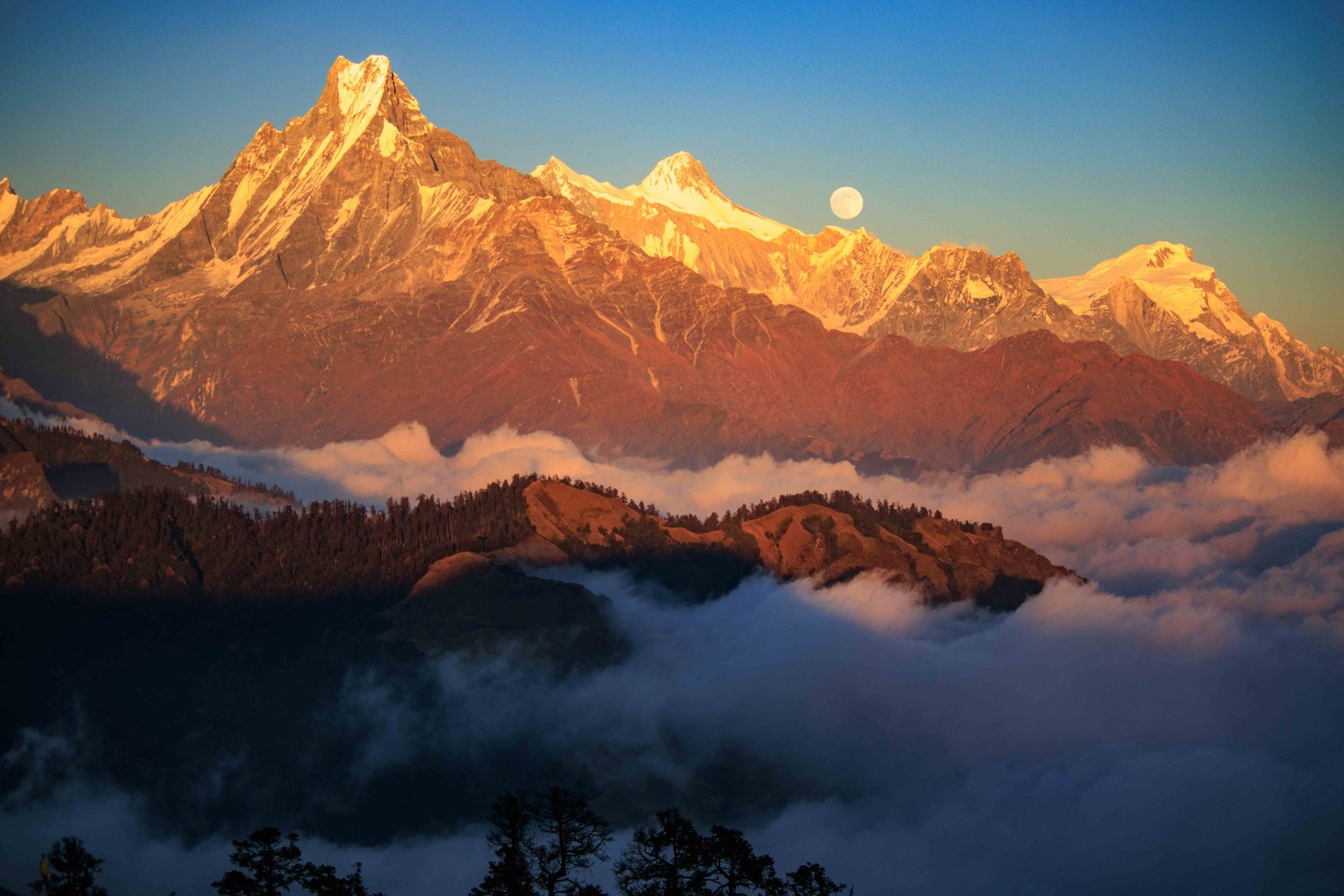
The Khopra Ridge Trek takes you to 3,667 metres, where you sleep for the night with Dhaulagiri and Annapurna South right in front of you. It is far lower than the Annapurna Circuit or Everest Base Camp, but it is above 3,500 metres, so this is the one where our morning checks really matter, as the story above shows. We keep the pace steady and do not rush the climb.
These risk levels are our approximate assessment based on the highest points and sleeping altitudes of our itineraries, not guarantees. Individual reactions vary on any trek.
Another advantage of all three routes is access. On our treks in this region, roads are usually within a few hours' walk, which often makes it quicker to reach a vehicle and get back towards Pokhara than on remote high-altitude routes. Weather, landslides and road conditions can change this, though, so road access is a helpful backup, not a guarantee of fast evacuation.
Want Himalayan views at a gentler altitude?
See the day-by-day itineraries, highest points and prices on our trek pages.
Kokhe Danda Trek → Khopra Ridge Trek → Panchase Trek →Be preparedTravel insurance and evacuation
For any trek that goes above 3,000 metres, carry travel insurance that covers trekking at your maximum altitude and includes emergency helicopter evacuation. Read the small print: many policies have an altitude limit. A helicopter rescue from the mountains can cost several thousand US dollars without insurance.
Before high-elevation treks, we ask every guest about their insurance and keep their policy details with the guide. If something goes wrong, there is no time to search through emails.
Quick checklist before you go
- Choose an itinerary that gains no more than 300–500 m of sleeping altitude a day above 3,000 m.
- Talk to your doctor about Diamox and carry your own medicines.
- Check that your insurance covers your highest altitude and helicopter evacuation.
- Learn the symptoms of AMS, HAPE and HACE, and the heel-to-toe test.
- Plan a spare day in case you need to rest or turn back.
- Agree with your group that anyone can say "I don't feel right" without judgment.
FAQFrequently asked questions about altitude sickness in Nepal
At what altitude does altitude sickness start in Nepal?
Altitude sickness usually becomes a real risk above about 2,500 metres, and especially once you sleep above 3,000 metres. Some people feel mild symptoms lower down. What matters most is your sleeping altitude and how quickly you gain it.
How much altitude should I gain per day on a Nepal trek?
Above 3,000 metres, try to raise your sleeping altitude by no more than about 300 to 500 metres per day. The Himalayan Rescue Association recommends around 300 metres a day above 3,000 metres.
What are the first signs of altitude sickness?
A headache plus one or more of nausea, loss of appetite, unusual tiredness, dizziness or poor sleep. Symptoms usually appear six to twelve hours after arriving at a new altitude.
What are the symptoms of HAPE and HACE?
HAPE (fluid on the lungs) starts with unusual breathlessness while walking, a drop in performance, chest tightness and a persistent cough, then progresses to breathlessness even at rest, a fast heart rate and extreme weakness. HACE (swelling of the brain) shows as confusion, unusual behaviour, loss of balance or coordination and drowsiness. Both are emergencies that require immediate descent.
Should I take Diamox for a trek in Nepal?
Diamox (acetazolamide) is the most commonly used medicine for preventing altitude sickness, but it is a prescription medicine. Discuss it with your doctor before you travel, especially if you have a sulfa allergy, and carry your own supply. It helps acclimatisation but does not make a fast ascent safe.
Does fitness protect you from altitude sickness?
No. Fitness has very little to do with who gets altitude sickness. Fit trekkers often walk too fast and climb too high in a day, which increases the risk.
Can Nepali people get altitude sickness?
Yes. Growing up in the hills does not protect you at high altitude. In fiscal year 2025/26, 12 of the 25 altitude sickness deaths recorded in the Annapurna Conservation Area were Nepali nationals, including four guides and porters.
Does garlic soup prevent altitude sickness?
Garlic soup is a popular local habit on Nepal's trails and many trekkers find it helps them feel better, but there is no scientific proof that it prevents altitude sickness. Enjoy it, but never rely on it instead of a slow ascent.
Should I avoid tea and coffee at altitude?
Moderate tea or coffee does not appear to dehydrate you or cause altitude sickness. If you drink coffee daily, stopping suddenly can cause a withdrawal headache that feels like AMS. Keep to your usual amount, avoid caffeine late in the day and do not let it replace water.
What should I do if I get altitude sickness on a trek?
Stop climbing. Rest at the same altitude until mild symptoms clear completely. If symptoms get worse, or if you notice any sign of HAPE or HACE, descend immediately, ideally 500 to 1,000 metres, and seek medical help.
Which treks near Pokhara have a low risk of altitude sickness?
The Panchase Trek (highest point 2,517 m) has a very low risk, and the Kokhe Danda Trek (3,309 m) has a low risk because you only reach the top briefly. Khopra Ridge (3,667 m) is a moderate-altitude trek where you sleep above 3,500 metres, so it needs a steady pace and attention to symptoms.
SourcesReferences
- Luks AM et al. Wilderness Medical Society Clinical Practice Guidelines for the Prevention, Diagnosis, and Treatment of Acute Altitude Illness: 2024 Update. Wilderness & Environmental Medicine, 2024.
- American Family Physician. Acute Altitude Illness: Updated Prevention and Treatment Guidelines from the Wilderness Medical Society (2020). aafp.org
- StatPearls. High-Altitude Illness (NCBI Bookshelf). ncbi.nlm.nih.gov
- Nepal Tourism Board. Safety in the Mountains (Himalayan Rescue Association aid posts and altitude talks). ntb.gov.np
- Nepali Times. Interview with Dr Buddha Basnyat, Himalayan Rescue Association, on ascent rates and AMS prevention. nepalitimes.com
- Hackett PH. Caffeine at high altitude: java at base camp. High Altitude Medicine & Biology 11(1), 2010.
- Scott D et al. The effect of drinking tea at high altitude on hydration status and mood. European Journal of Applied Physiology 91(4), 2004.
- myRepublica. 25 trekkers die from altitude sickness in Annapurna region in FY 2025/26 (ACAP data), July 2026. myrepublica.nagariknetwork.com
- OnlineKhabar English. A trek for pleasure turns into a tragedy (domestic trekkers and altitude sickness), 2025. english.onlinekhabar.com
This article is general safety information based on our guiding experience and published medical guidelines. It is not medical advice. Please consult a doctor, ideally one familiar with travel or altitude medicine, before a high-altitude trek, and before taking any medication.