Short answer: Muldai, and you can see both
Muldai is the better viewpoint. At 3,637 m it stands over 400 metres higher than Poon Hill, sees a far wider stretch of the Himalaya, from Dhaulagiri across the Annapurnas to Manaslu, and gets a fraction of the crowds. Poon Hill is still worth it, and the two are only a day's walk apart, so the best plan is to see both.
Poon Hill (3,210 m) rises above Ghorepani and is the sunrise viewpoint on the region's most popular short trek. Muldai Viewpoint (3,637 m), also spelled Mulde, rises above Dobato, on the quieter trail between Tadapani and Ghorepani. Both face the Dhaulagiri and Annapurna ranges, so it is fair to ask whether the extra walk to Muldai is worth it.
We are a local team from Parbat, and our Muldai Viewpoint Trek visits both, so we see them side by side every season. Below we compare them view by view, climb by climb, so you can decide for yourself.
Muldai vs Poon Hill at a glance
| Feature | Muldai Viewpoint | Poon Hill |
|---|---|---|
| Height | About 3,637 m | About 3,210 m |
| Base for the climb | Dobato (about 3,500 m) | Ghorepani (about 2,880 m) |
| Morning climb | About 30 minutes, roughly 790 m on foot | About 1 hour of steep stone steps |
| Dhaulagiri range | Full range, from Gurja Himal to Dhaulagiri I and Tukuche Peak | Full range, the same as Muldai |
| Annapurna range | The whole range, from Nilgiri to Lamjung Himal | Fang, Annapurna South and Hiunchuli clearly; the rest blocked or hidden |
| Machhapuchhre (Fishtail) | Fully visible | Cut in half by the Muldai ridge |
| Manaslu & Langtang | Manaslu, Ngadi Chuli, Himalchuli, Baudha Himal and Langtang Lirung | Only the tops of Himalchuli and Baudha Himal |
| Crowds at sunrise | Few trekkers | Very busy in spring and autumn |
| Teahouses | Two basic teahouses at Dobato | Many larger lodges in Ghorepani |
| Itinerary & cost | See the Muldai Viewpoint Trek page, which covers both viewpoints | |
Altitudes and walking times are approximate.
The view: what you see from each viewpoint
This is where the two really separate. They share one great view, Dhaulagiri, and then Muldai keeps going where Poon Hill stops.
From Muldai: four ranges in one sweep
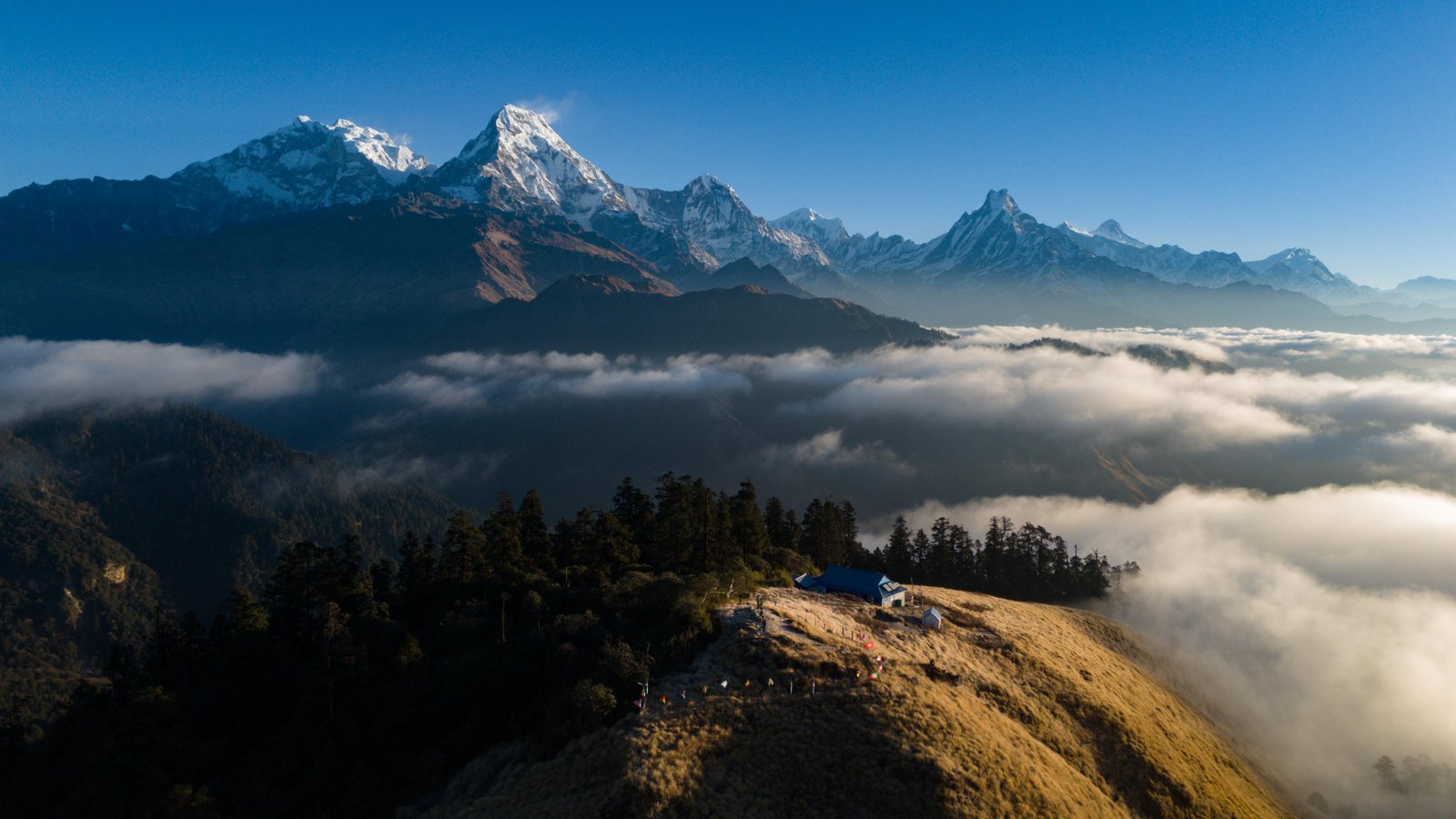
Muldai sits high enough, and far enough east, that almost nothing gets in the way. Turning from west to east on a clear morning, you see:
- The Dhaulagiri range: the whole line from Gurja Himal to Dhaulagiri I, plus Tukuche Peak and Dhampus Peak
- The Annapurna range: Nilgiri North and South, Annapurna Fang, Annapurna South, Hiunchuli, Annapurna III, Gandharva Chuli, Machhapuchhre (Fishtail), Annapurna II and Lamjung Himal
- The Manaslu range: Manaslu, Ngadi Chuli, Himalchuli and Baudha Himal
- Langtang Lirung, far to the east on clear days
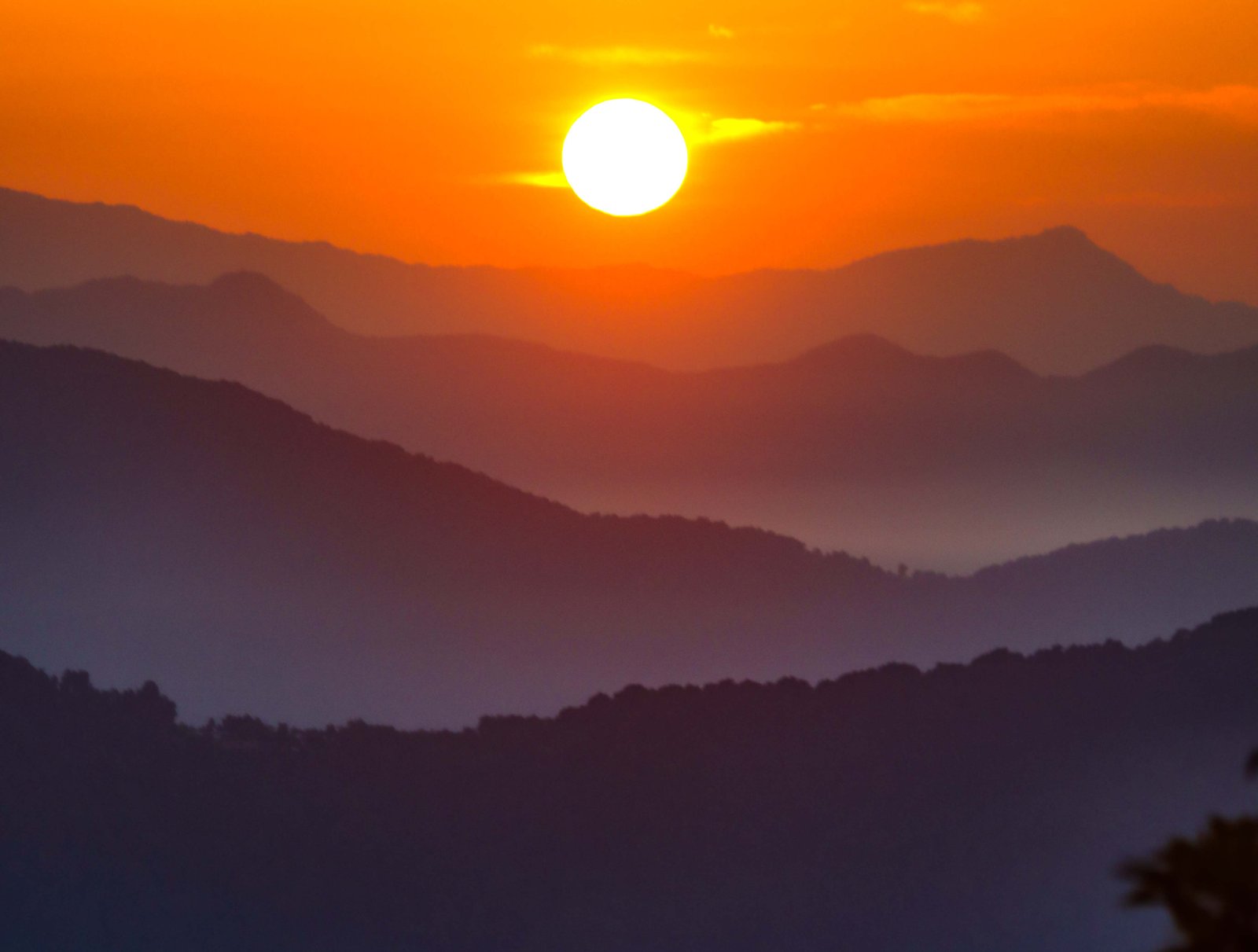
Turn around and there is a second view most people never expect: layer after layer of blue hills rolling away to the south, towards Parbat, Kaski and the lowlands. At sunrise those ridges fill with mist and light, and it is as memorable as the mountains.
From Poon Hill: Dhaulagiri up front, Annapurna partly hidden
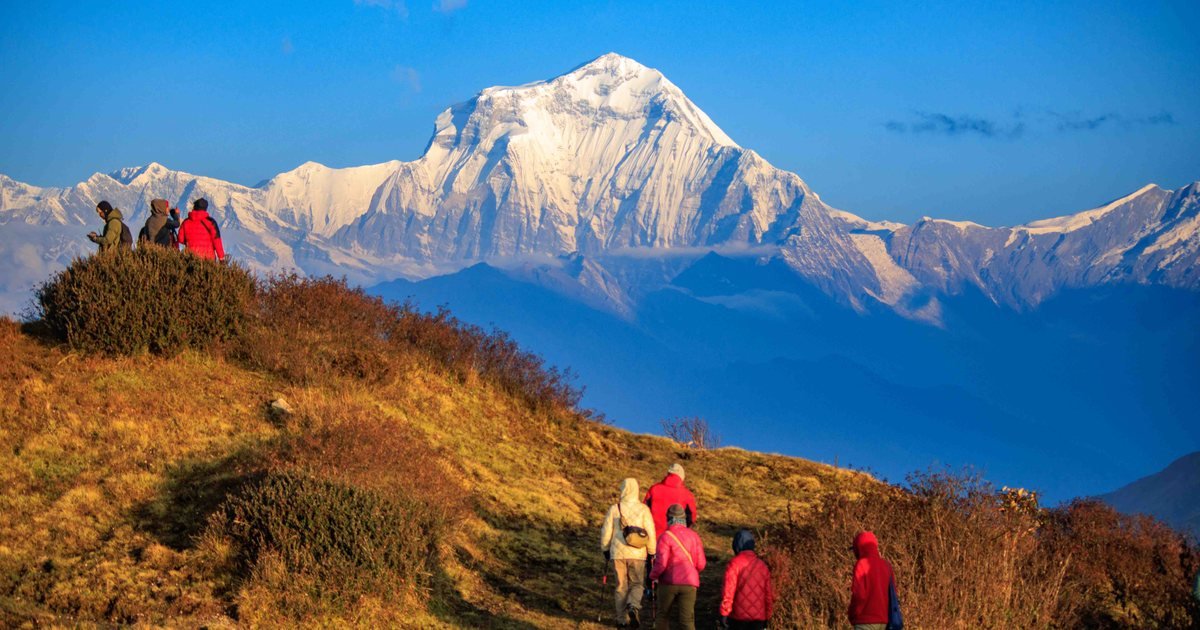
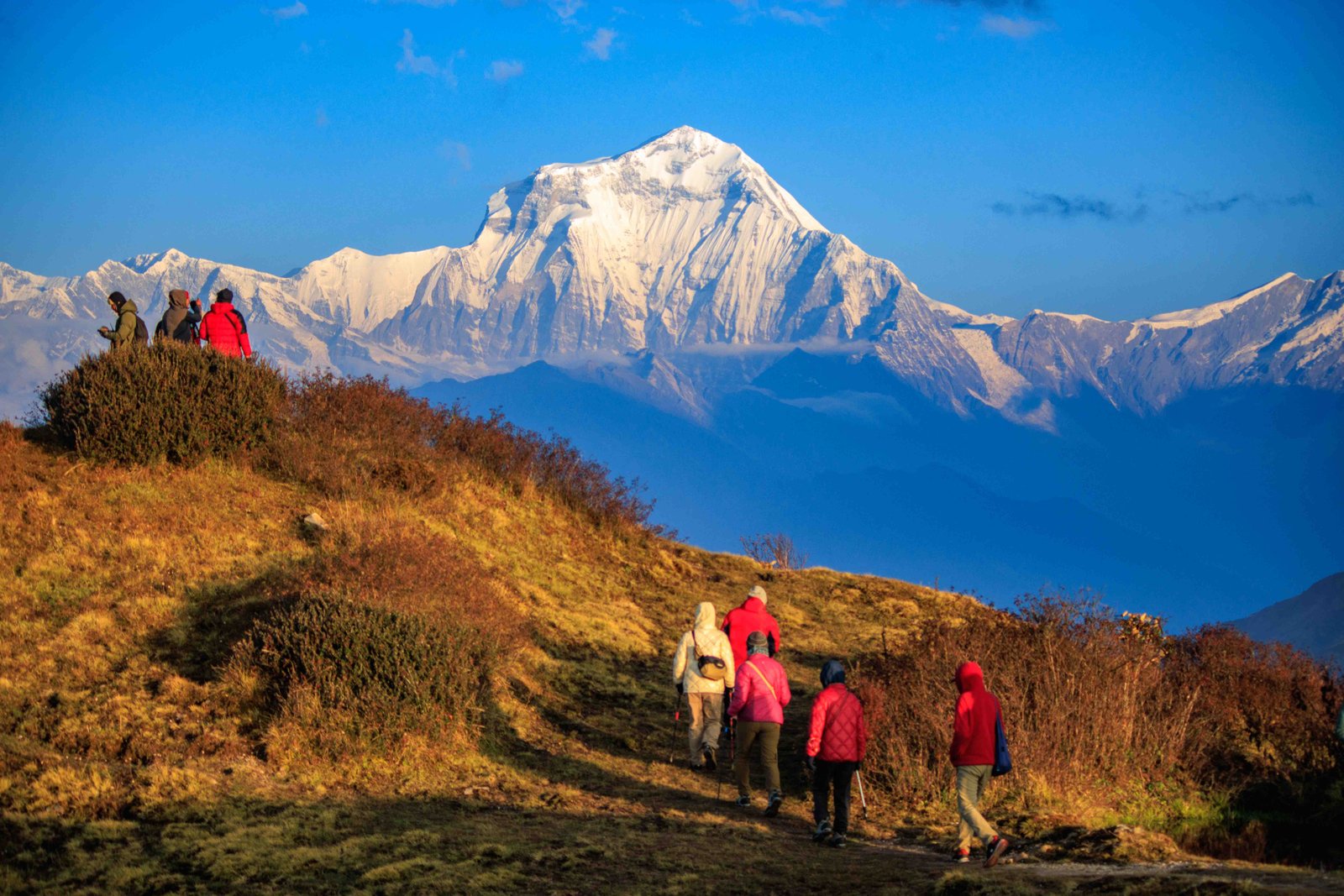
Poon Hill's view of the Dhaulagiri range is just as good as Muldai's, and it is the reason the viewpoint became famous. Dhaulagiri I rises straight across the valley, with the rest of the range lined up beside it.
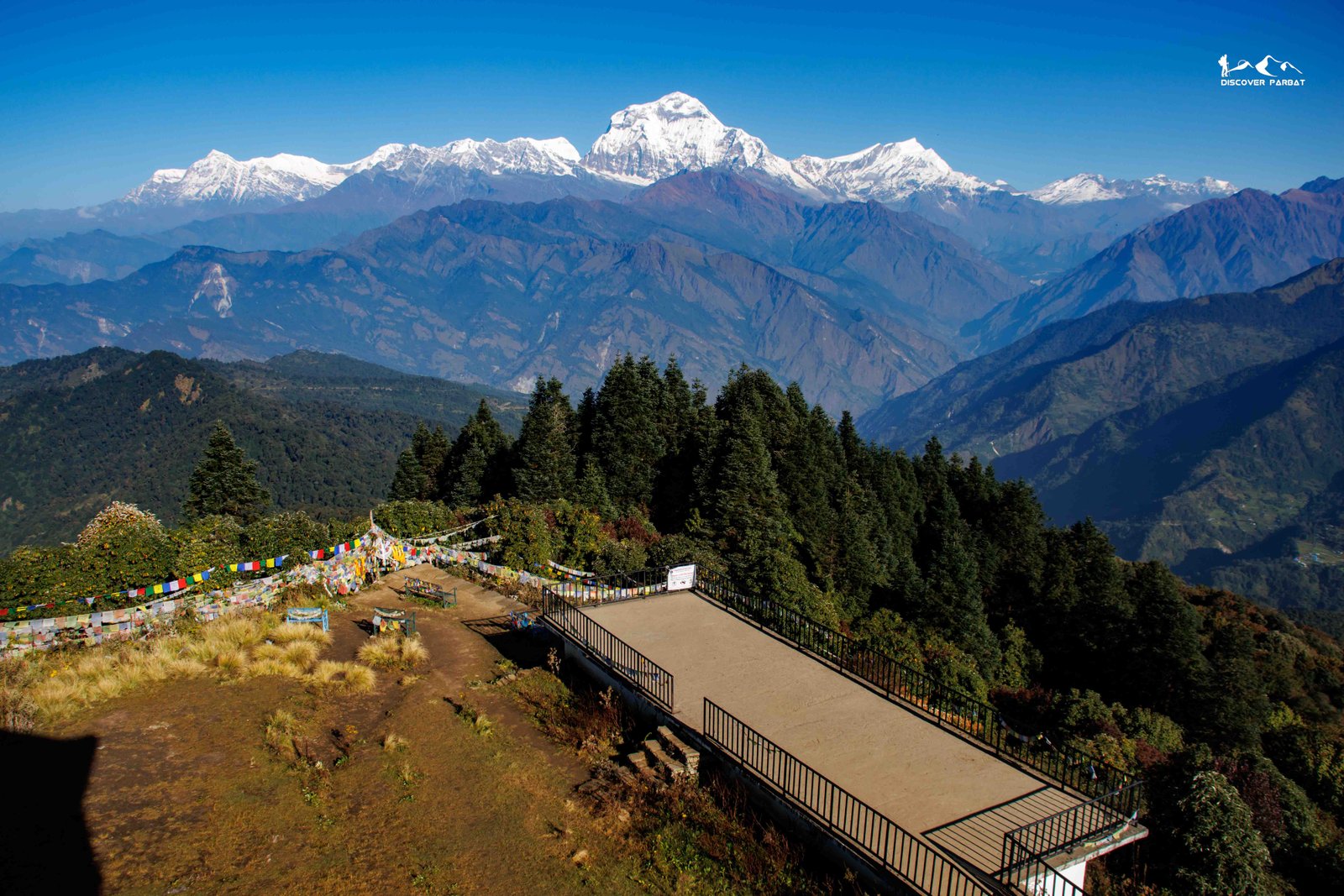
Look east, though, and the forested Muldai ridge stands in the way. From Poon Hill you see Annapurna Fang, Annapurna South and Hiunchuli properly. Machhapuchhre is cut in half by the ridge, and only the tops of Lamjung Himal, Himalchuli and Baudha Himal show above it. The other Annapurna peaks are more than half blocked or not visible at all, and Manaslu and Langtang are out of sight.
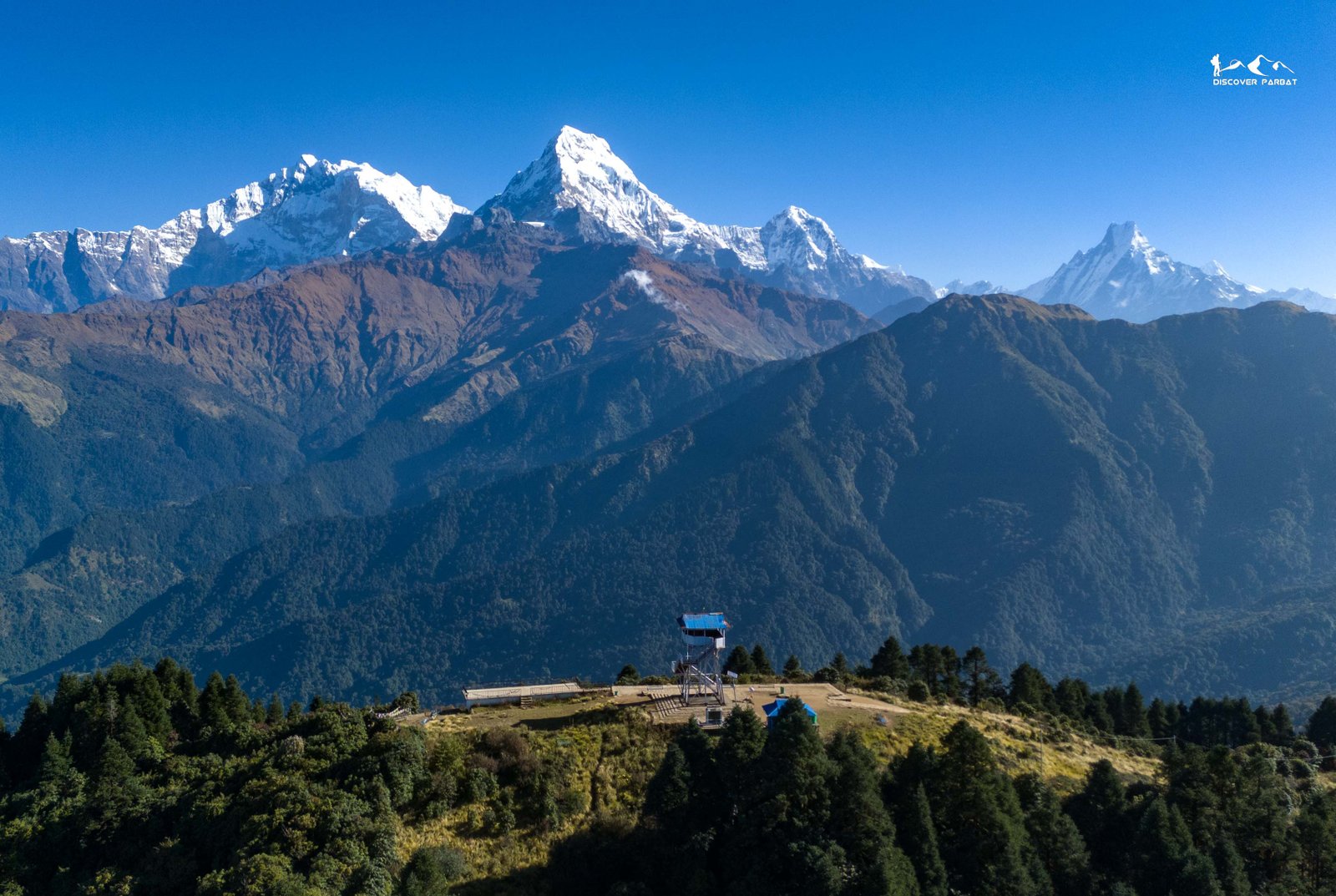
Our verdictFor Dhaulagiri, it's a draw. For everything else, Muldai wins clearly: the full Annapurna range, all of Fishtail, the Manaslu peaks, Langtang Lirung and the layered hills to the south.
The morning climb
Both viewpoints are climbed before dawn from the village where you sleep, but the effort is very different.
From Ghorepani, the trail to Poon Hill climbs about 330 m, from 2,880 m to 3,210 m, almost entirely on steep stone steps. It takes about an hour on average, longer when the steps are busy with other trekkers.
From the teahouses at Dobato, Muldai is only about 790 m away on foot and about 30 minutes uphill, gaining roughly 140 m from around 3,500 m to 3,637 m. You do the hard work the day before, walking up to Dobato, so sunrise morning is short and easy. Then you walk back down to the teahouse for breakfast.
In winter, after fresh snow the short climb to Muldai can be icy, and you will need crampons or microspikes. Your guide will check conditions the evening before.
Our verdictMuldai is higher, but its sunrise climb is half the time and much gentler.
Crowds
Poon Hill is one of the most visited viewpoints in Nepal. Ghorepani fills up with trekkers on the classic short loop, and in spring and autumn most of them climb Poon Hill at the same time for sunrise. The stone steps turn into a line of headlamps, and the top gets crowded around the viewing tower.
Muldai is off that main loop. Most Poon Hill trekkers never go there, so even in peak season you share the summit with only a few people, sometimes no one at all. You can choose your own spot, set up a camera and watch the light move across four mountain ranges in near silence.
Our verdictMuldai, by a long way. It's the quiet sunrise Poon Hill used to be.
Where you stay: Dobato vs Ghorepani
Ghorepani is a proper trekking village with many large lodges, plenty of rooms, bigger menus and more facilities. You can read more about it in our Ghorepani village guide.
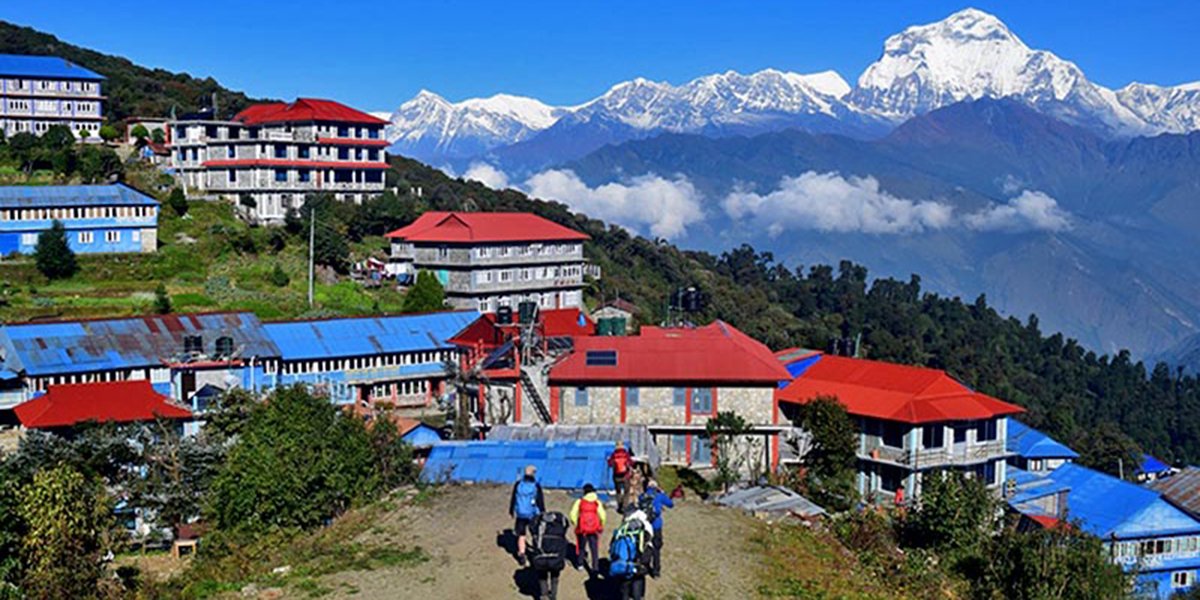
Dobato is a tiny stop with just two teahouses. They are more basic than the lodges in Ghorepani, so expect simple rooms, a warm dining room and a short menu. In exchange you sleep high, close to the viewpoint, in one of the quietest places on the trail.
Our verdictGhorepani is more comfortable. Dobato is simpler, but it puts the best sunrise in the region 30 minutes from your door.
Sea of clouds
Because Muldai stands higher and looks over a wide, open drop to the south, you have a better chance of seeing a sea of clouds there than at Poon Hill. On many mornings, and again around sunset, cloud fills the valleys below while the peaks rise clear above it, as if the clouds were bridging the mountains. It happens at Poon Hill too, but less often, and the lower viewpoint is more likely to end up inside the cloud rather than above it.
Watch: Muldai, Poon Hill and the trail between
Our video from the trail shows Dobato, the sunrise on Muldai, Poon Hill and the walk on to Kokhe Danda.
Watch: Muldai Viewpoint Trek – Dobato, Muldai, Poon Hill and Kokhe Danda in 6 days
You don't have to choose: see both
Muldai and Poon Hill are on the same trail system, a day's walk apart, so the best plan is to visit both. That is exactly what our Muldai Viewpoint Trek does.
In short: you walk up through Tadapani to Dobato, climb Muldai for sunrise, then walk on to Ghorepani. The next morning, while everyone else has already been up Poon Hill in the dark, we climb it after breakfast, when the sunrise crowd has gone and we usually have it almost to ourselves. From there the trek leaves the busy trail for Kokhe Danda, the highest point of Parbat, and a homestay night in Lespar. The full day-by-day itinerary and prices are on the trek page.
Only have 4 days? Our 4-day Poon Hill Trek skips Dobato and Muldai but keeps the crowd-free Poon Hill climb, Kokhe Danda and Lespar. If Muldai is a must, the 6-day route is the one to choose.
Choose the route with Muldai if you…
- Have 6 days
- Want the widest sunrise panorama in the area
- Would rather watch sunrise without the crowds
- Want to see Fishtail, Manaslu and Langtang Lirung, not just Dhaulagiri
- Are happy with two simple teahouses for one night
Poon Hill only is fine if you…
- Only have about 4 days
- Mainly want the Dhaulagiri view
- Prefer bigger lodges with more facilities
- Don't mind sharing the viewpoint
So, which is better?
Poon Hill deserves its fame. Its Dhaulagiri view is superb, it is easy to reach and it fits into a short trip. But it is crowded at sunrise, and much of the Annapurna range is hidden behind the Muldai ridge.
Muldai is the better viewpoint. It is higher, the sunrise climb is shorter, and from the top you see the entire Dhaulagiri, Annapurna and Manaslu ranges as far as Langtang Lirung, with layered hills to the south and a good chance of a sea of clouds. You trade some comfort for it: one night in a basic teahouse at Dobato.
If you can spare the time, don't choose. Do Muldai for sunrise and Poon Hill after breakfast, and you get the best of both without the crowds.
Frequently asked questions
Is Muldai higher than Poon Hill?
Yes. Muldai Viewpoint is about 3,637 m, while Poon Hill is about 3,210 m, so Muldai is roughly 427 m higher.
Is the view from Muldai better than Poon Hill?
Yes, it is wider. Both show the full Dhaulagiri range, but from Muldai you also see the whole Annapurna range, from Nilgiri to Lamjung Himal, the Manaslu range and, on clear days, Langtang Lirung. From Poon Hill the Muldai ridge blocks much of the Annapurna range: you see Annapurna Fang, Annapurna South and Hiunchuli properly, Machhapuchhre is cut in half and only the tops of Lamjung Himal, Himalchuli and Baudha Himal show.
How long is the hike from Dobato to Muldai Viewpoint?
About 30 minutes. From the teahouses at Dobato it is roughly 790 m on foot, climbing from about 3,500 m to 3,637 m. The climb from Ghorepani to Poon Hill takes about an hour on average, up steep stone steps from 2,880 m to 3,210 m.
Is Muldai crowded like Poon Hill?
No. Poon Hill is one of the busiest viewpoints in Nepal at sunrise in peak season. Muldai sees far fewer trekkers because it is off the main Ghorepani loop, and there are only two teahouses at Dobato.
Where do you stay to visit Muldai Viewpoint?
At Dobato, just below the viewpoint. There are two teahouses there. They are simpler than the lodges in Ghorepani, but they put you a 30-minute walk from sunrise at Muldai.
Can I see both Muldai and Poon Hill on one trek?
Yes. Our 6-day Muldai Viewpoint Trek visits Muldai at sunrise from Dobato, then walks to Ghorepani and climbs Poon Hill the next morning after breakfast, when the sunrise crowd has gone, before continuing to Kokhe Danda and Lespar.