Two ridge treks, two very different experiences
Khopra Ridge and Mardi Himal are both ridge treks in Nepal's Annapurna region, both start near Pokhara, and both end with you standing face to face with big Himalayan peaks. That is where the similarity ends.
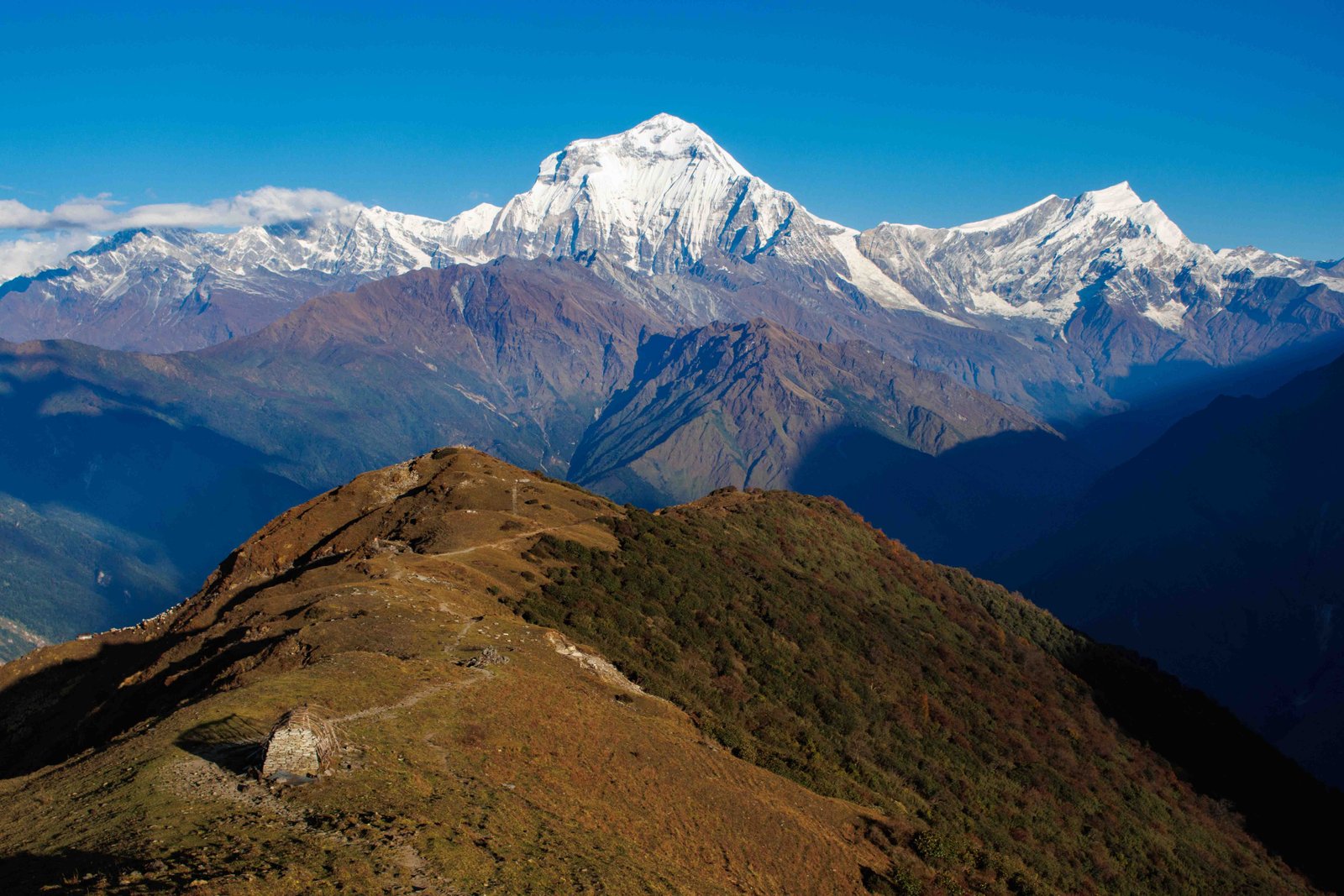
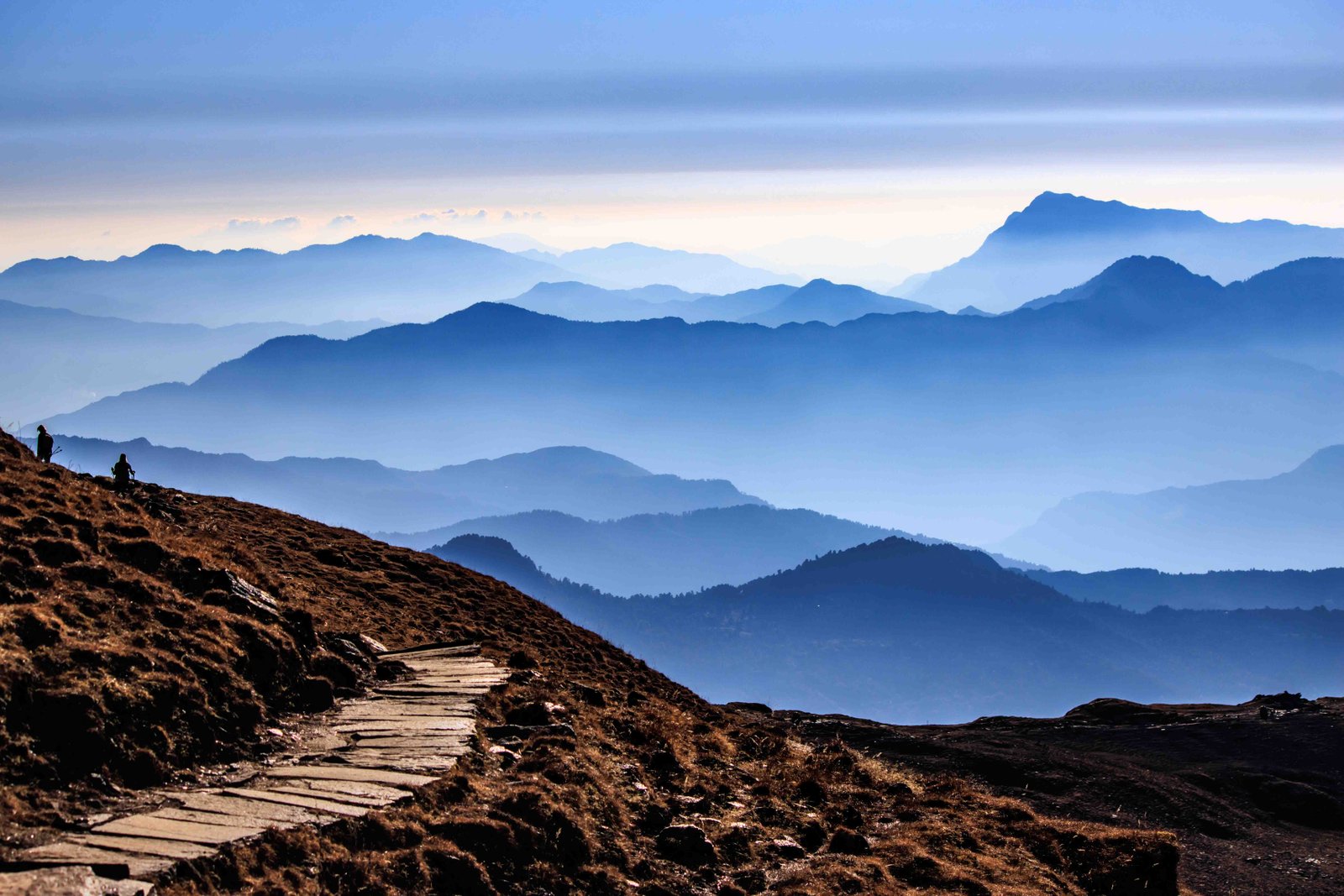
The Mardi Himal Trek is short, direct and hugely popular: five days up a forested ridge to viewpoints right beneath Machhapuchhre (Fishtail) and Annapurna South. The Khopra Ridge Trek takes longer and wanders more, through rhododendron forest, high pastures and farming villages, to a ridge with one of the widest panoramas of the Annapurna and Dhaulagiri ranges in Nepal.
We guide both, so here is our honest take. If you have the time and want peaceful trails, nature and real village life, Discover Parbat recommends the Khopra Ridge Trek. If you only have five days and don't mind sharing the trail, Mardi Himal is a superb short trek. Below, we explain the difference in detail.
Khopra Ridge vs Mardi Himal at a glance
| Feature | Khopra Ridge Trek | Mardi Himal Trek |
|---|---|---|
| Best for | Peaceful trails, nature and village life | A short trek with close-up mountain views |
| Duration | Generally 7–9 days (ours: 8 days) | 5 days from Pokhara |
| Highest point | About 3,667 m at Khopra Ridge | About 4,000 m (Lower Viewpoint), up to about 4,230 m at Mardi Himal Base Camp |
| Optional high excursion | Khayer Lake, about 4,653 m (one extra day) | Upper Viewpoint and Base Camp, same day as the viewpoint climb |
| Mountain views | Wide panorama of the Annapurna and Dhaulagiri ranges, with close views of Dhaulagiri and Annapurna South | Close-up views of Machhapuchhre (Fishtail) and Annapurna South |
| Crowd levels | Quiet, even in peak season | Busy in spring and autumn, especially near the top |
| Villages | Overnight stops in Swanta and Lespar on our itinerary | No real villages on the trail; ends at Siding with no overnight stay |
| Accommodation | Teahouses, a community lodge and a village homestay | Teahouses at trekking camps |
| Difficulty | Moderate; slightly harder because it is longer | Moderate; shorter, with one steep pre-dawn climb |
| Itinerary & cost | See the Khopra Ridge Trek page | See the Mardi Himal Trek page |
Altitudes are approximate. Khayer Lake is optional and needs an extra day, good weather and proper acclimatisation.
Mountain views: wide panorama or close-up giants?
Both treks deliver serious mountain scenery, but they frame the Himalayas very differently. One gives you a horizon full of peaks; the other puts a few famous peaks almost on top of you.
Khopra Ridge: the Annapurna and Dhaulagiri panorama
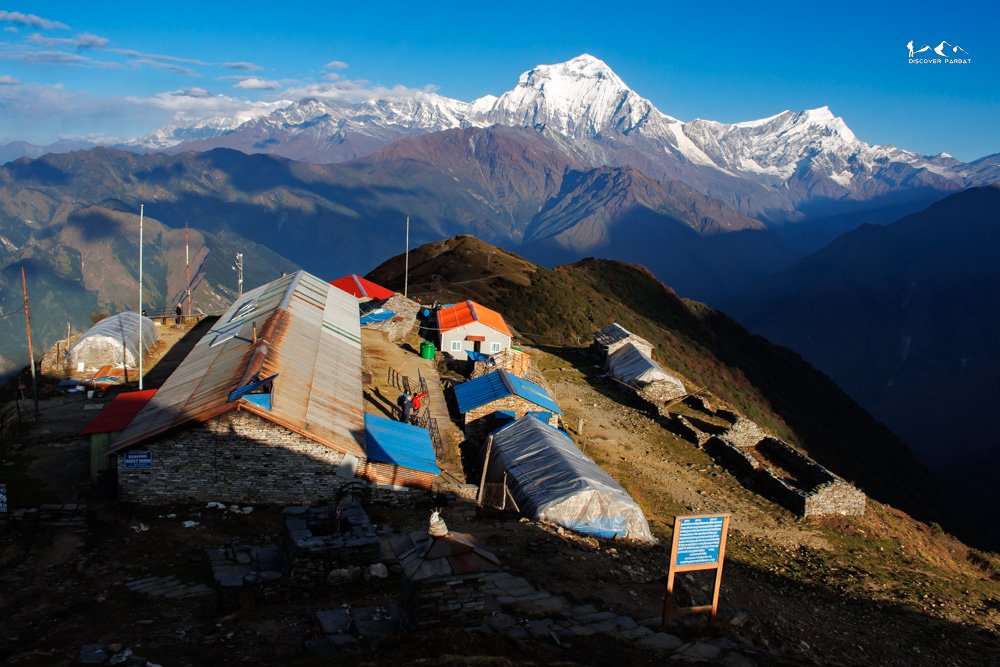
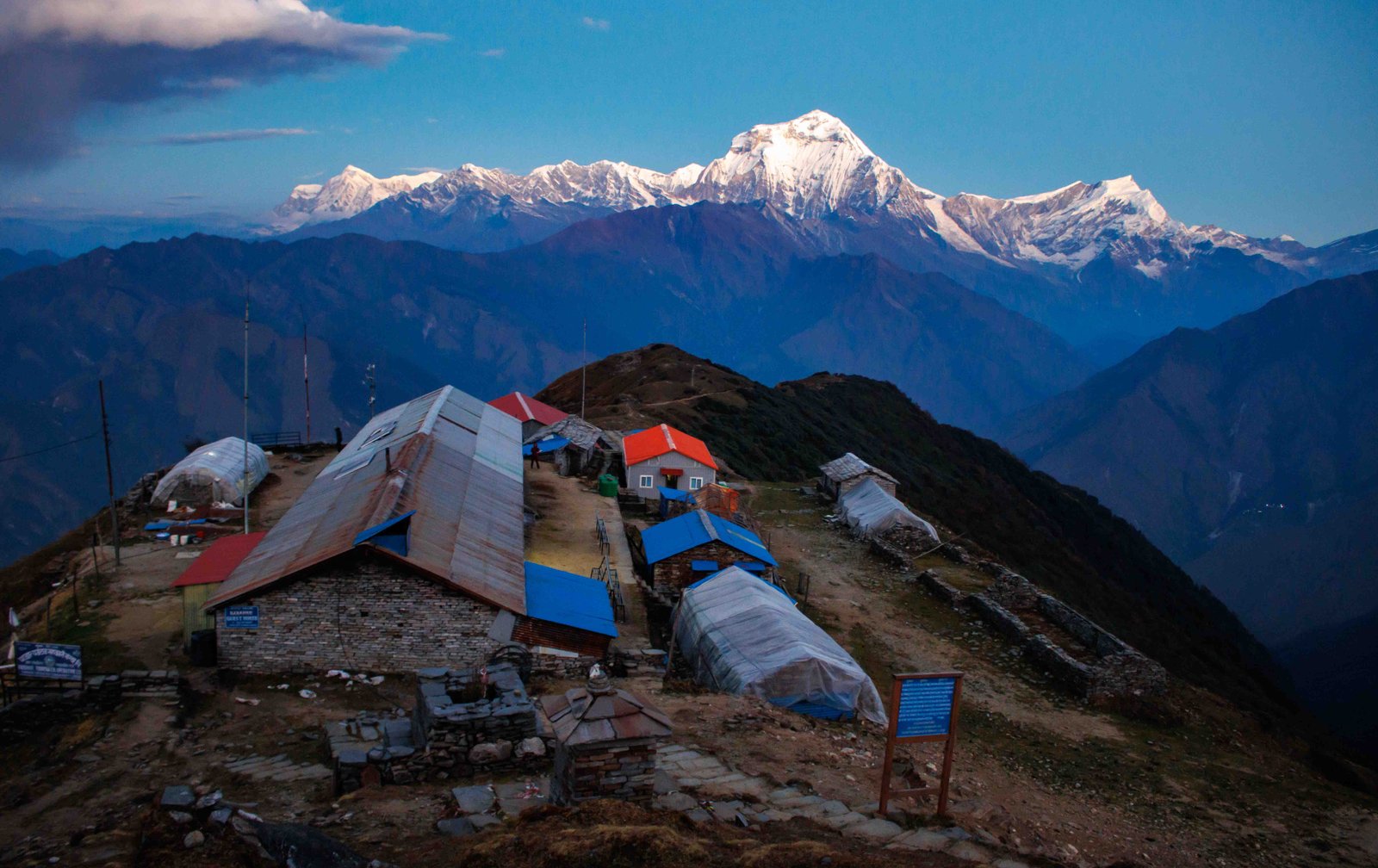
The Khopra route climbs onto high, open ground where several ranges line up at once. On the way, the Muldai Viewpoint above Dobato gives a sunrise sweep from Dhaulagiri across the Annapurna range to Manaslu. Then, from Khopra Ridge itself, Dhaulagiri rises almost straight across the Kali Gandaki gorge, one of the deepest valleys on earth, while Annapurna South towers close on the near side, with Nilgiri and Tukuche filling in the skyline.
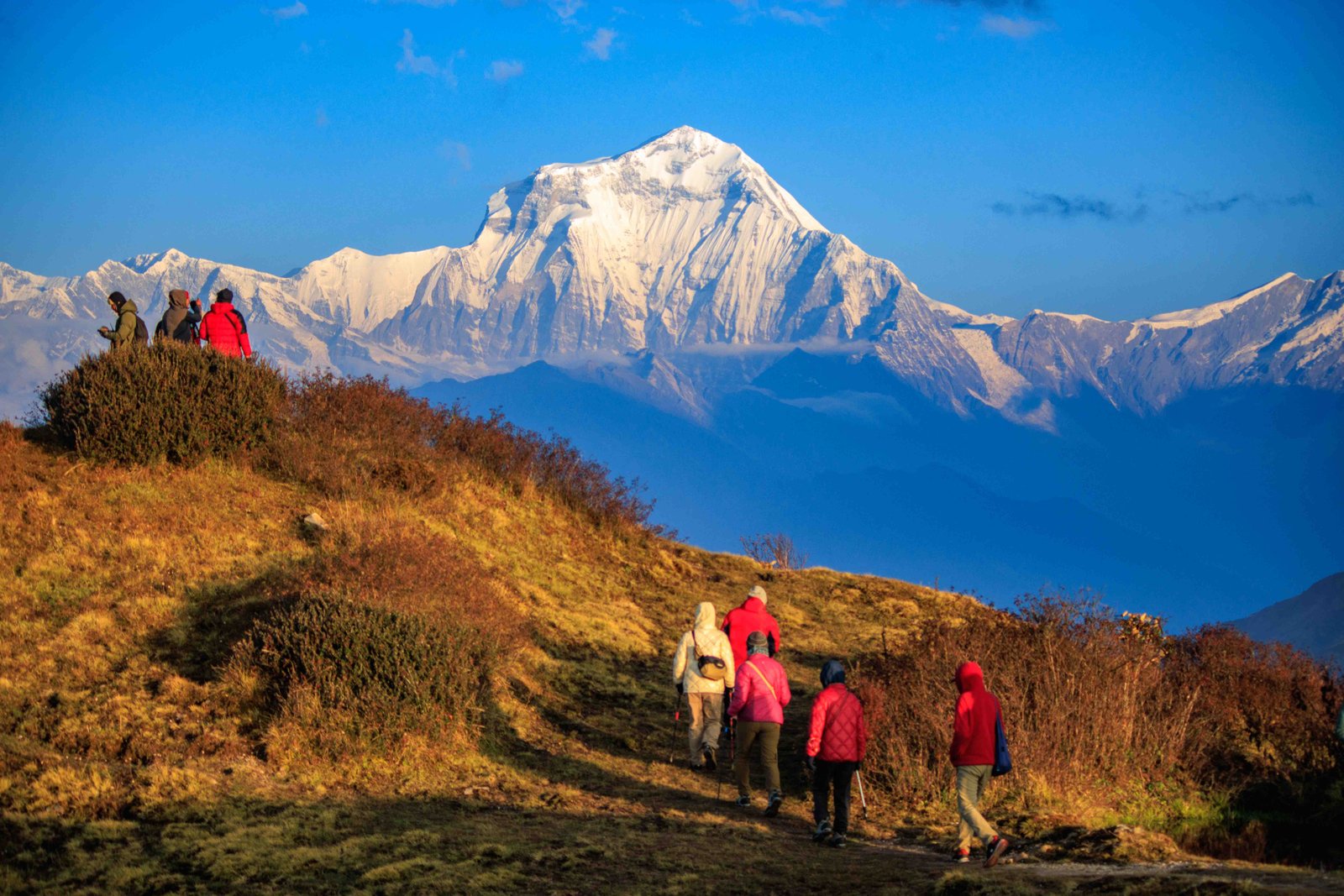
So you get both things: the wide panorama and the close-up. And because the views come at several points over several days, from Tadapani, Muldai, Khopra Ridge and later Poon Hill and Kokhe Danda on our itinerary, the scenery keeps changing rather than building to one single moment.
Mardi Himal: right under Fishtail
Mardi Himal's strength is proximity. Once the trail leaves the forest above Low Camp, you walk an open ridge with Machhapuchhre rising sharply ahead, and Annapurna South and Hiunchuli appear from Badal Danda onward. From the viewpoints above High Camp, Fishtail feels close enough to touch. Few treks this short get you this near to such an iconic peak.
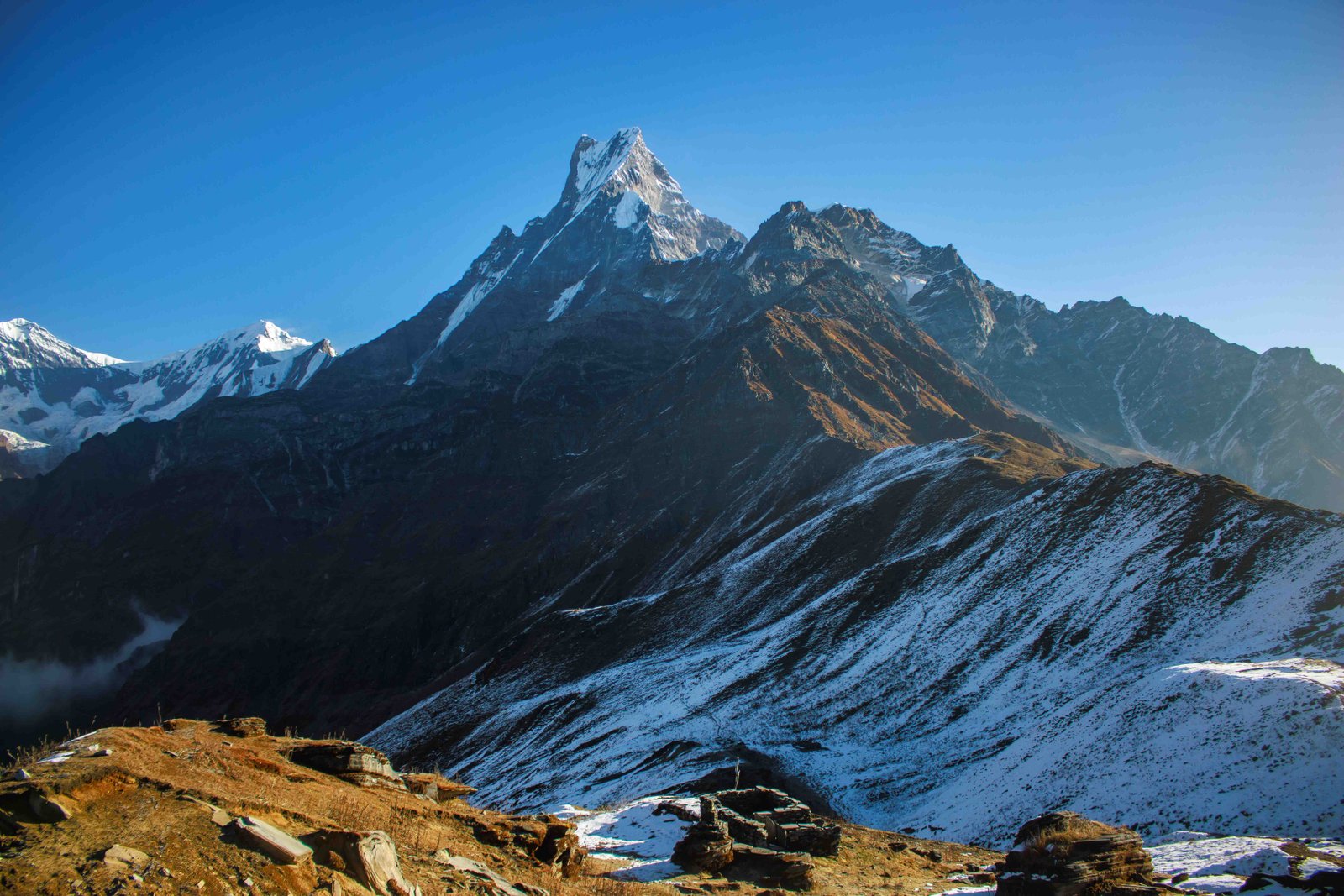
The trade-off is breadth. The view is dominated by Fishtail, Annapurna South and Hiunchuli. Dhaulagiri shows up on the horizon from Suire Danda early in the trek, but you don't get the big Dhaulagiri face-off that Khopra offers.
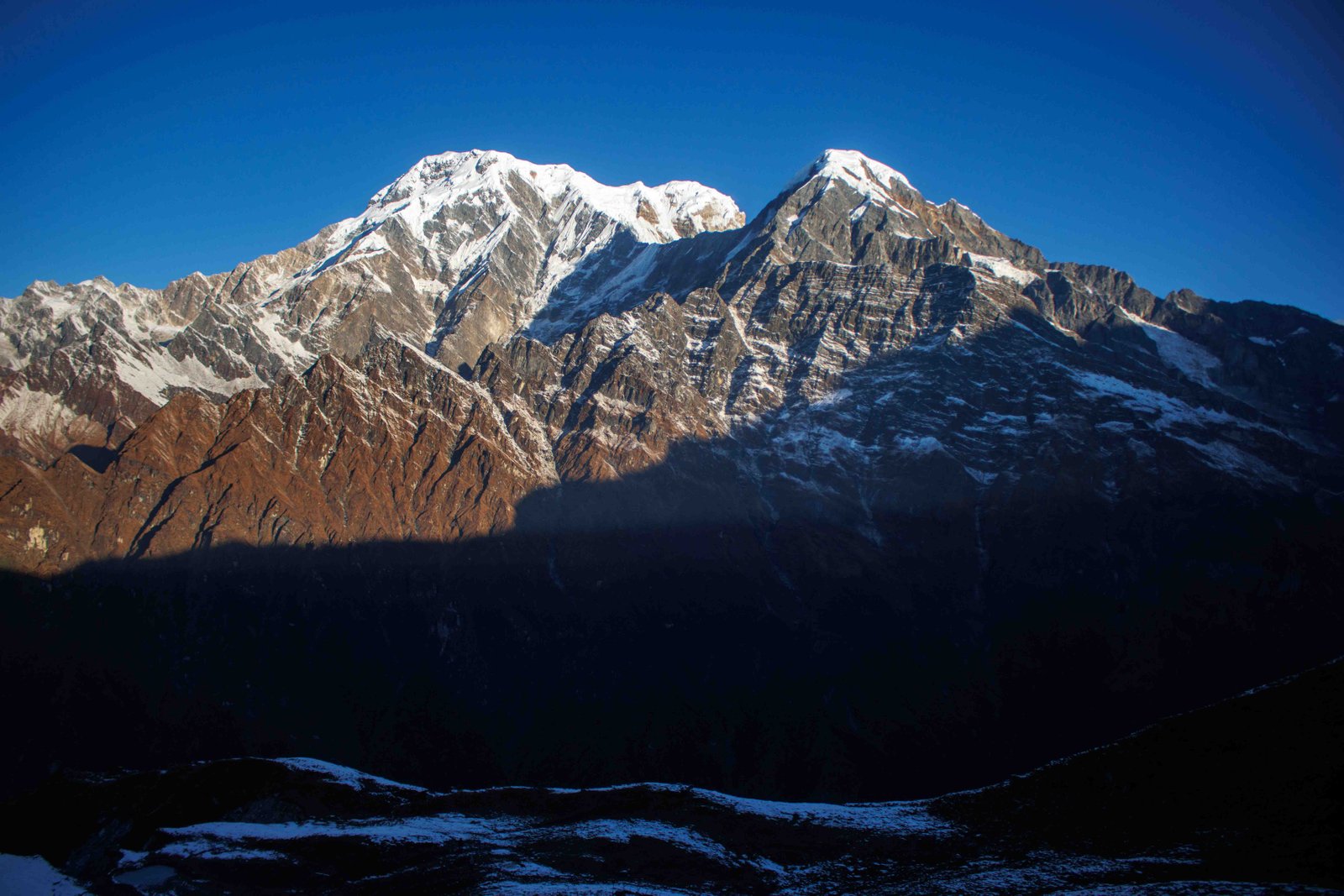
Our verdictChoose Khopra Ridge for the overall panorama of the Annapurna and Dhaulagiri ranges plus close views of Dhaulagiri and Annapurna South. Choose Mardi Himal if a close-up of Fishtail is the one view you want most.
Crowds and trail atmosphere
This is the biggest practical difference between the two treks.
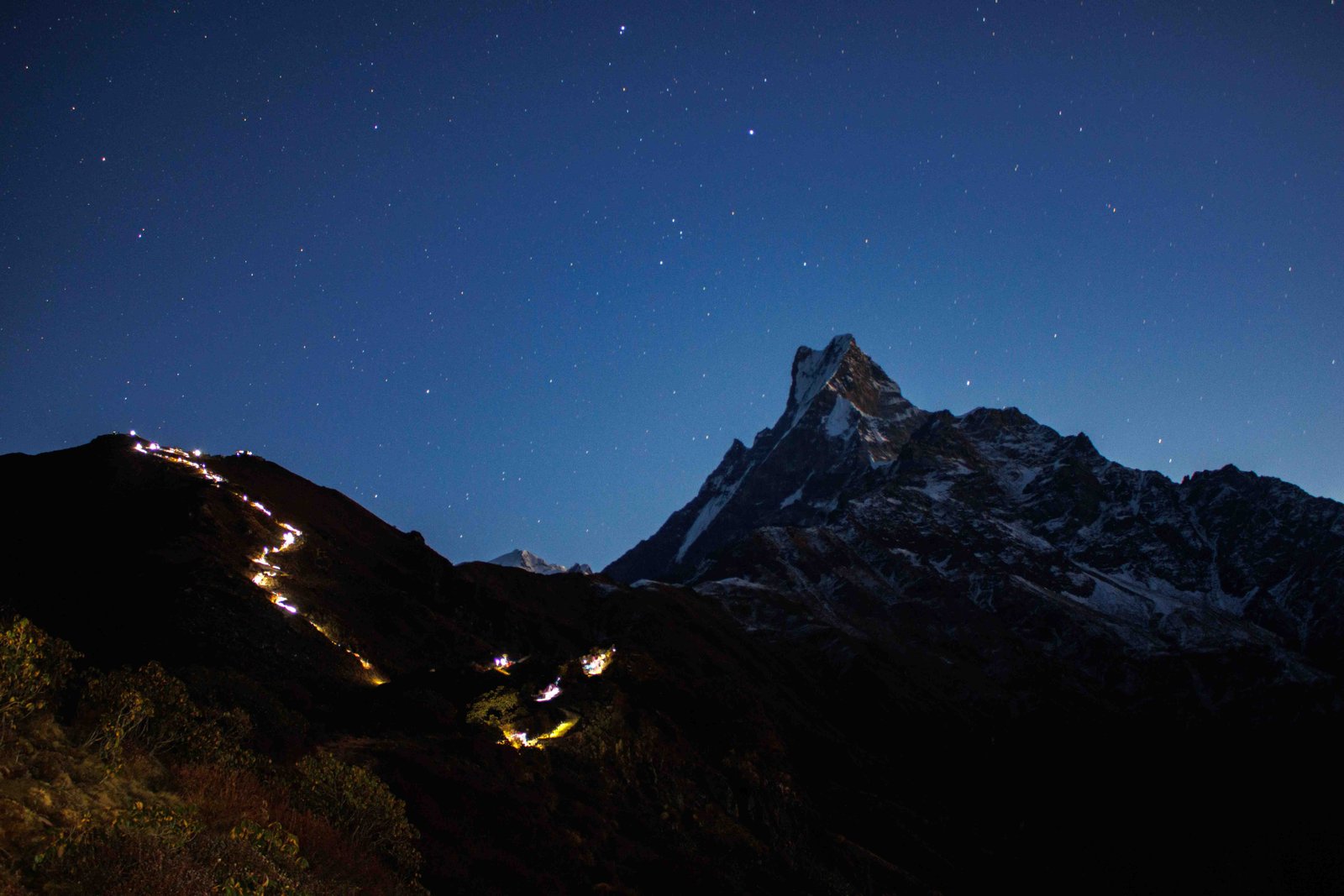
Mardi Himal has become one of the most popular short treks from Pokhara. In spring and autumn, teahouses at Low Camp and High Camp fill up, and the climb to the viewpoint becomes a line of headlamps in the dark as everyone heads up for sunrise at the same time. Some trekkers enjoy that social buzz. If you don't mind company, it is a lively, friendly trail.
Khopra Ridge feels completely different. Beyond Tadapani the route leaves the main trekking corridor, and on most days you will meet only a handful of other trekkers. Forest stretches are quiet apart from birdsong, the lodges are calm in the evening, and it is common to watch the light change on Dhaulagiri from Khopra Ridge with almost no one else around.
Our verdictIf peaceful trails matter to you, Khopra Ridge wins clearly. Mardi Himal suits trekkers who don't mind crowds.
Villages and local life
Many people are surprised to learn that the Mardi Himal Trek doesn't really pass through villages. After the first day, the trail follows a forested ridge, and the overnight stops at Forest Camp, Low Camp and High Camp are clusters of teahouses built for trekkers rather than villages where people farm and raise families. The trek ends at Siding village, but you simply walk in and take a jeep back to Pokhara; there is no overnight stay there.
On our Khopra Ridge itinerary, village life is part of the journey. After coming down from the ridge, we spend a night in Swanta, a farming village of terraced fields and orchards where life follows the seasons rather than the trekking calendar. Later we cross into Parbat district and spend the final night with a Magar family in Lespar, with home-cooked meals by the hearth and a momo-making session in the evening. For many of our guests, Lespar turns out to be the highlight of the whole trip.
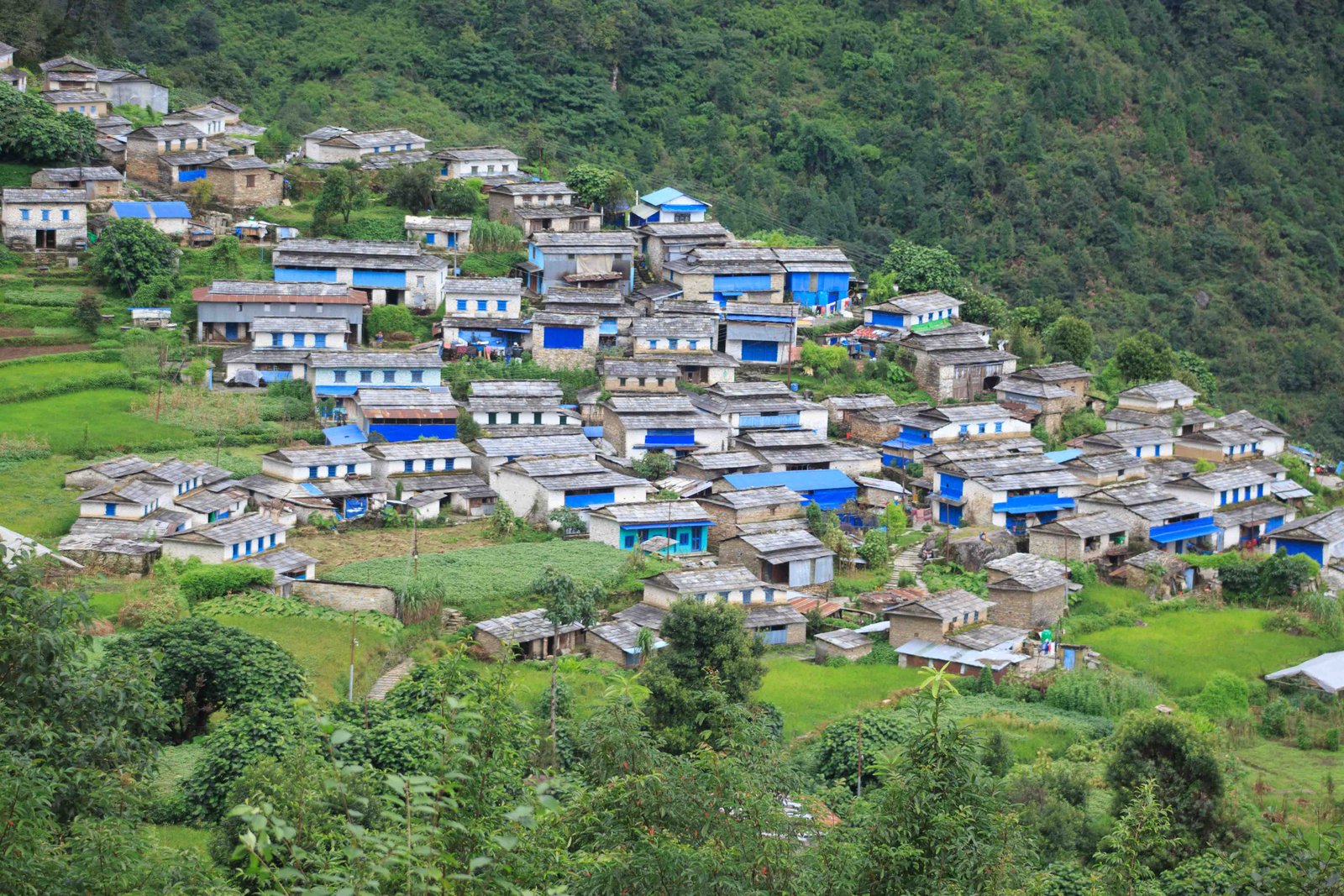
Our verdictFor village life and local culture, Khopra Ridge is the clear choice. Mardi Himal is a nature and mountain trek, not a village trek.
Accommodation and comfort
Here there is little to separate them. Both routes use simple, comfortable teahouses with private twin rooms, shared bathrooms, a warm dining room and the usual menu of dal bhat, noodles, soups and eggs. Facilities get more basic higher up on both treks, and hot showers, where available, usually cost a little extra.
The difference is variety. On Khopra Ridge you also sleep at the community lodge on the ridge, whose income supports local villages and schools, and with a family in Lespar on our itinerary. On Mardi Himal, every night is in a trekking-camp teahouse.
Tip: Nights get cold at High Camp on Mardi Himal and on Khopra Ridge, so bring a warm sleeping bag or a liner for the teahouse blankets. Our Khopra Ridge Trek packing list works for both routes.
Our verdictAccommodation is similar on both treks. Khopra adds a community lodge and a homestay for a more varied, more local experience.
Difficulty and altitude
On paper Mardi Himal looks harder because it goes higher. The standard route reaches the Lower Viewpoint at about 4,000 m, and strong, well-acclimatised trekkers can continue to the Upper Viewpoint or Mardi Himal Base Camp at about 4,230 m. Khopra Ridge itself sits at about 3,667 m.
In practice, we find Khopra Ridge slightly more demanding, though not challenging. It is longer, and the route has more up and down: day three from Dobato to Khopra, for example, drops to around 2,800 m before climbing back up to the ridge. Mardi Himal is shorter and more direct, but its viewpoint day is a big one, starting around 4:30 am with a steep climb to 4,000 m and a long descent afterwards.
Khopra also has a higher option. With one extra day, you can hike from Khopra Ridge to sacred Khayer Lake at about 4,653 m, well above anything on the Mardi Himal route. It is a long, tough day that needs good weather and acclimatisation, and it is entirely optional.
Don't judge difficulty by maximum altitude alone. Trek length, daily elevation change, total ascent and how many days in a row you walk all affect how hard a route feels. On both treks, walk at a steady pace, drink plenty of water and tell your guide early if you feel unwell.
Our verdictBoth treks are moderate and suit reasonably fit beginners. Khopra is slightly harder because it is longer; Mardi Himal reaches higher but is over sooner.
How much time do you have?
Often, this decides it. The Mardi Himal Trek fits neatly into 5 days from Pokhara: a short drive to Kande, up via Suire Danda, Low Camp and High Camp, the viewpoint, then down to Siding and back by jeep. It is ideal if Nepal is part of a bigger trip or your leave is limited.
The Khopra Ridge Trek generally takes 7 to 9 days. Our 8-day itinerary runs from Ghandruk via Tadapani, Dobato and the Muldai Viewpoint to Khopra Ridge, then down to Swanta, on to Ghorepani and Poon Hill (after the sunrise crowds have gone), over Kokhe Danda and into Lespar. Add the Khayer Lake day and it becomes 9 days. Those extra days are what buy you the quiet trails, the villages and the variety.
Best season for both treks
The two treks share the same best months. For views, timing matters on both, since each is built around a mountain viewpoint.
Monsoon (June to September) is not recommended for either trek. The high ridges get slippery and the mountains are usually hidden in cloud.
Which trek is better for you?
Both are excellent treks. The right one depends on your time and what you want from the mountains.
Choose Khopra Ridge if you…
- Have 7 to 9 days to spare
- Prefer peaceful trails and time in nature
- Want the wide panorama of the Annapurna and Dhaulagiri ranges
- Want close views of Dhaulagiri and Annapurna South
- Would love to stay in villages like Swanta and Lespar
- Like the option of a high day hike to Khayer Lake (about 4,653 m)
Choose Mardi Himal if you…
- Only have about 5 days
- Want a close-up of Fishtail and Annapurna South
- Don't mind busy teahouses and trails
- Enjoy meeting lots of other trekkers
- Are happy with a nature trek without village stays
So, which is better?
If you are short on time, the Mardi Himal Trek is hard to beat. In five days you get forest, an open ridge and one of the closest views of Machhapuchhre anywhere, as long as you are comfortable sharing it with plenty of other trekkers.
But if you have a week or more, we believe the Khopra Ridge Trek is the more rewarding choice. It gives you a broader, more varied Himalayan panorama, close views of Dhaulagiri and Annapurna South, quiet trails, and nights in villages where trekking is still a small part of everyday life. It asks a little more of your legs and your calendar, and pays it back in peace and depth.
Can't decide? Our Multiple Viewpoints Trek combines Mardi Himal and Khopra Ridge, along with Khayer Lake, Poon Hill and Kokhe Danda, in one longer journey.
Frequently asked questions
Which is higher, Khopra Ridge or Mardi Himal?
Mardi Himal goes higher on its standard route. The Mardi Himal Lower Viewpoint is about 4,000 m and Mardi Himal Base Camp is about 4,230 m, while Khopra Ridge is about 3,667 m. With the optional extra day to Khayer Lake, the Khopra Ridge Trek reaches about 4,653 m, higher than anything on the Mardi Himal Trek.
Is the Khopra Ridge Trek harder than the Mardi Himal Trek?
Khopra Ridge is slightly harder overall, mainly because it is longer and has more up and down between stops. It is not a challenging trek, though. Both are rated moderate and suit reasonably fit beginners. Mardi Himal is shorter but has a steep, early-morning climb to the viewpoint at about 4,000 m.
Does the Mardi Himal Trek pass through villages?
Not really. Above the first day, the Mardi Himal trail stays on a forested ridge with overnight stops at trekking camps such as Low Camp and High Camp rather than in villages. The trek ends at Siding village, but you take a jeep back to Pokhara from there and do not stay overnight. The Khopra Ridge Trek with Discover Parbat includes overnight stops in the villages of Swanta and Lespar.
Which trek is less crowded, Khopra Ridge or Mardi Himal?
Khopra Ridge is much quieter. Mardi Himal has become one of the most popular short treks from Pokhara and gets busy in spring and autumn, especially around High Camp and the viewpoints. Khopra Ridge sees far fewer trekkers, even in peak season.
How many days do the Khopra Ridge and Mardi Himal treks take?
The Mardi Himal Trek usually takes 5 days from Pokhara. The Khopra Ridge Trek generally takes 7 to 9 days: our itinerary is 8 days, or 9 days with the optional Khayer Lake hike.
Is accommodation different on the two treks?
Not much. Both routes use simple teahouses with private rooms, shared bathrooms and a communal dining room. On the Khopra Ridge Trek you also stay at the community-run lodge on Khopra Ridge and with a local family in Lespar on our itinerary.
Can I do Khopra Ridge and Mardi Himal in one trip?
Yes. Our Multiple Viewpoints Trek links Mardi Himal, Khopra Ridge, Khayer Lake, Poon Hill and Kokhe Danda in a single longer route for trekkers who have the time.