The quick answer
Foreigners can fly a drone in Nepal, but only after declaring it at customs, registering it with the Civil Aviation Authority of Nepal (CAAN) and getting permission to fly in the area you plan to use it.
Registration costs USD 50 plus 13% VAT. Inside a national park or conservation area, which covers Everest, Annapurna, Langtang and Manaslu, you need extra approvals and a much higher fee. Flying without permission is illegal, and drones are regularly seized from trekkers.
Mini drones are not exempt. Every drone needs registration and a permit, including drones under 250 grams like the DJI Mini series. The 250 g exemption you may know from Europe or the US does not apply in Nepal.
The simplest way to fly on a trek is to choose one outside the protected areas. Two of our treks, Kokhe Danda and Pikey Peak, are; more on that below.
Rules change. We checked everything here against CAAN and national park sources in November 2026, but Nepal's drone rules and fees are updated from time to time. Email CAAN before you travel to confirm, and see the official links at the end of this article.
How to get a drone permit in Nepal, step by step
The order matters, because each office asks for the papers from the one before. This is the sequence we follow ourselves when we take drone permits from the District Administration Office in Parbat.
Step 1Declare your drone at Tribhuvan International Airport customs
When you land in Kathmandu, declare the drone at customs. Do not skip this: the TIA customs declaration for the drone is one of the documents CAAN asks foreigners for when they register.
Step 2Register the drone with CAAN in Sinamangal
Foreign nationals need a Temporary Drone Registration from the Flight Safety Standards Department (FSSD) of the Civil Aviation Authority of Nepal. The office is in Sinamangal, right next to Tribhuvan International Airport. Go in person and take the drone, as CAAN may inspect it; drones over 2 kg (CAAN categories C and D) must be brought for physical verification and need valid insurance.
CAAN's list of documents for foreigners:
- Application form RPA/Form/001 for drone registration
- A passport-size colour photo of you
- A photo of the drone showing its serial number
- A copy of your passport with a valid Nepal visa
- The Tribhuvan International Airport customs declaration for the drone
- The registration fee: USD 50 plus 13% VAT
- Purpose of operation and a signed letter of commitment (form RPA/Form/002), stating the purpose, the places you plan to fly and the dates
The drone must be an approved model with a serial number and a CE marking or type approval certificate, which most mainstream consumer drones carry. CAAN's drone desk is at drone@caannepal.gov.np; email before you fly to Nepal.
Step 3Get national park or conservation area approval, if you will fly inside one
If the place you want to fly is inside a national park or conservation area, get that authority's approval next, because the District Administration Office will ask for it. This is the slow, expensive part for most trekking regions, and it is covered in detail below.
Step 4Get airport permission, if you will fly near an airport
Flying anywhere near an airport needs permission from that airport. In practice:
- Kathmandu Valley: permission from Tribhuvan International Airport.
- Annapurna Base Camp and Mardi Himal treks: permission from Pokhara International Airport.
For airport permission you need your drone registration, a map of the area, the purpose of the flight, your identity document, and a declaration of the areas you will fly.
Step 5Get the flight permit from the District Administration Office
The final permit comes from the District Administration Office (DAO) of the district where you will fly. For the DAO you need:
- Your CAAN drone registration
- Your passport (Nepali citizens use their citizenship certificate)
- A map of the area you will fly
- Conservation area or national park approval, if the area is inside one
- Airport permission, if the area is near an airport
Can't get to the district office? The DAO is in the district headquarters, which is often far from where you start walking. Sometimes you can phone or email the office and they will issue the permit online once you send all the documents. For example, on the Everest Base Camp trek you may not pass through Salleri, where the Solukhumbu DAO is, so you can ask them to process it remotely. The same works with the Manang and Mustang DAOs for the Annapurna Circuit. It depends on the office, so contact them well before your trek.
From our own experience: we take our drone permits from the DAO in Parbat for flights around Kokhe Danda and our villages. Because that area is outside the conservation area and away from airports, steps 3 and 4 do not apply, which keeps the process short.
Flying a drone in national parks and conservation areas
Most of Nepal's famous treks are inside protected areas: Sagarmatha (Everest) National Park, the Annapurna Conservation Area, Langtang National Park and the Manaslu Conservation Area. Your trekking permit for these areas does not cover a drone.
Everest region (Sagarmatha National Park)
Sagarmatha National Park's own drone procedure lists four steps: register the drone with CAAN; get an approval letter from the Department of National Parks and Wildlife Conservation in Babarmahal, Kathmandu; get an approval letter from the District Administration Office in Salleri; then the park issues permission to fly based on those letters.
The cost is the real barrier. The department's park brochure lists the drone fee as the same as the documentary and filming fee, US$1,500 for foreigners, even when the drone is not for filming a documentary. Check the current figure with the department before you plan around it.
Annapurna region (ACAP)
Poon Hill, Annapurna Base Camp, the Annapurna Circuit, Mardi Himal, Khopra Ridge and Mustang are all inside the Annapurna Conservation Area. Flying here needs ACAP approval on top of CAAN registration and the DAO permit. For Nepali citizens, the ACAP drone fee is NPR 12,500; the fee for foreigners is set separately, so confirm it with ACAP before you go.
Other parks
Langtang, Manaslu and the other parks and conservation areas follow the same idea: CAAN registration plus approval from the park or conservation authority. Restricted areas such as Upper Mustang and Dolpo are more sensitive still, and also need Ministry of Home Affairs clearance.
Where you can never fly without special permission
- Around airports. CAAN bans drones within 5 km of Tribhuvan International Airport without permission, and every airport has its own controlled area: Pokhara, Jomsom and Lukla included. Near an airport you need that airport's permission.
- Heritage and religious sites. Kathmandu's Durbar Squares, Pashupatinath, Swayambhu, Boudha and similar sites need extra permission from the Department of Archaeology.
- Government, army and security sites. Do not fly near them at all.
- Over people and private homes. Even with a permit, ask before flying over villages, schools, monasteries or people.
What happens if you fly without a permit
Flying a drone without permission is illegal under Nepal's civil aviation law, and drones are seized regularly, including small ones.
- Police in Mustang seized an Indian tourist's drone after finding him flying it without permission near the Syang Khola bridge in Gharapjhong, inside the Annapurna Conservation Area.
- It was a 240-gram DJI: a mini drone, the kind many trekkers assume does not need paperwork.
- He was also flying within the Jomsom airport area, a second violation. The drone was handed to CAAN's Jomsom office for action.
It is not a one-off. Sagarmatha National Park has seized drones from foreign trekkers and mountaineers in the Everest region, and on the Annapurna Circuit a Chinese tourist was fined NPR 25,000 in Manang for flying without permission. A seized drone is rarely a quick thing to get back.
The trekking permit in your pocket does not cover the drone in your bag.
Treks where flying a drone is simpler
If drone footage is a big part of your trip, the easiest win is to pick a trek outside national parks and conservation areas. You still need CAAN registration and permission from the District Administration Office, and all the no-fly rules still apply, but you skip the park approval chain and the park drone fee.
Kokhe Danda Trek, Parbat
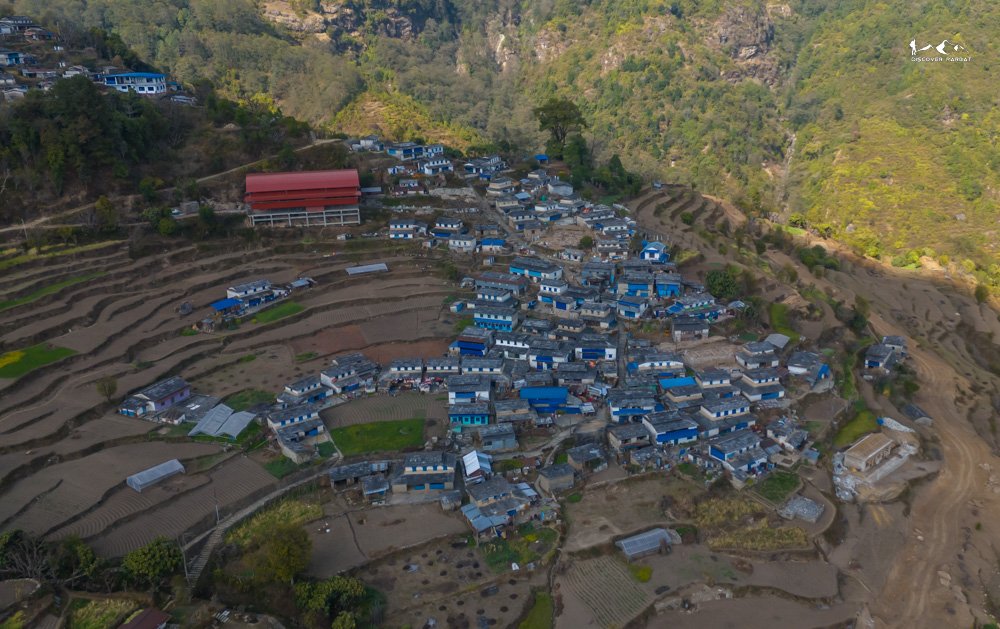
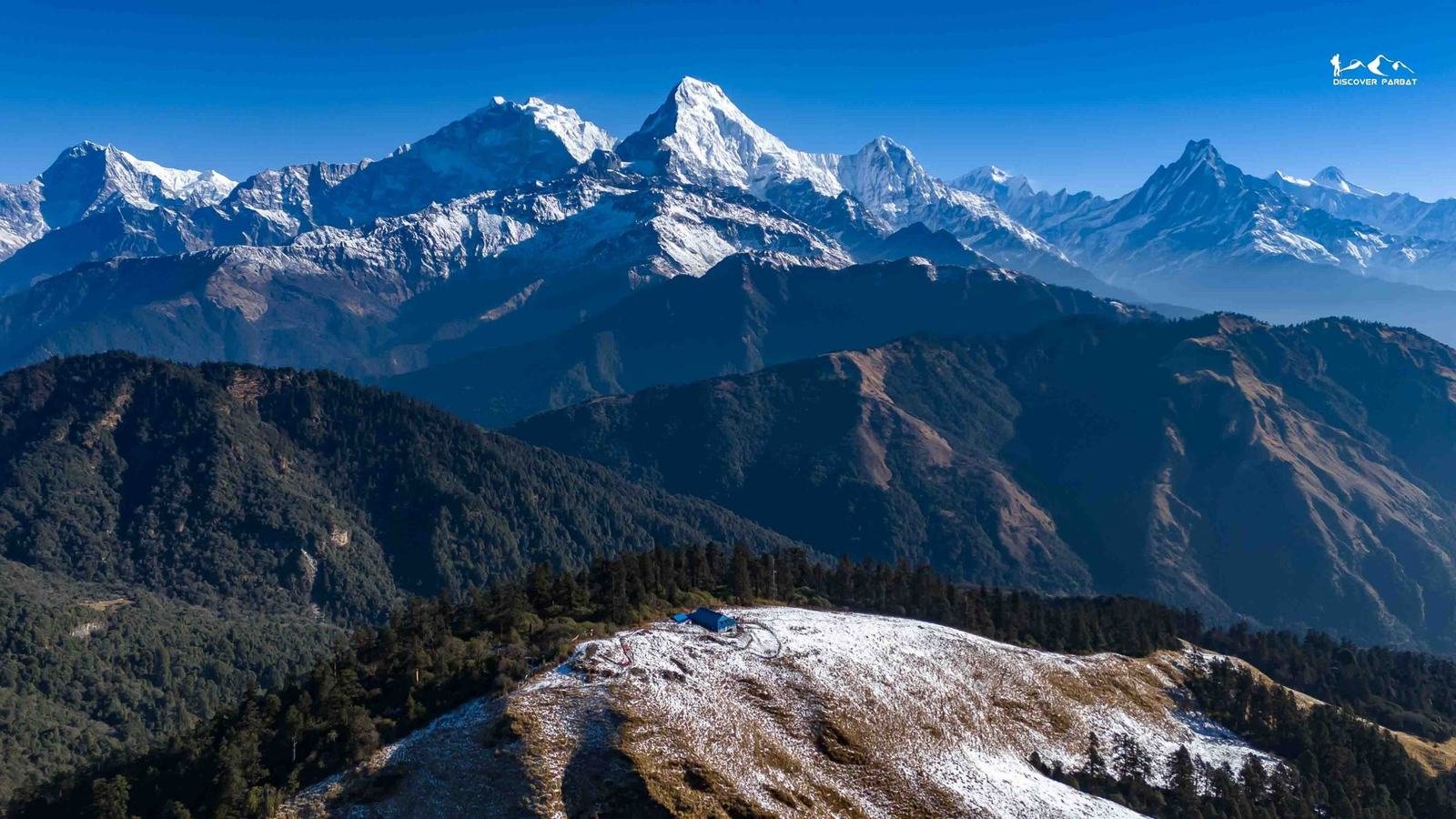
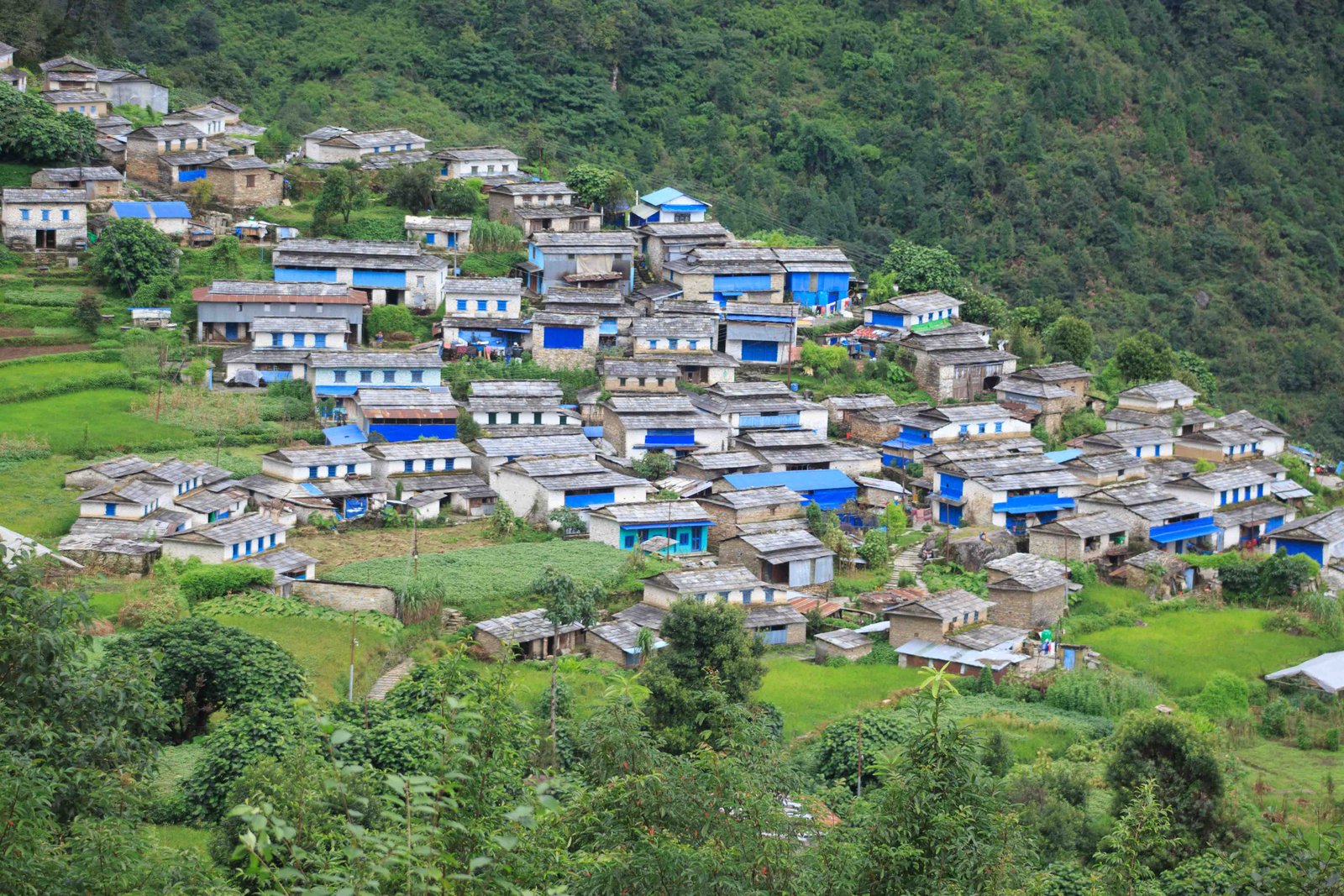
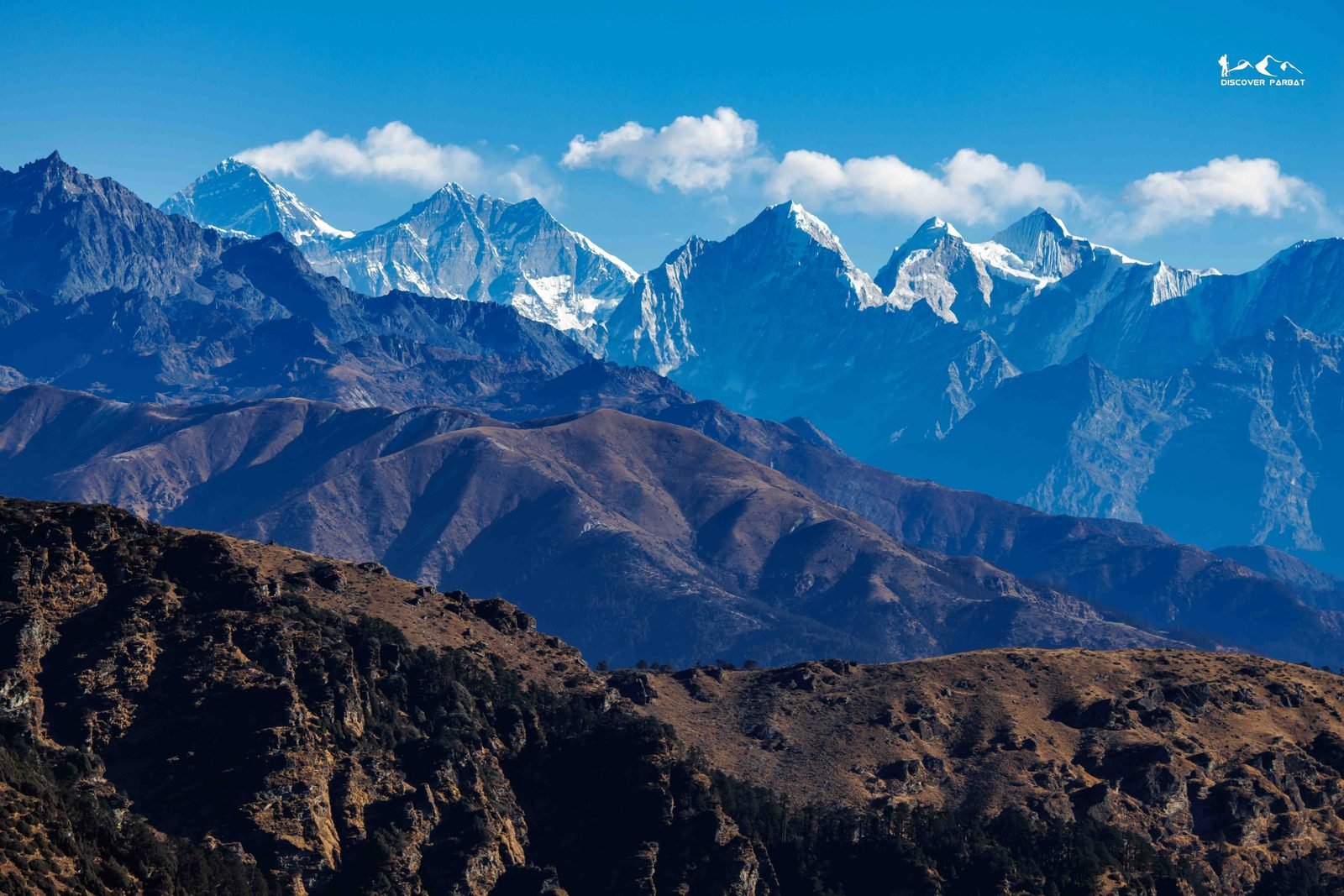
The standard Kokhe Danda route stays outside the Annapurna Conservation Area, so it needs no ACAP permit. It climbs to 3,309 m, the highest point of Parbat district, with Dhaulagiri, the Annapurnas and Machhapuchhre in view, and passes Magar villages like Haljure and Lespar. The aerial at the top of this page was taken above Kokhe Danda under a Parbat DAO permit. Flight permission comes from the District Administration Office in Parbat, which is where we take our own permits. One caution: the alternative route that exits via Nayapul does enter the conservation area.
Pikey Peak Trek, lower Everest region
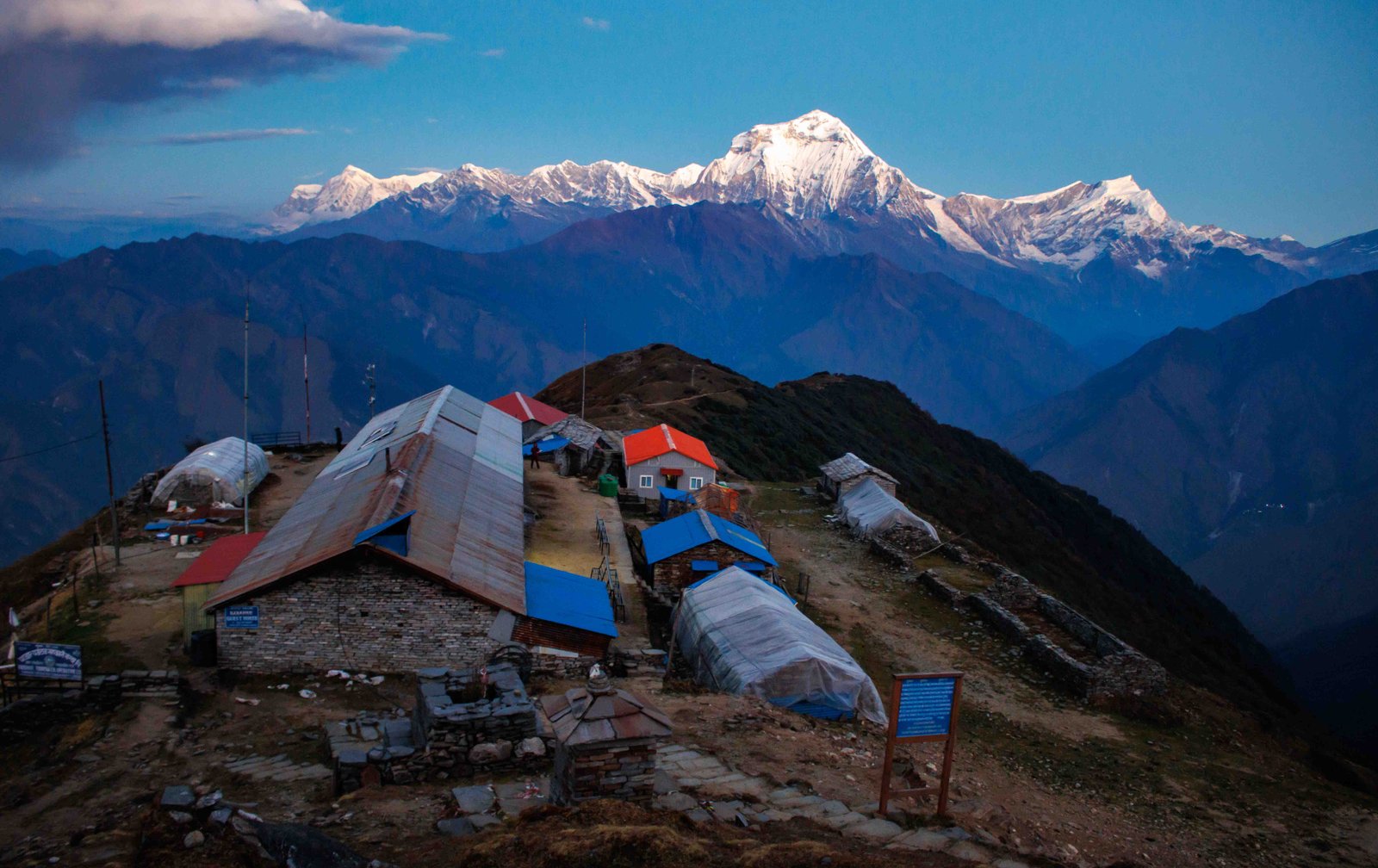
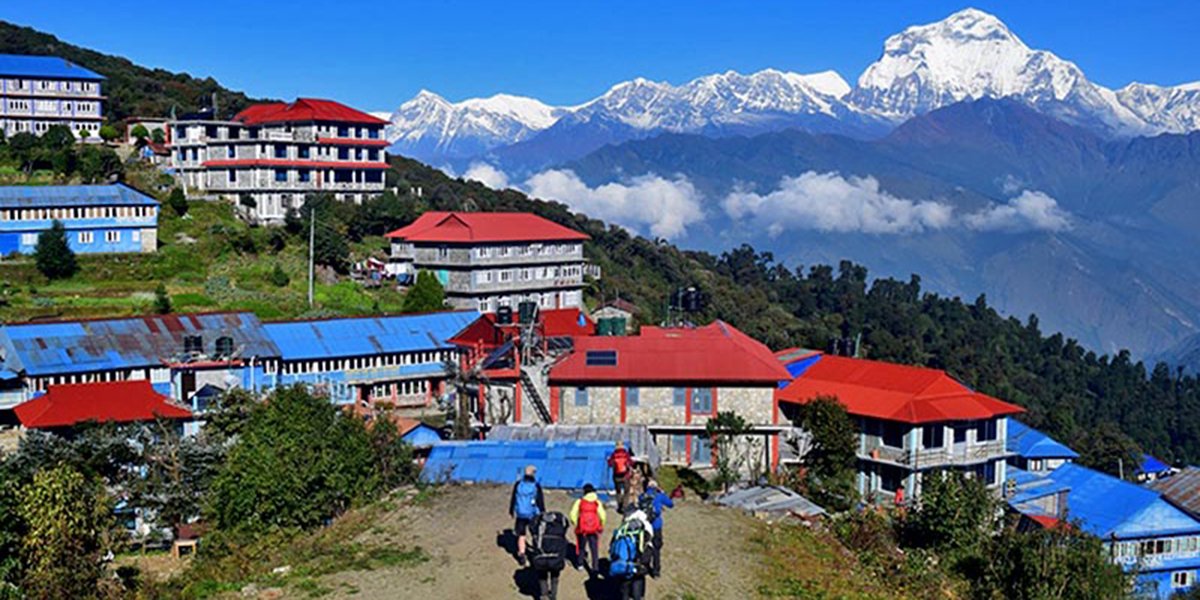
Pikey Peak (4,065 m) sits south of Sagarmatha National Park and needs no trekking permits, yet gives you Everest and Lhotse on the horizon, visible even from Dhap, where the trek starts. For drone pilots, that is Everest views without the park process. Flight permission comes from the District Administration Office of the district you will fly in, so ask CAAN which office applies to your route.
Our honest advice
For a one- or two-week trek inside a national park, the drone paperwork is often not worth it: several offices, a fee that can cost more than the trek, and time in Kathmandu you would rather spend walking. Many trekkers leave the drone at home, or keep it for a trek outside the protected areas.
If you do bring one, start early. Email CAAN with your drone model and plan before you book flights, declare the drone on arrival, and allow time in Kathmandu for registration. Fly low, fly in daylight, keep it in sight, and always ask before flying over people or homes. On our treks, your guide can help you talk to villagers about where flying is welcome.
Weighing up where to go? Our list of underrated treks in Nepal includes both drone-friendlier routes alongside the classics.
Frequently asked questions
What is the process to get a drone permit in Nepal?
Declare the drone at Tribhuvan airport customs, register it with CAAN in Sinamangal, get national park or conservation area approval if you will fly inside one, get airport permission if you will fly near an airport, then get the flight permit from the District Administration Office of the district where you will fly.
Do drones under 250 grams need a permit in Nepal?
Yes. In Nepal every drone needs CAAN registration and a flight permit, including drones under 250 grams such as the DJI Mini series. The 250 g exemption used in Europe and the US does not apply here, and in June 2026 police in Mustang seized a 240-gram drone flown without permission.
Can foreigners fly a drone in Nepal?
Yes, but only with paperwork. Foreign nationals need a Temporary Drone Registration from the Flight Safety Standards Department of the Civil Aviation Authority of Nepal (CAAN), then permission to fly for the area, and extra approval for national parks and conservation areas. Flying without permission is illegal and drones are regularly seized.
How much does a drone permit cost in Nepal for foreigners?
CAAN registration for foreigners costs USD 50 plus 13% VAT. Flying inside a national park or conservation area costs much more: the Department of National Parks and Wildlife Conservation lists the drone fee in Sagarmatha (Everest) National Park as the same as its filming fee, US$1,500 for foreigners. Confirm current fees with each office before you travel.
Do I have to visit the District Administration Office in person?
Not always. Sometimes you can phone or email the District Administration Office and they will issue the permit online once you send all the documents. This helps when the office is off your route, for example Salleri (Solukhumbu) for the Everest Base Camp trek, or Manang and Mustang for the Annapurna Circuit. It depends on the office, so contact them well before your trek.
Do I need to declare my drone at Kathmandu airport?
Yes. A Tribhuvan International Airport customs declaration for the drone is one of the documents CAAN asks for when you register, so declare it when you arrive.
Can I fly a drone at Everest Base Camp?
Only with full approval. The whole Everest Base Camp trail is inside Sagarmatha National Park. You need CAAN registration, an approval letter from the Department of National Parks and Wildlife Conservation in Kathmandu, an approval letter from the District Administration Office in Salleri, and then permission from the park itself.
Can I fly a drone in the Annapurna region?
Not on an ordinary trekking permit. Poon Hill, Annapurna Base Camp, the Annapurna Circuit, Mardi Himal, Khopra Ridge and Mustang are inside the Annapurna Conservation Area, so you need ACAP approval, CAAN registration and a DAO permit, plus Pokhara airport permission for ABC and Mardi Himal. In June 2026 police in Mustang seized a tourist's 240-gram drone for flying without permission.
Which treks in Nepal are easiest for flying a drone?
Treks outside national parks and conservation areas, because you avoid the park approval and fee. The standard Kokhe Danda Trek in Parbat and the Pikey Peak Trek in the lower Everest region are both outside protected areas. You still need CAAN registration and permission for the area, and must respect no-fly zones.
Sources
Checked on 25 November 2026. Always confirm with these offices before you travel.
- Civil Aviation Authority of Nepal: drones (temporary registration for foreign nationals)
- CAAN: required documents for drone registration (foreigners), PDF
- Sagarmatha National Park: Drone Related Procedure 2075
- Department of National Parks and Wildlife Conservation: Sagarmatha National Park brochure (fees), PDF
- Ratopati: Indian tourist's drone seized in Mustang for flying without permission (June 2026)
- The Kathmandu Post: Chinese tourist fined Rs 25,000 for illegally flying drone in Manang