A new ACAP checkpoint in the last village before the base camp
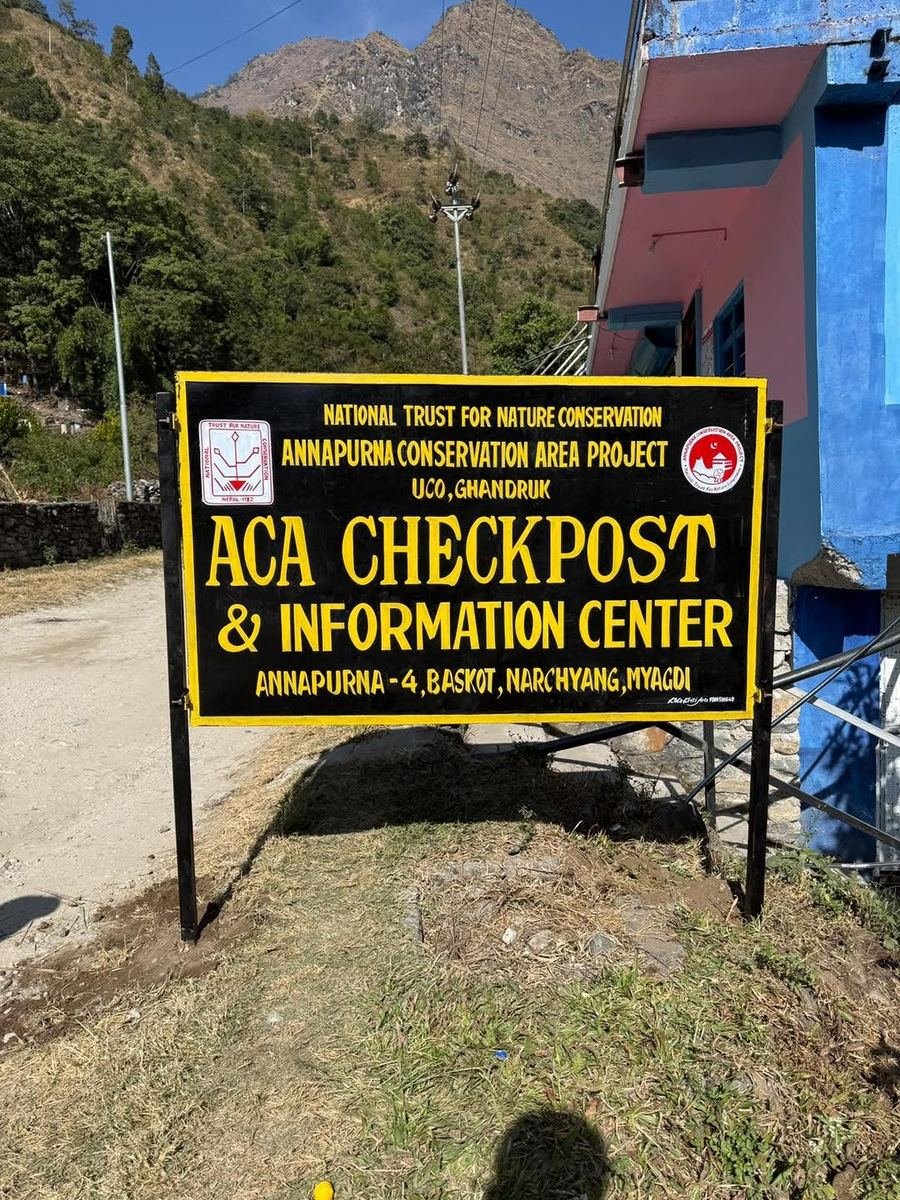
The Annapurna Conservation Area Project (ACAP) has officially set up a checkpoint and information centre at Baskot in Narchyang, Myagdi, on the trail to Annapurna North Base Camp.
The signpost for the new ACA Checkpoint & Information Center went up on 21 November 2026 (Mangsir 5, 2083 BS). It stands in Annapurna Rural Municipality-4, Baskot, Narchyang, and is run by ACAP's Unit Conservation Office in Ghandruk. Baskot (sometimes written Banskot) is the last village on the route to Annapurna I Base Camp, so every trekker heading up the valley now passes it.
- Until now, trekkers could reach Annapurna North Base Camp without an ACAP permit, because there was no checkpoint on this route
- That is no longer the case: permits are now checked at Baskot, the last village before the base camp
- Get your ACAP permit in Pokhara or Kathmandu before you leave, not on the trail
ACAP permit fees for Annapurna North Base Camp
The base camp lies inside the Annapurna Conservation Area, so the standard ACAP entry permit applies:
| Nationality | ACAP permit fee |
|---|---|
| Foreign nationals | NPR 3,000 |
| Indian nationals | NPR 1,000 |
| Other SAARC nationals | NPR 1,500 |
Buy it before you go. Get your permit at the Nepal Tourism Board office in Pokhara or Kathmandu. Under ACAP's general rules, permits issued at a checkpoint cost double, and there is no reason to risk being turned back in Narchyang after a long drive.
Annapurna North Base Camp, Annapurna I Base Camp, Maurice Herzog Base Camp: one place
You will see this trek sold under several names. They all lead to the same base camp on the north side of Annapurna I (8,091 m):
- Annapurna North Base Camp (or North Annapurna Base Camp): the most popular name
- Annapurna I Base Camp: after the mountain itself
- Maurice Herzog Base Camp: after the French expedition that made the first ascent of Annapurna in 1950, the first 8,000-metre peak ever climbed
Don't confuse it with the classic Annapurna Base Camp Trek (ABC) in the Annapurna Sanctuary, which approaches the massif from the south via Chhomrong and is a completely different trek.
The route today: a road to Humkhola, then the Mistri Khola valley
The approach has changed a lot in recent years. Hydropower projects in the valley built a road that now reaches Humkhola at about 2,800 m, cutting out days of walking that the trek once required.
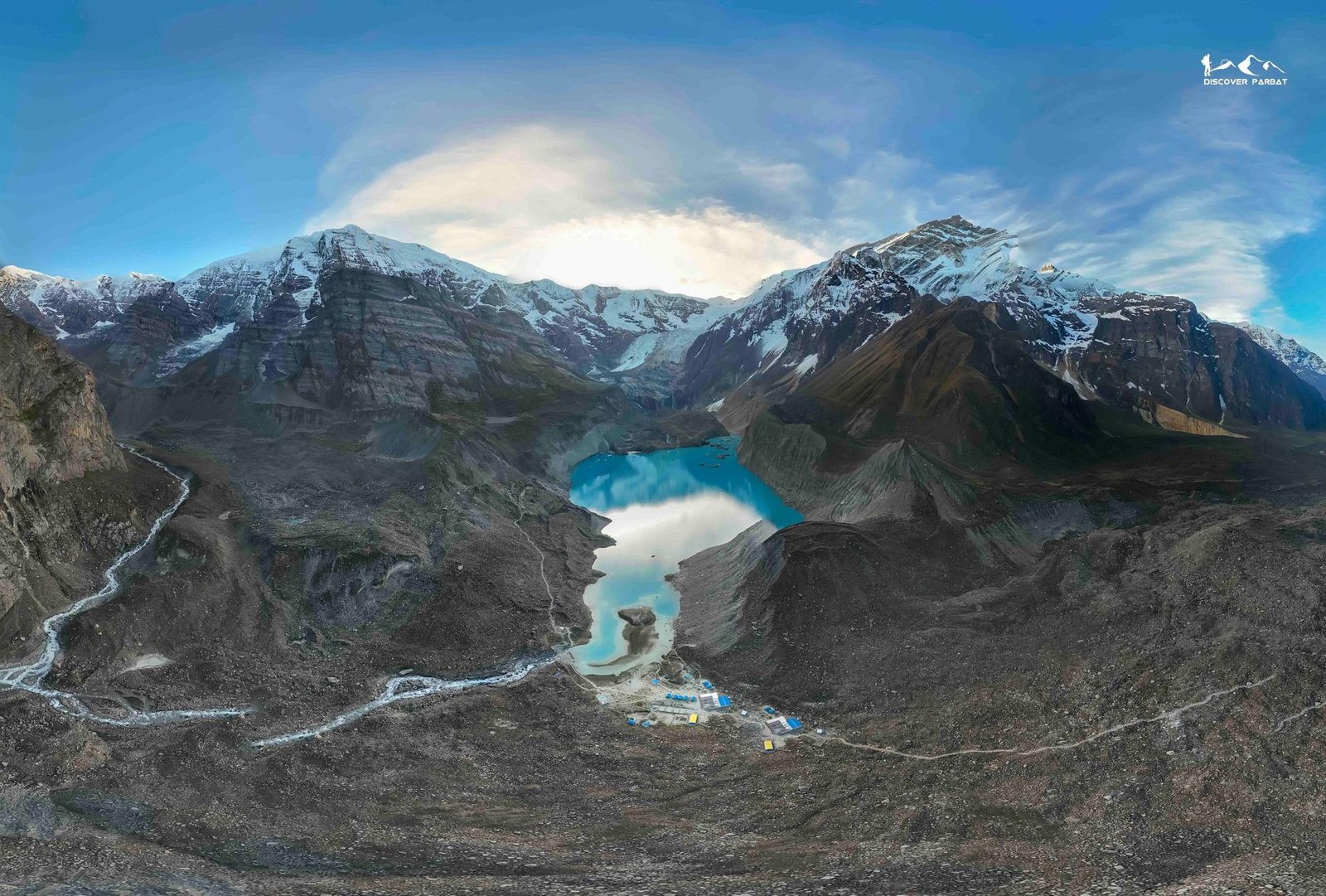
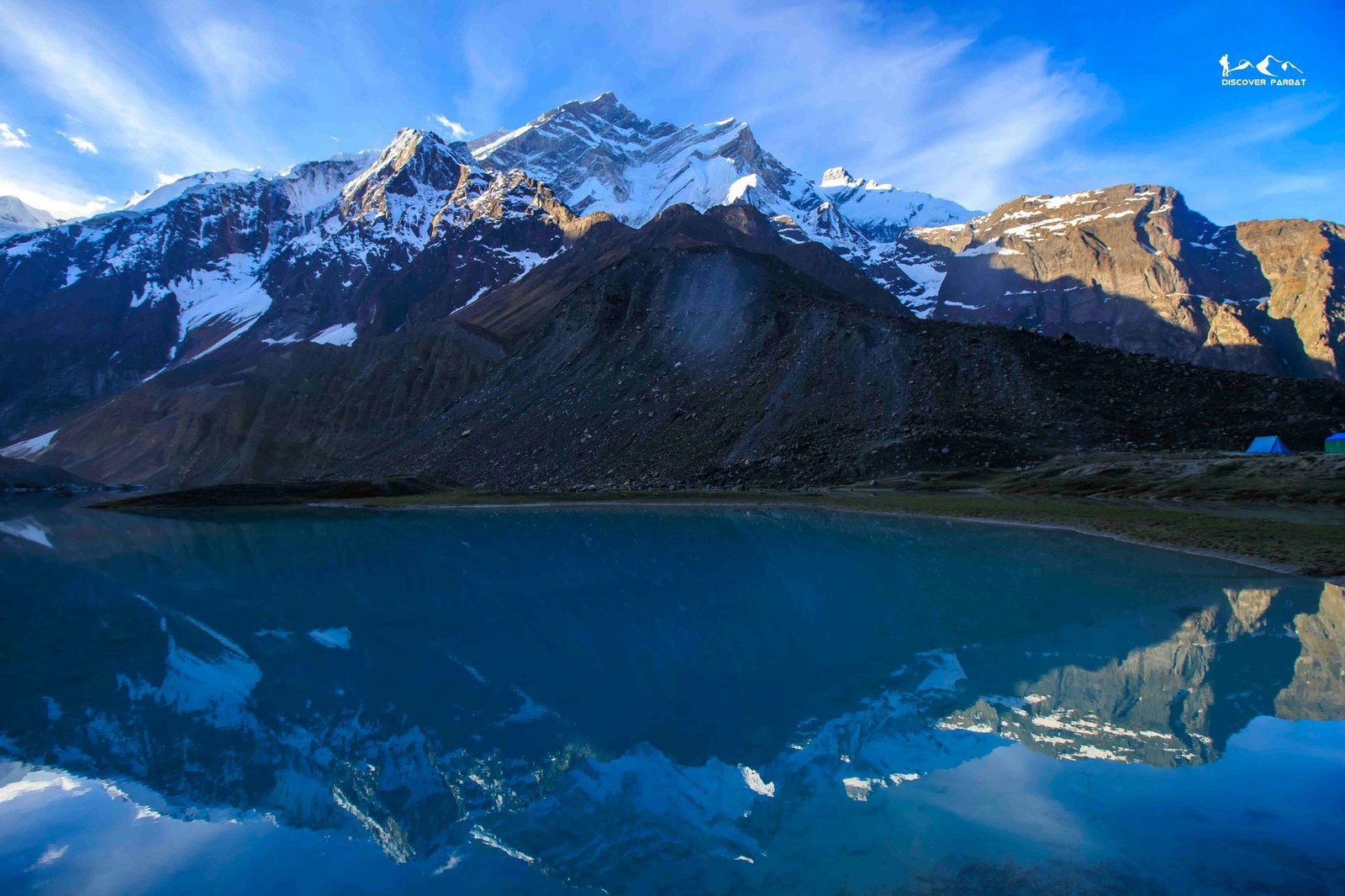
From there the trail follows the Mistri Khola, the river that drains Panchakunda Lake, the glacial lake right below the base camp. The aerial view at the top of this page shows how the camp sits at the lake's outflow, under the walls of Annapurna I.
Camps and crowds: what to expect
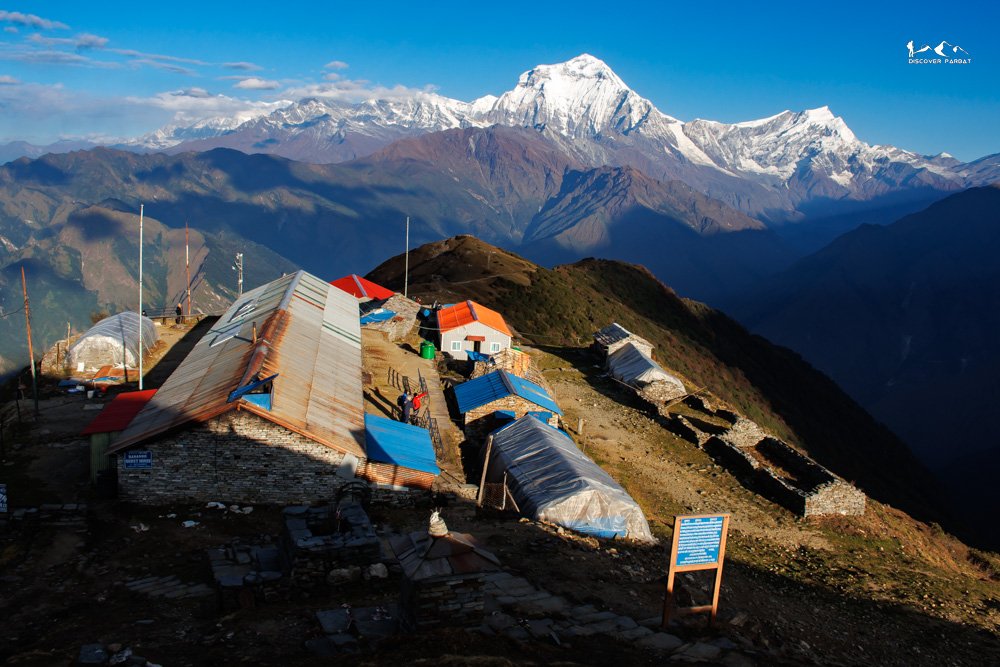
Accommodation on the upper trail is basic camps, not teahouses. Capacity is limited, and that matters more than it used to.
With the road now reaching Humkhola, Annapurna North Base Camp has become hugely popular with Nepali trekkers, who often do the whole trip in three days from Pokhara. During the festival season and on weekends, the camps can get overbooked.
In busy periods, this may not be the best choice for foreign trekkers.
If you are travelling from abroad and want a quiet Himalayan experience, avoid festival weeks and weekends, or pick a trail with the same big-mountain scale and far fewer people. The Khopra Ridge Trek faces Dhaulagiri, Annapurna South and Nilgiri from a high community-lodge ridge, and the Kokhe Danda Trek climbs to the highest point of Parbat (3,309 m) through Magar villages and family homestays, a few hours from Pokhara.
Our advice if you're planning Annapurna North Base Camp
- Get your ACAP permit in Pokhara or Kathmandu before driving to Narchyang.
- Plan your dates around Nepali festivals and weekends, when the camps fill up.
- Confirm camp space before you set off, especially in peak season.
- Allow time to acclimatise. A three-day dash suits locals used to the hills, not most visitors flying in.
- Want the views without the queue? The Khopra Ridge Trek faces Dhaulagiri and the Annapurnas across the Kali Gandaki, and the Kokhe Danda Trek is a quiet 5-day ridge walk from Pokhara (or 3 days on the short Kokhe Danda trek).
Frequently asked questions
Do I need an ACAP permit for Annapurna North Base Camp?
Yes. ACAP has opened a checkpoint and information centre at Baskot in Narchyang, the last village on the route, so foreign trekkers who used to walk in without a permit will now be checked.
How much is the ACAP permit?
NPR 3,000 for foreign nationals, NPR 1,000 for Indian nationals and NPR 1,500 for other SAARC nationals. Buy it in Pokhara or Kathmandu before you go.
Are Annapurna North Base Camp, Annapurna I Base Camp and Maurice Herzog Base Camp the same place?
Yes. They are different names for the same base camp on the north side of Annapurna I. Annapurna North Base Camp is the most commonly used name. The Herzog name comes from the 1950 French expedition led by Maurice Herzog that made the first ascent of Annapurna I.
Where exactly is the new checkpoint?
At Baskot (sometimes written Banskot), Annapurna Rural Municipality-4, Narchyang, Myagdi. The signpost was installed on 21 November 2026 (Mangsir 5, 2083 BS). It is run by ACAP's Unit Conservation Office in Ghandruk.
Is Annapurna North Base Camp crowded?
It can be. A road now reaches Humkhola at about 2,800 m, so many Nepali trekkers do the trip in three days from Pokhara. The basic camps can be overbooked during festivals and on weekends, which makes those dates a poor choice for foreign trekkers.