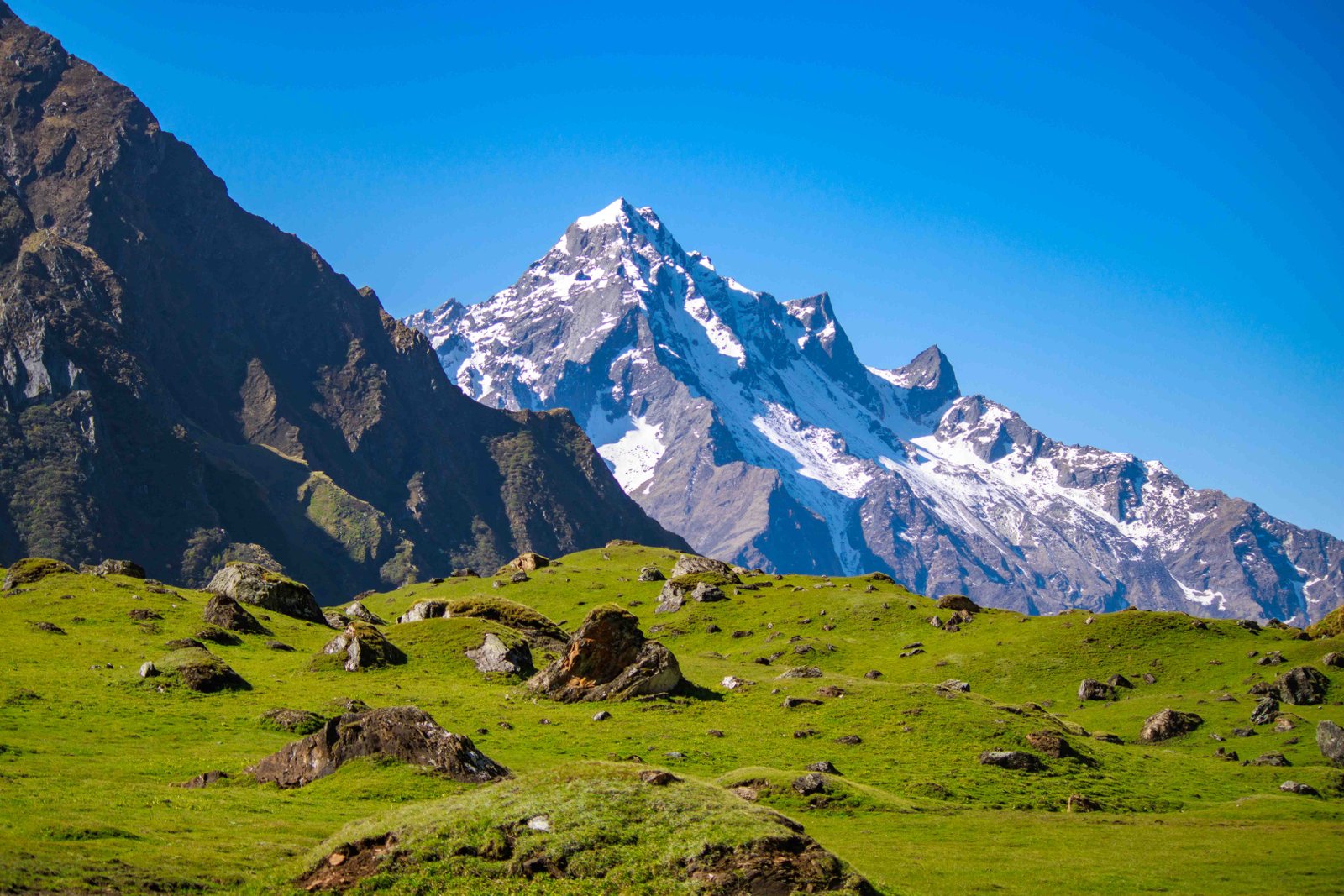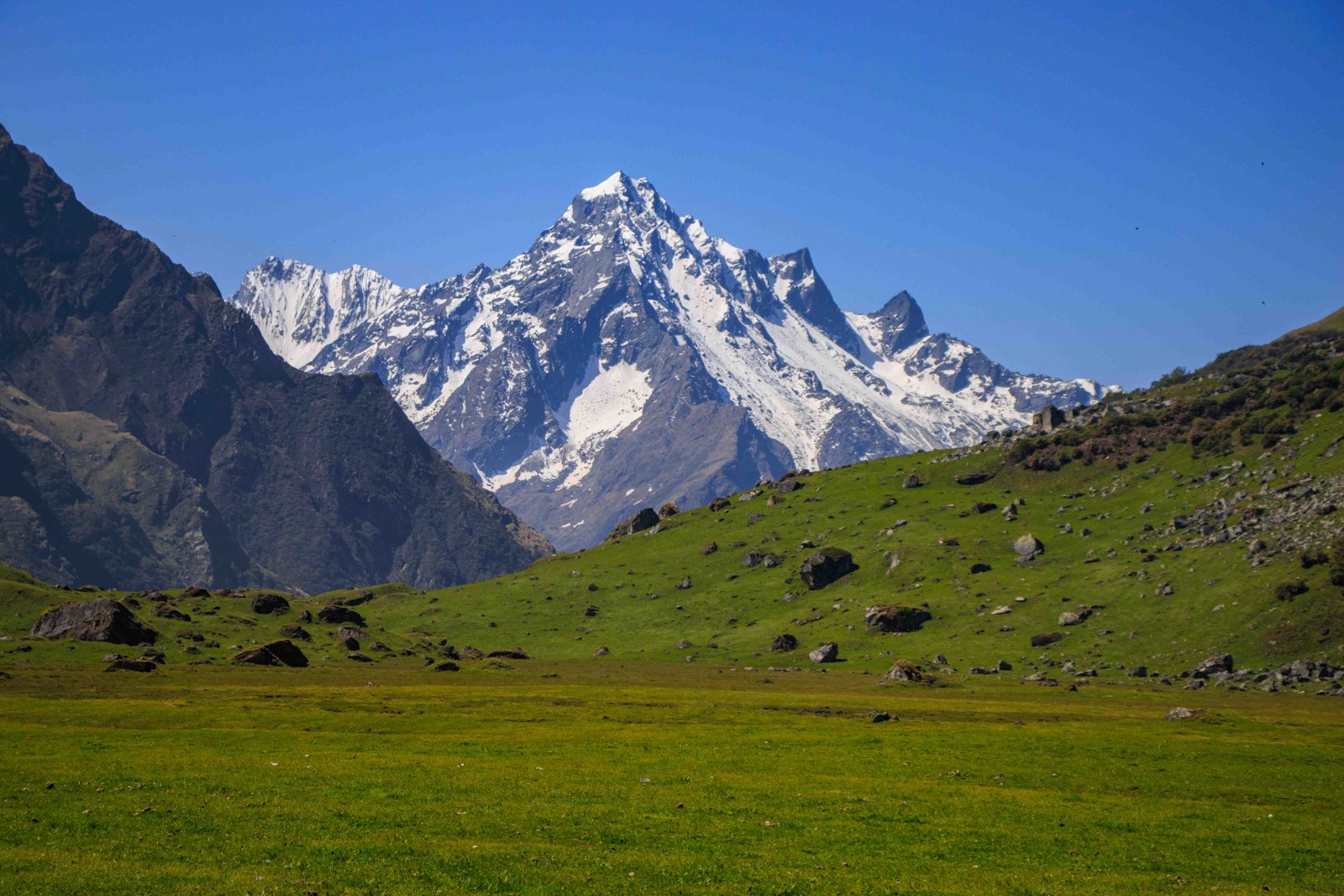
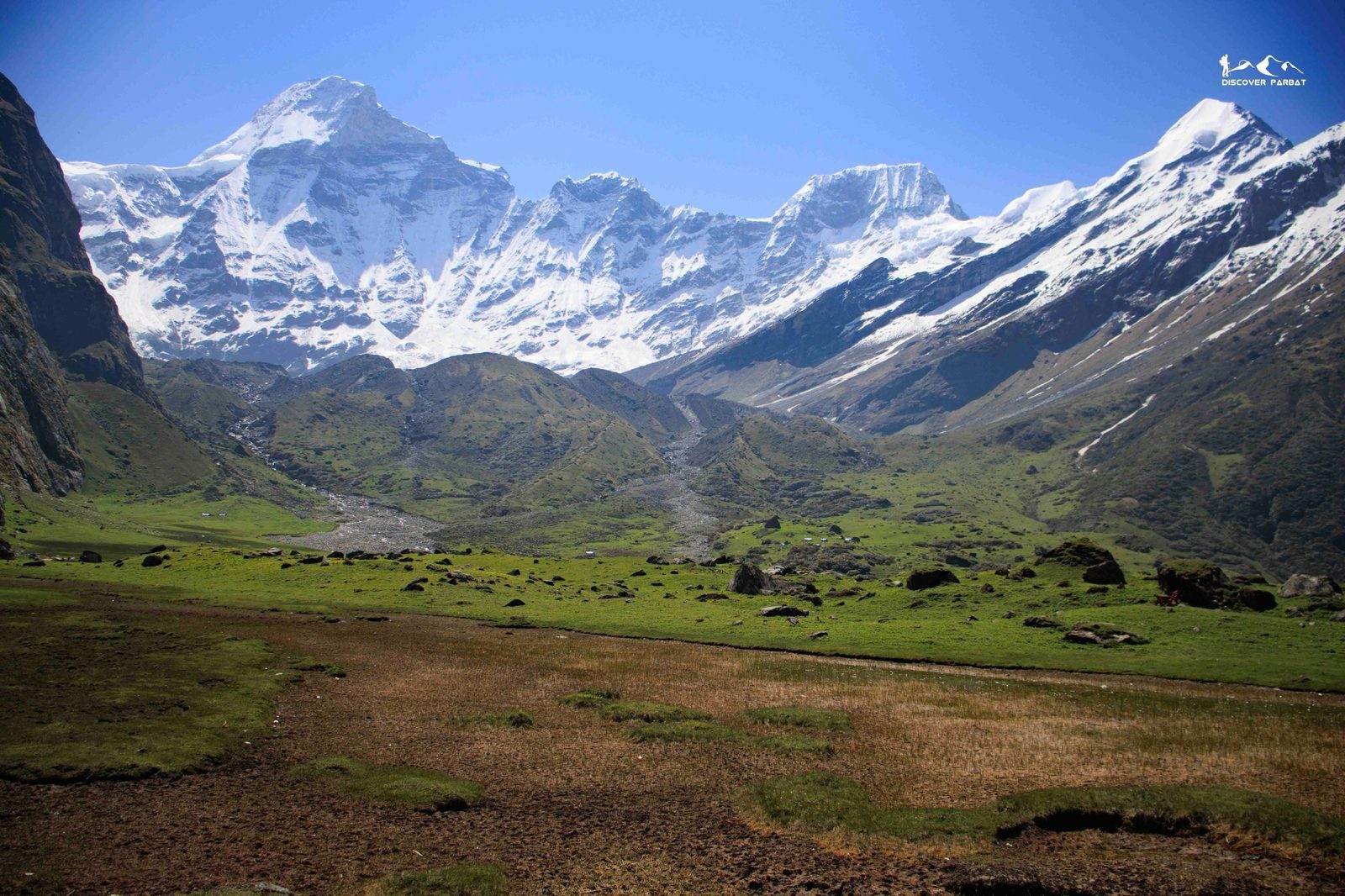
Most Himalayan base camps sit at the end of a narrow, rocky valley. Api Base Camp sits in a wide green bowl with mountains standing all the way around it.
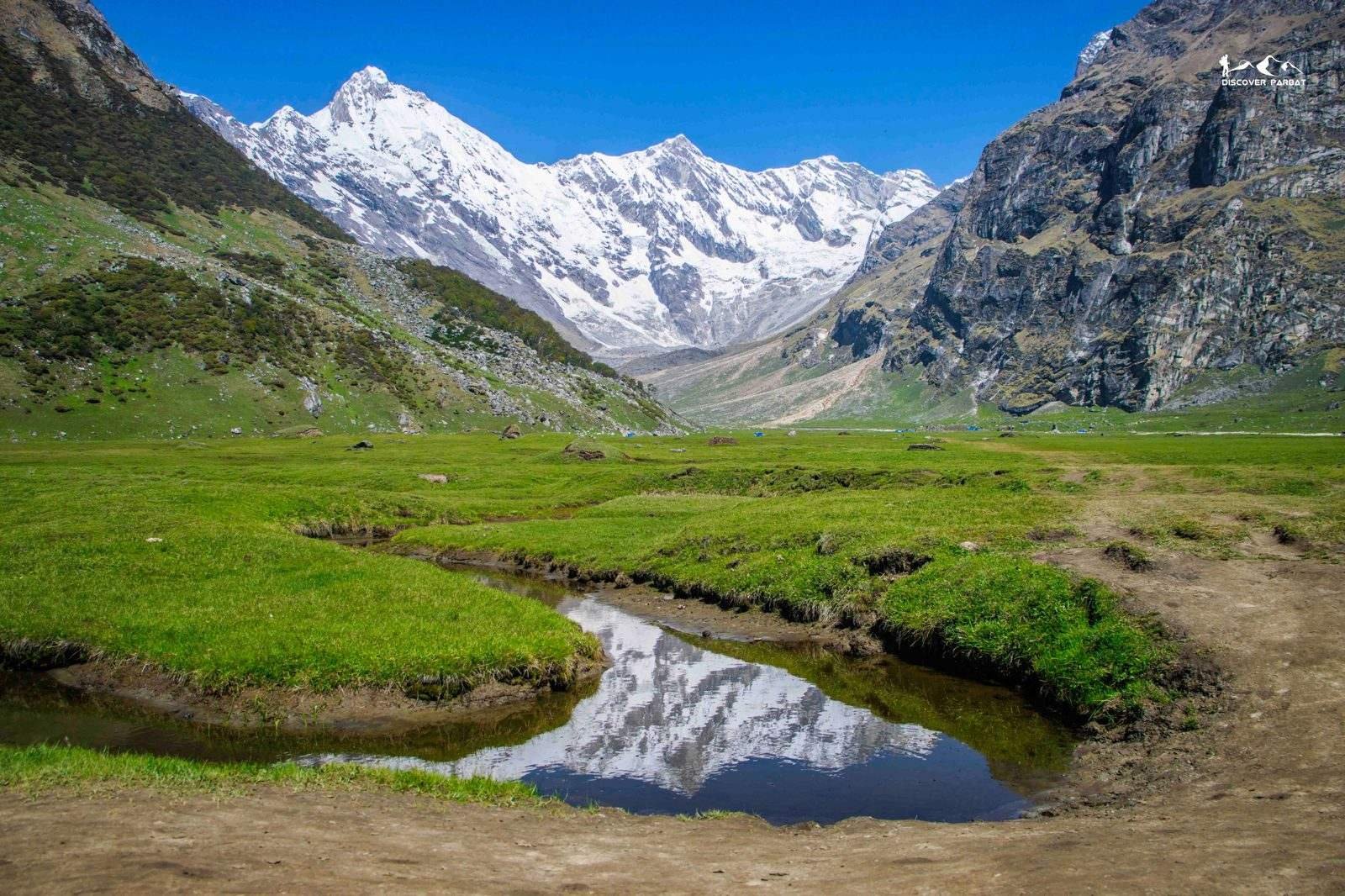
It took three days of walking up the Chameliya valley in Darchula to get here, through forest, homestay villages and the pastures of Dhauli Odhar. Then the trail opens onto a broad, flat meadow at about 3,820 m with streams running through it, and every side of the valley is snow. This is the southern base camp of Api Himal (7,132 m), the highest mountain in far-western Nepal, inside the Api Nampa Conservation Area near the borders with India and Tibet.
The full route, day-by-day itinerary and price are on our Api Himal Base Camp Trek page. This article is only about what you see once you arrive.
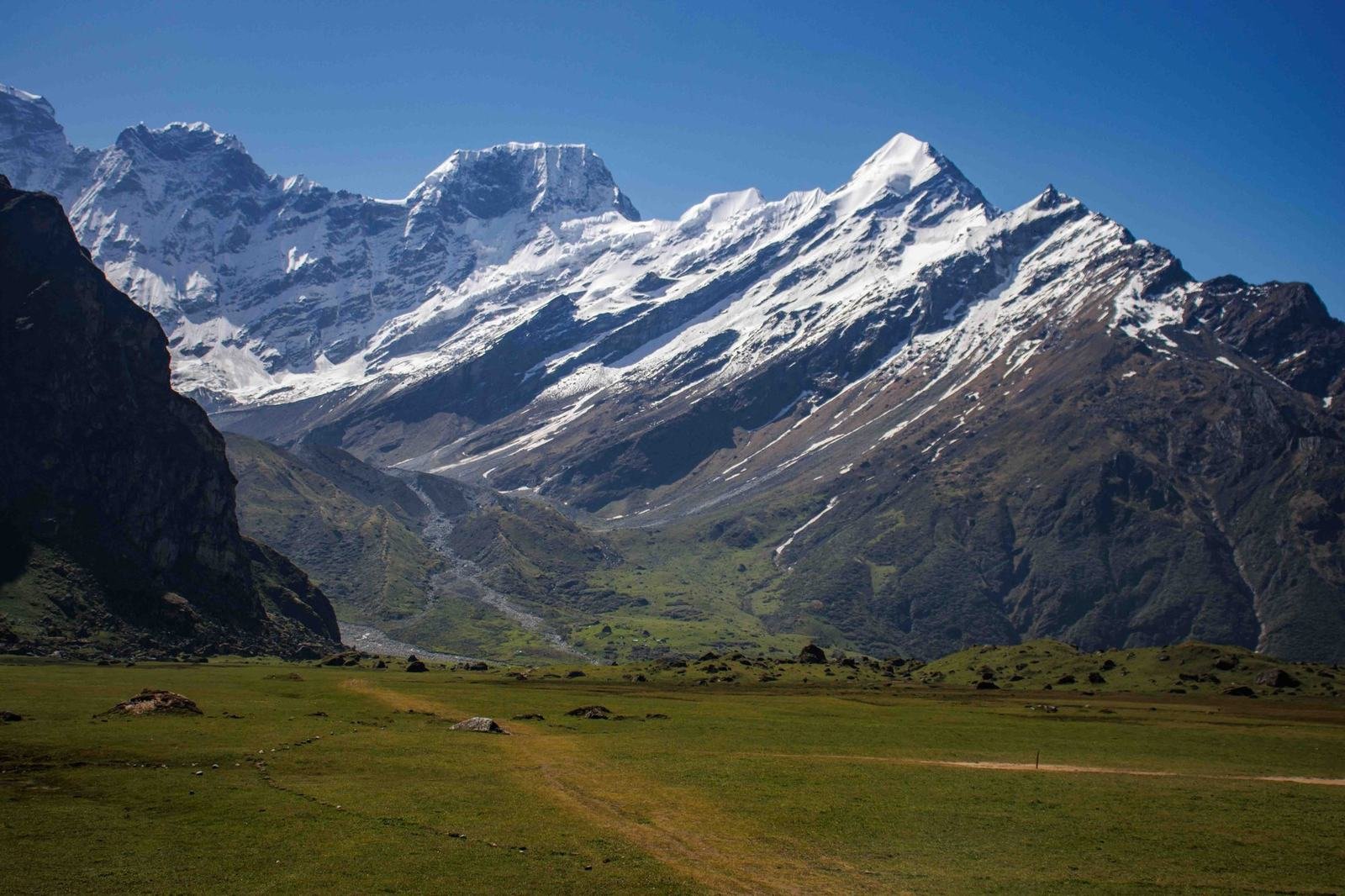
All the way aroundThe mountains that ring the valley
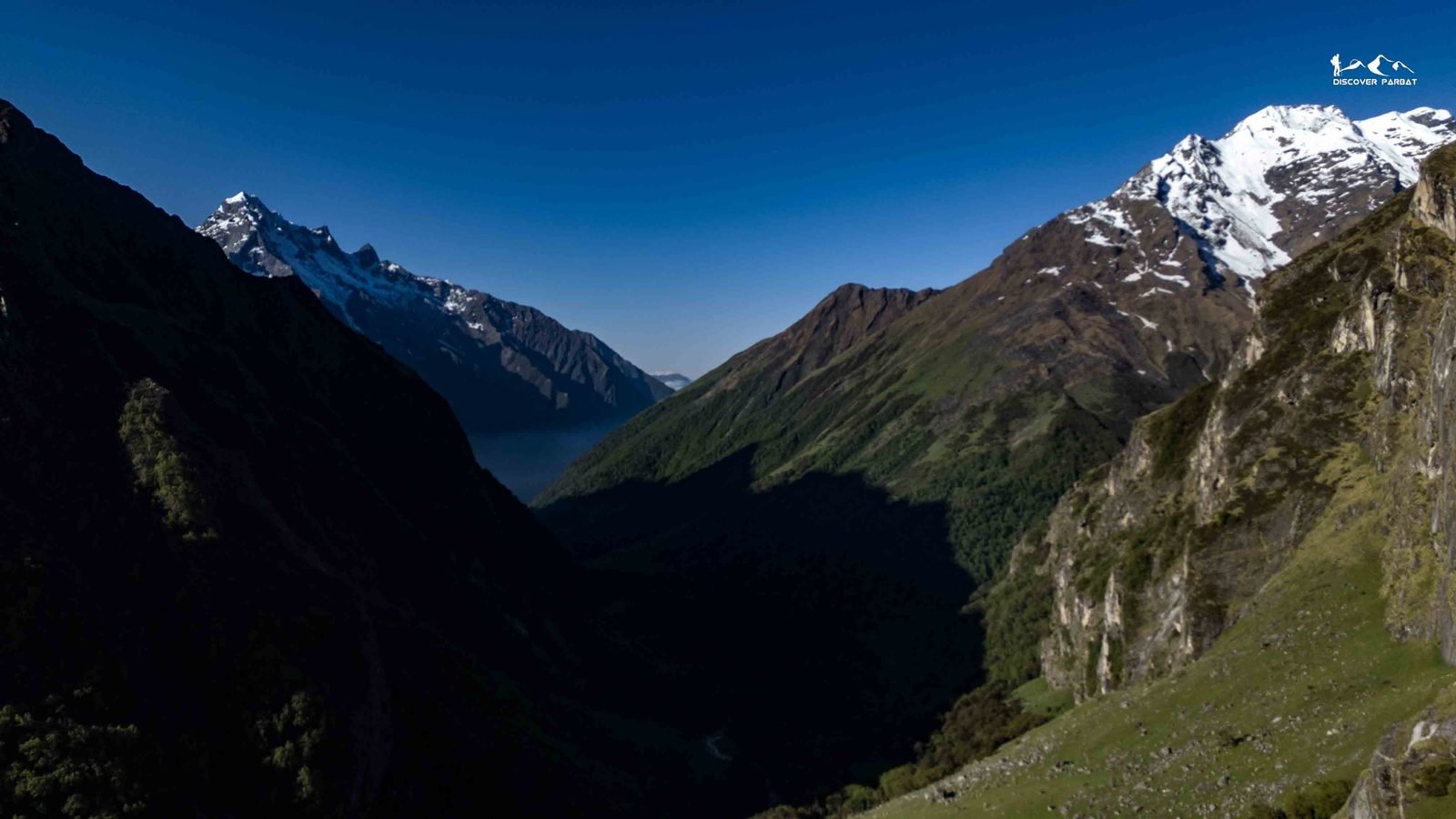
Standing in the middle of the meadow, you can turn a full circle and see mountains on every side. Four of them shape the views from camp:
What surprised me most is how close the snow feels. At most base camps you look up at one big mountain. Here the walls rise straight out of the pasture on both sides, with glaciers and icefalls hanging above the grass, so the whole valley feels enclosed by mountains.
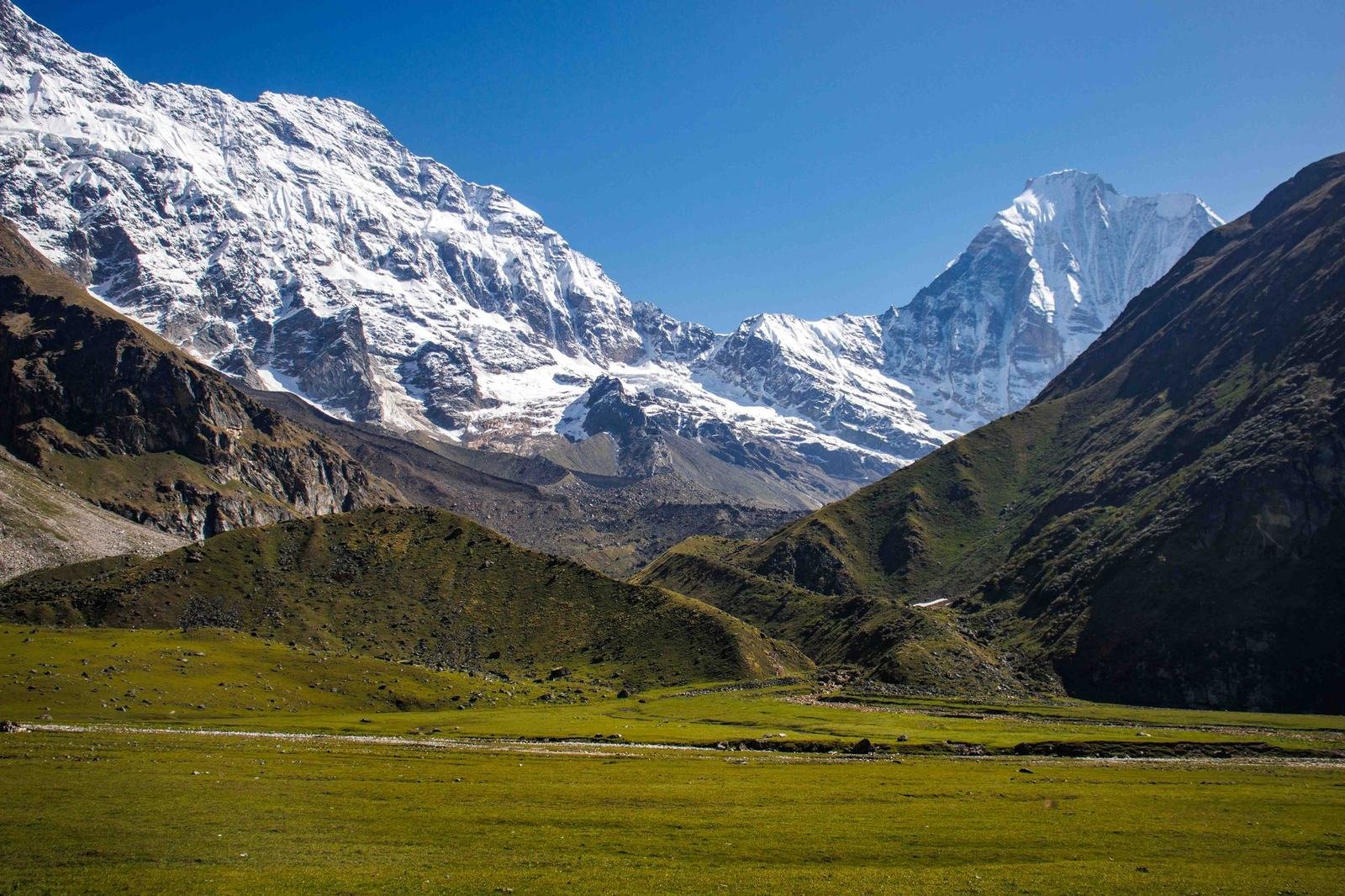
The meadowPastures, streams and still water
The ground at base camp is soft, flat grassland, cut by small streams and pools of meltwater. On a still morning the pools hold a perfect reflection of the peaks, like the photo at the top of this page. You only need to walk a few minutes from camp to find one.
Boulders are scattered across the pasture. They have come down from the slopes above over the years, and they are the only thing that breaks up the flat green. In June the grass is at its brightest.
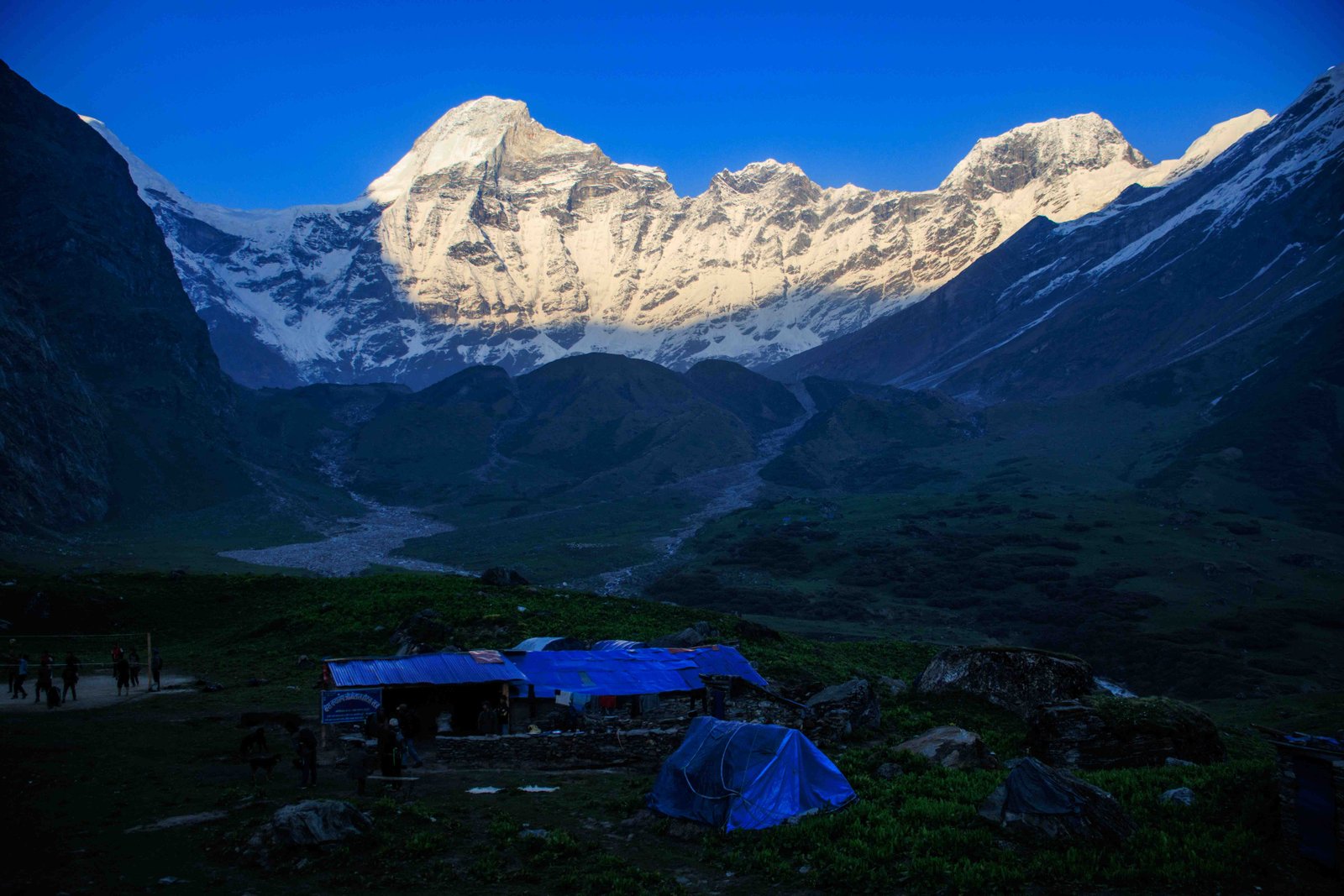
After the sun goesEvening light and nights under the snow
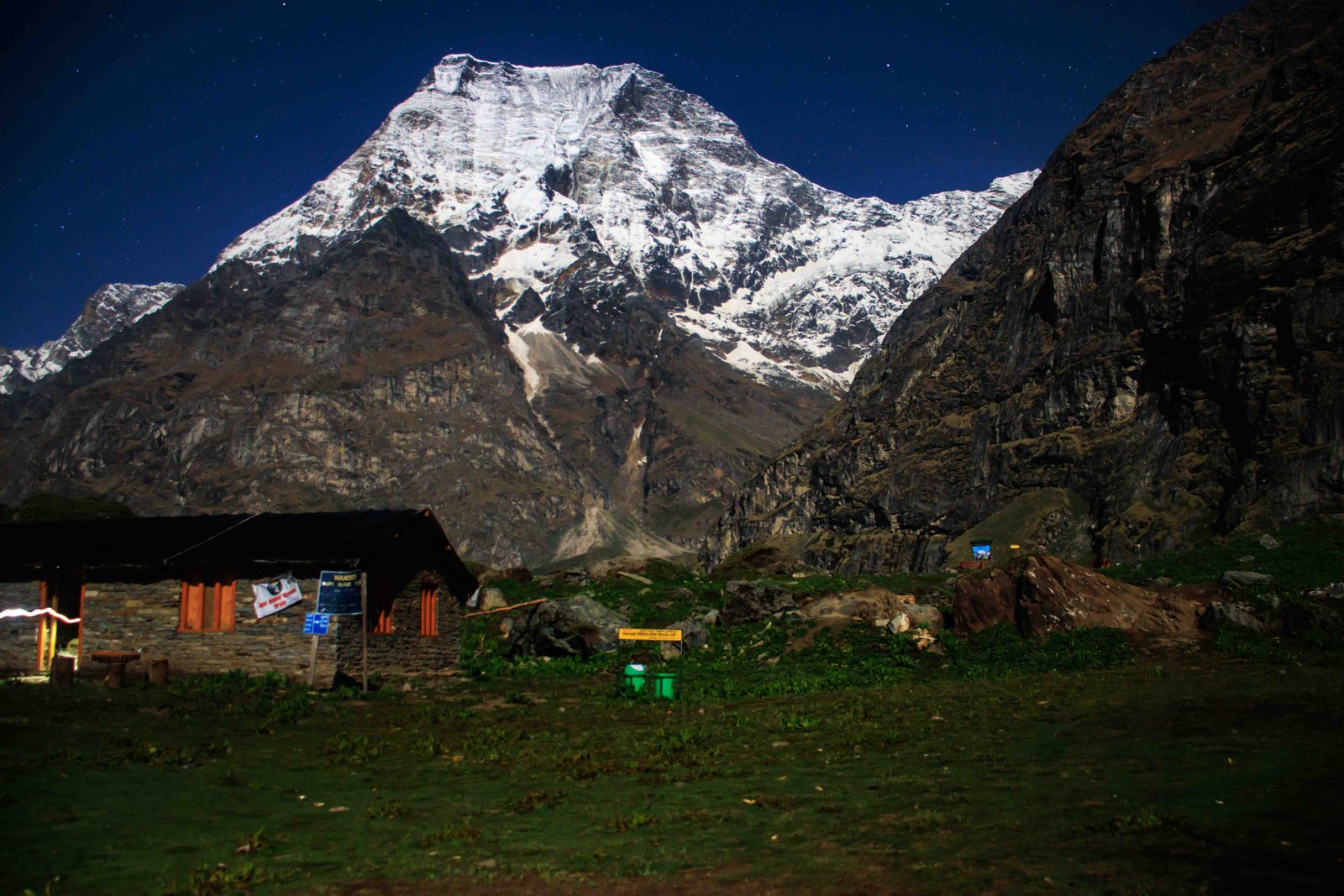
Bring a jacket outside in the evening. As the sun drops behind the western ridges, the valley floor goes blue and cold, but the high faces of Bobaye and Nampa keep the light for several more minutes. The rock turns gold, then pink, then fades. It is the best photo of the day, and it is right in front of the camp.
On a clear night the snow faces glow under the moon and the stars come right down to the ridgelines.
Above campKalidhunga and Ringdepani lakes
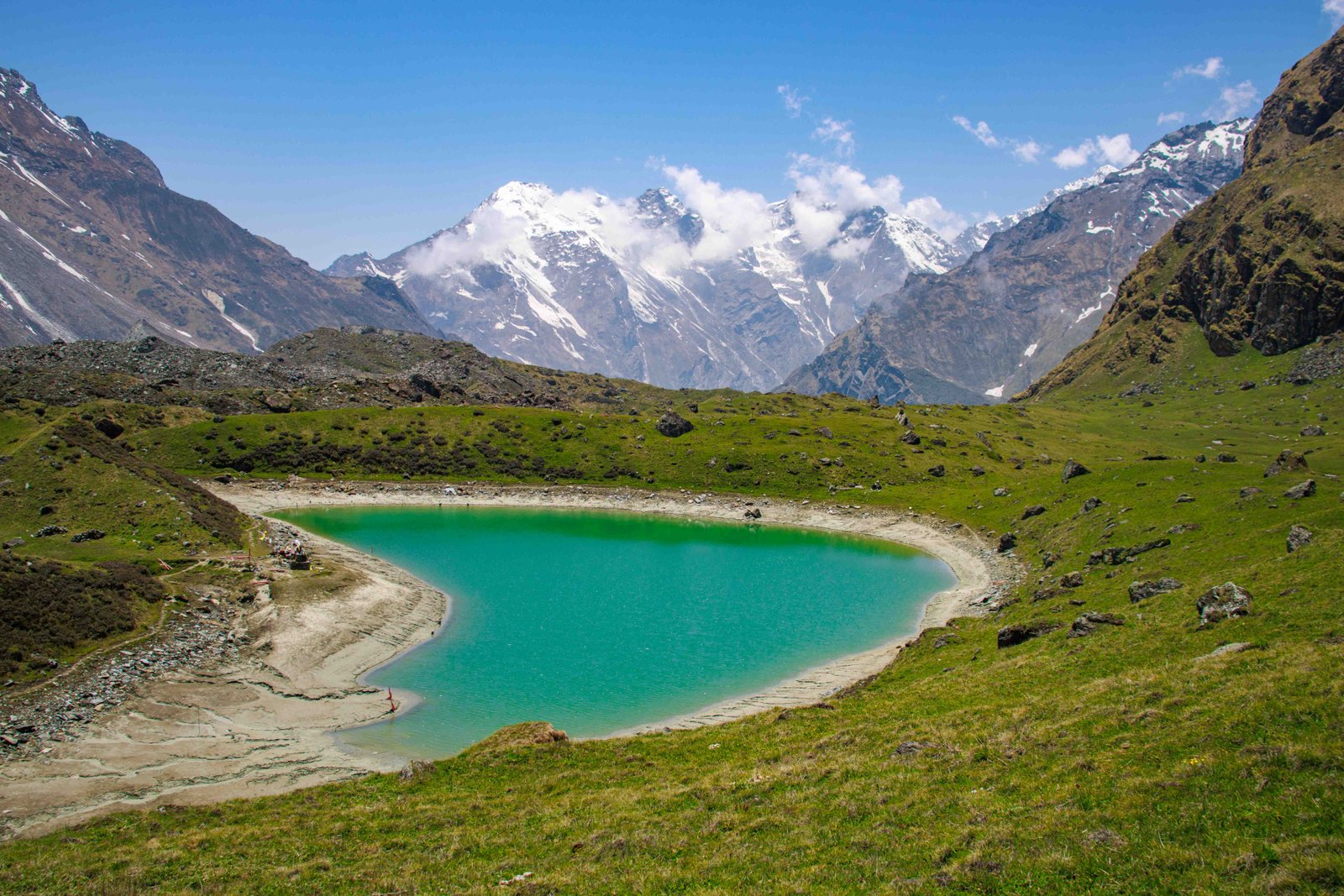
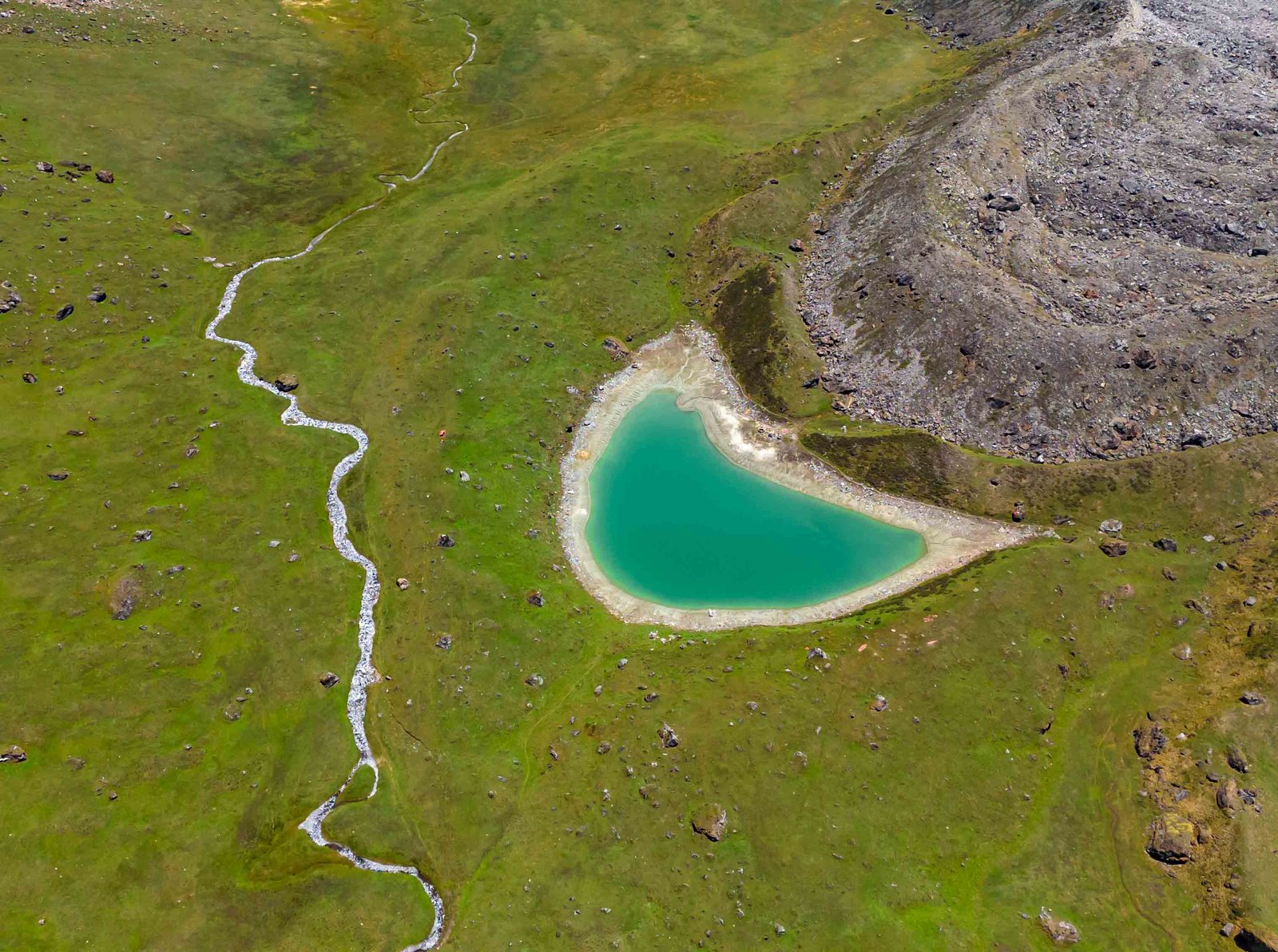
Two lakes sit in the ridges above base camp. Each one is about 1.5 hours on foot from where the teahouses stand, so you can see one in a morning and be back for lunch.
Kalidhunga Lake, at 4,160 m, is a bright turquoise pool in a fold of green pasture under a grey moraine. From the ridge above, you can see the glacial stream winding past it across the grass. Ringdepani Lake is smaller and stiller, tucked among the ridges.
Mid-April to the monsoonWhen the valley fills up: yarsa season
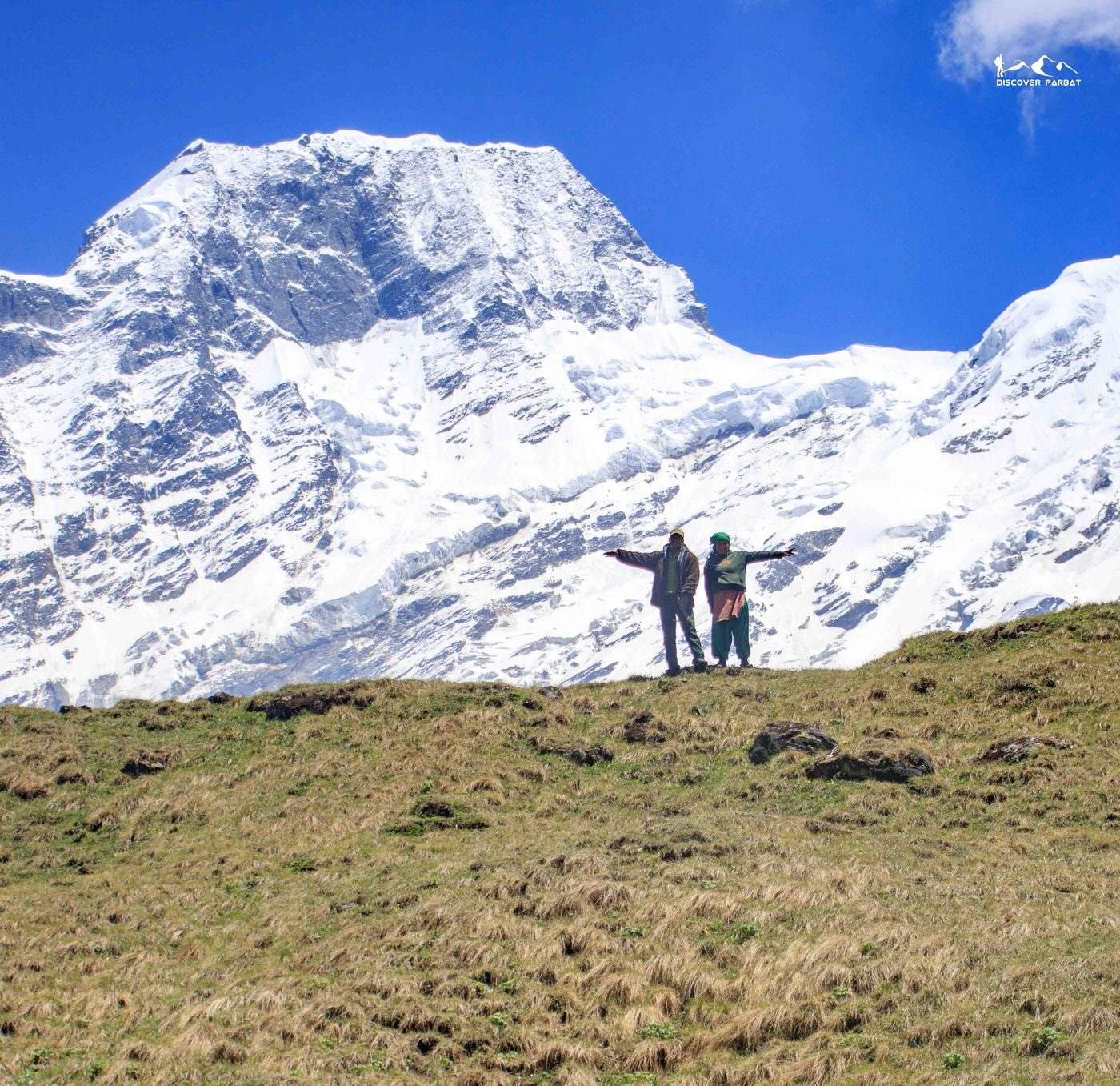
If you arrive between mid-April and the monsoon, you will not find an empty valley. Every year in that season, hundreds of people from the lower valleys move up to base camp and the lower pastures to search for yarsagumba, the caterpillar fungus that grows in the high grasslands and is an important source of income for many mountain families.
The day has a steady rhythm:
- MorningGroups leave camp early and climb to the higher slopes to search.
- Around 3–4 pmThey come back down to camp, tired and cold.
- Late afternoonSome groups play volleyball or cricket on the flat ground near the huts until the light goes.
For those few weeks, base camp and Dhauli Odhar each turn into a small seasonal market, with shelters and a lot of people. If you came for silence it can feel busy, but it is also a fascinating time to be there. You see how far-western mountain families actually use these pastures, and it is not something you will see on the Annapurna or Everest trails.
If you want the quiet version of the valley, go in October or November. If you want to see it full of life, go in May or June.
One step lowerDhauli Odhar and the valley beside it
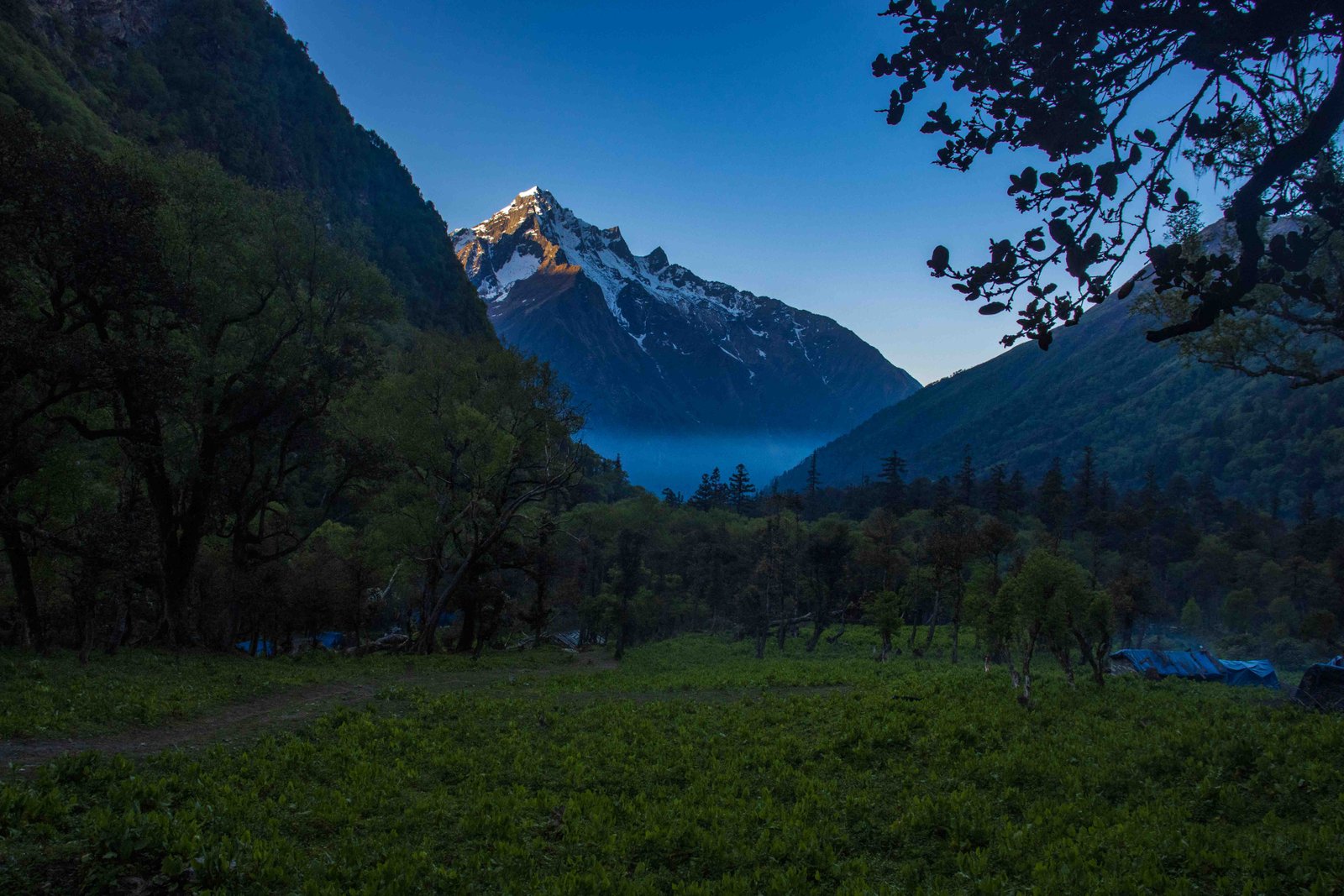
Dhauli Odhar (3,470 m) is the broad grassy shelf just below base camp, and it deserves more time than most people give it. Early in the morning the forest edge is still in shadow while the first sun hits the peak at the head of the valley, and mist sits in the trees below.
Another valley opens up from Dhauli Odhar, away from the main trail to base camp. It is just as beautiful and worth exploring if you have extra time.
Two base camps, two sides of Api
The camp in these photos is the southern base camp, at the head of the Chameliya valley, and it is the one trekkers walk to. Api has a second base camp on its northern side, in the Byans valley, which mountaineering expeditions use for their climbing pushes. If you read about "Api Base Camp" in a climbing report, it may be the northern camp, which is a completely different approach.
Honest expectationsBasic camps, not comfortable teahouses
The photos make the valley look like a paradise, and the views are every bit as good as that. The accommodation is not. There are no comfortable teahouses here like the ones in the Annapurna and Everest regions. At base camp you sleep in simple stone huts, tarpaulin shelters or tents, and eat simple meals. Nights are cold even in June.
The camps are part of the experience, but if you are expecting hot showers, Wi-Fi and a dining room with a menu, Api is not the right trek. If you can be comfortable with very little, you will have one of the most remote base camps in Nepal almost to yourself, at least outside yarsa season.
For the viewsWhen the valley looks like this
October to mid-December gives the clearest skies and the sharpest views of the peaks. The yarsa collectors have gone by then, so the valley is quiet. Late March to June is the other window. From June the pastures turn bright green under the snow peaks, which is how they look in most of these photos. I do not recommend going between mid-December and mid-March, when snow and cold make the upper trail hard going.
For the route, permits and what the trek involves, see the Api Himal Base Camp Trek page. If you are going by road, our Kathmandu to Darchula by bus guide covers the journey to the trailhead.
FAQFrequently asked questions
Which mountains can you see from Api Base Camp?
The base camp valley is surrounded by mountains on every side. The main peaks are Api Himal (7,132 m), Nampa Himal, Bobaye and Kaiyokor Himal.
How far are Kalidhunga Lake and Ringdepani Lake from Api Base Camp?
Each lake is about a 1.5-hour walk from where the teahouses stand at base camp. Kalidhunga Lake, at 4,160 m, is the highest point most trekkers reach on the trip.
Is Api Base Camp crowded?
Not with trekkers. But from mid-April, hundreds of local people from the lower valleys settle around base camp and the lower pastures for the yarsagumba season, so the camp feels busy until the season ends. In October and November the valley is much quieter.
What are the camps like at Api Base Camp?
Basic. There are simple stone huts, tarpaulin shelters and tents, not the comfortable teahouses of the Annapurna or Everest regions. Expect simple meals and cold nights.
When is the best time to see Api Himal?
October to mid-December gives the clearest skies. Late March to June is the other good window, and from June the pastures turn green under the snow peaks. Mid-December to mid-March is not recommended.