
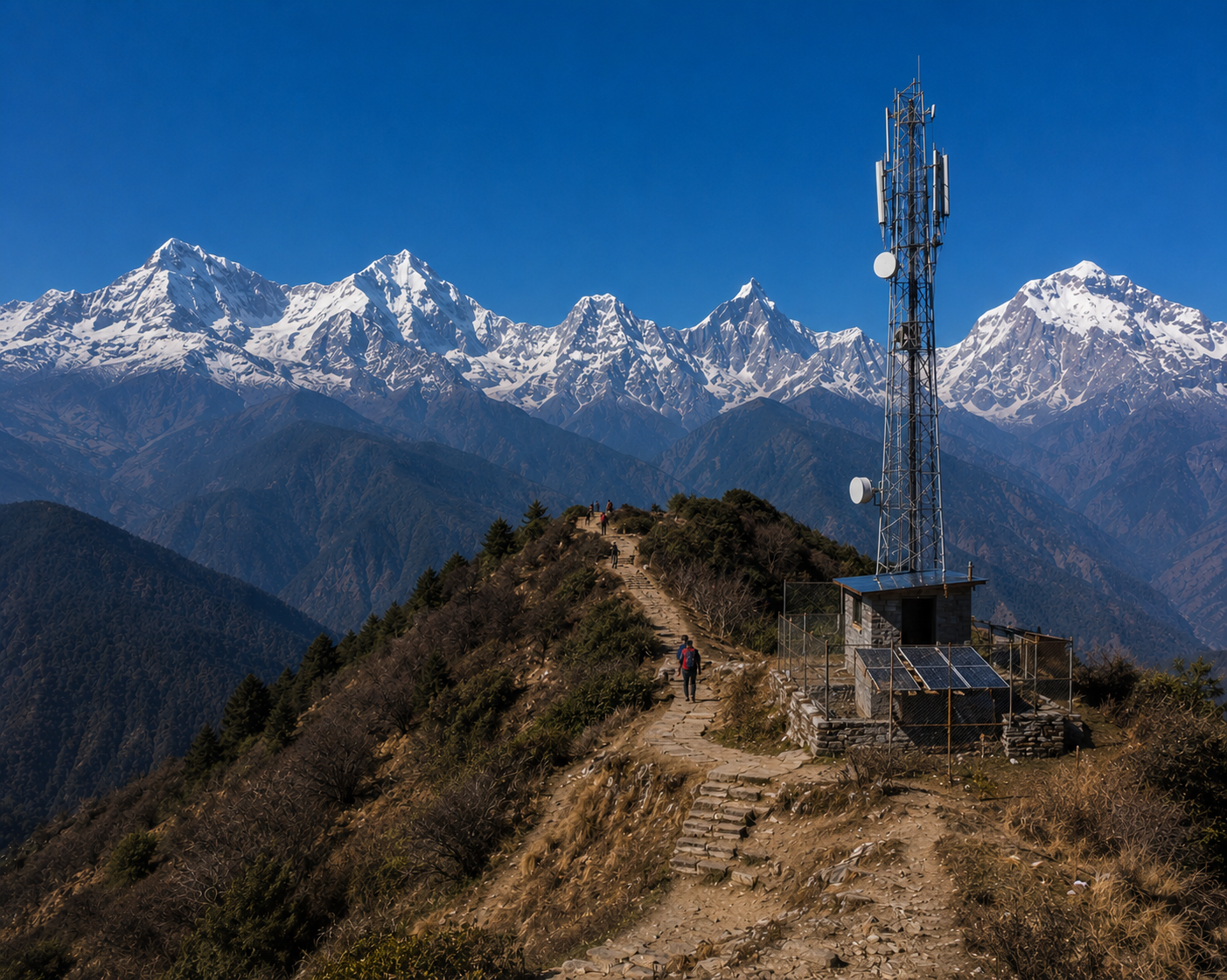
Nepal has two primary mobile network operators, NTC and Ncell, and both are widely available in Kathmandu, Pokhara, and other major cities and towns across the country. In urban areas, there is very little difference between the two. Both networks offer reliable 4G coverage, easy SIM card registration at the airport or local shops, and affordable data packages that work well for everyday browsing, messaging, and calls.
Which Is the Best SIM Card for Trekking in Nepal?
Staying connected while trekking in Nepal is a common concern for travelers, whether it's for sharing photos with family back home, checking weather updates, or simply having peace of mind on remote mountain trails. Choosing the right SIM card can make a real difference to your trekking experience, and in Nepal, that choice comes down to two main telecom providers: NTC (Nepal Telecom) and Ncell.

The Two SIM Card Providers in Nepal
Nepal has two primary mobile network operators, NTC and Ncell, and both are widely available in Kathmandu, Pokhara, and other major cities and towns across the country. In urban areas, there is very little difference between the two. Both networks offer reliable 4G coverage, easy SIM card registration at the airport or local shops, and affordable data packages that work well for everyday browsing, messaging, and calls.
The real difference between NTC and Ncell becomes apparent once you leave the cities and head into the mountains.
NTC vs Ncell in the Mountains and Trail Regions
For trekkers heading into Nepal's mountain regions, NTC (Nepal Telecom) is generally the more reliable option. As a government-owned telecom operator, NTC has invested more extensively in extending its network infrastructure into remote and high-altitude regions, including many of the country's popular trekking trails. Trekkers on routes through the Annapurna, Everest, and other Himalayan regions often find that NTC maintains a stronger and more consistent signal along the trail compared to Ncell.
Ncell, while a strong performer in cities and lower-altitude areas, tends to have noticeably weaker coverage once you start gaining elevation. Its network towers are more concentrated in populated valleys and lowland regions, which means trekkers relying on Ncell may find their signal dropping out sooner as they move deeper into the mountains.
For this reason, if you're planning a trek and want to stay connected as much as possible along the way, an NTC SIM card is generally the safer and more dependable choice.

Signal Strength Decreases With Altitude
No matter which SIM card you choose, it's important to set realistic expectations about connectivity in Nepal's high mountain regions. As you climb higher, particularly above 4,000 meters, network signal strength naturally becomes weaker and less consistent, even on NTC's network. In remote, sparsely populated areas at these altitudes, there may only be a faint signal, and in some places, no signal at all.
Once you move into areas far from any village or settlement, mobile network coverage effectively disappears. Nepal's mountain terrain, combined with the limited economic incentive to build infrastructure in uninhabited high-altitude zones, means that true network deserts are a normal part of trekking here, not the exception.
Coverage Gaps Even on Major Trekking Trails
It's worth noting that patchy coverage isn't limited to extremely remote or high-altitude regions. Even along well-established, popular trekking routes, there can be specific spots, particularly in deep gorges, dense forest sections, or areas shadowed by steep ridgelines, where signal disappears entirely for a stretch before returning once the trail opens up again. Trekkers should not be surprised to lose signal briefly even on trails that are otherwise well covered.
This is one of the reasons experienced trekking guides and operators recommend not relying solely on your phone for navigation or emergency communication in the mountains, and instead carrying a physical map, informing someone of your itinerary, or, on more remote routes, carrying a satellite communication device as a backup.
Wifi at Teahouses: A Useful Backup
For most teahouse treks in Nepal, wifi is available at the majority of teahouses along the route, offering trekkers a convenient way to check messages, upload photos, or make video calls once they've stopped for the night. However, it's important to know that this wifi service is very often not free. Most teahouses charge a small fee for wifi access, particularly at higher altitudes, where the cost of maintaining internet infrastructure is higher due to the remoteness of the location. The price for wifi access will usually increase the higher you climb.
Trekkers should budget a little extra for these fees along the way, and treat wifi access at teahouses as a helpful supplement to their SIM card connectivity, rather than something to rely on as a primary source of internet.

The Bottom Line
For most trekkers heading into Nepal's mountain regions, an NTC SIM card offers the best overall balance of coverage and reliability, particularly once the trail leaves the cities behind. That said, no SIM card, whether NTC or Ncell, can guarantee a signal everywhere, especially above 4,000 meters or in remote, forested, and gorge-heavy sections of trail. Combining an NTC SIM card with the occasional use of paid teahouse wifi, along with sensible backup plans for navigation and emergencies, is the smartest way to stay connected during a Nepal trek without over-relying on any single method.
Plan Your Trek With Local Experts Who Know Every Trail
At Discover Parbat, we don't just plan treks, we prepare you for the realities of the trail, from choosing the right SIM card to knowing exactly where signal will and won't reach. Whether you're heading out on the Kokhe Danda Trek or a longer Himalayan route, our team makes sure you're ready for what's ahead.
Book Your Trek With Discover ParbatExplore All TreksPlanning a trek in Parbat? Tell us your dates and we'll help you choose the right route.
Contact our team