
Even during the monsoon months — roughly June through early September — Kokhe Danda still has something to offer. The trail turns a deep, saturated green, small wildflowers appear in patches along the path, and waterfalls that are barely a trickle in dry season come into full force.
Best Season for the Kokhe Danda Trek
When you start planning the Kokhe Danda Trek, you will invariably come across one question: when am I supposed to go? It's a sensible query, and one that should be answered correctly, with a proviso worth stating first. There is no single "best" weather window for Kokhe Danda. The interesting thing about trekking at Kokhe Danda is that it's much more about the experience than a clear blue sky and the perfect sunrise photo — the homestay in Haljure where you're invited to sleep under the family's roof and eat what they eat, and the Magar village life you enter at Lespar, with its rhythms, its textures, its everyday warmth. That part of the trek is independent of the seasons. The welcome at Haljure and the village atmosphere at Lespar are just as real whether you arrive in the golden hush of October or the damp green quiet of July. Knowing when to visit is useful, but it's worth remembering that the mountains are a bonus on Kokhe Danda, not the only reason to go.
That said, timing does shape the kind of trek you'll have, so let's break it down.
For the Clearest Mountain Views: October & November
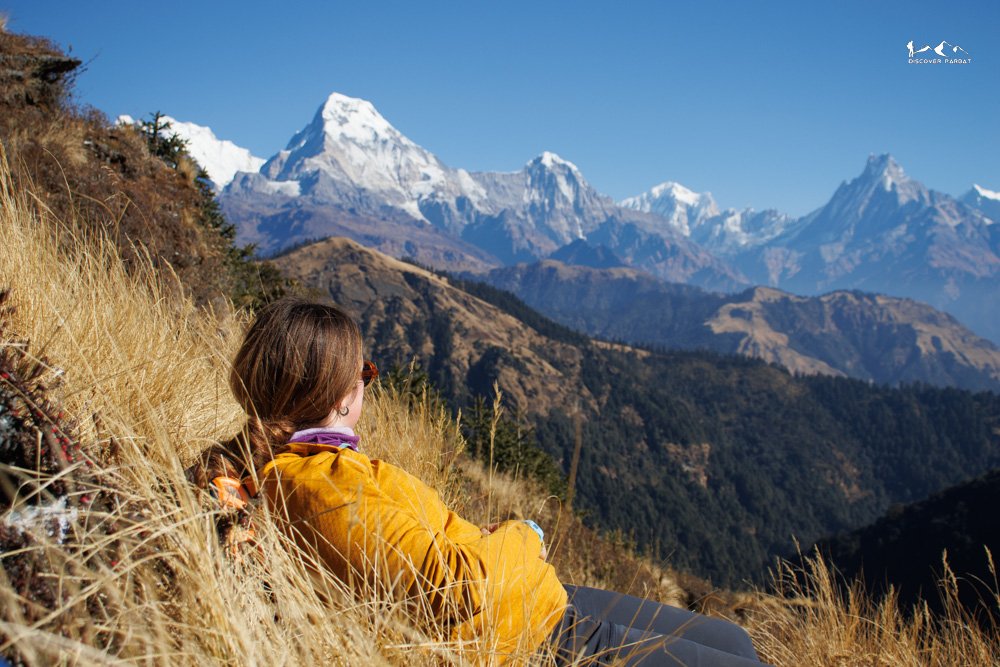
October and November are the best months to visit if you're after unobstructed views of the Himalayas. Once the monsoon withdraws — usually in the last days of September or the first week of October — the skies over the region turn a deep, washed blue, and the air is about as clean as it gets all year. The first three weeks of October in particular offer a rare combination: green hillsides that haven't yet faded, crisp air, and mountain views with almost nothing in the way. Most of that magic carries into November, with slightly cooler air and generally good visibility, even if an occasional hazy day creeps in as the month wears on. This is the window to book if you want sweeping panoramic shots or simply want the peaks to look exactly as they do on the postcards.
For Rhododendrons: March
If color on the trail matters as much as a spotless horizon, March is the month to aim for. This is when Nepal's rhododendron forests come alive, often blooming alongside the last patches of lingering snow — a striking mix of red and pink blossoms against a still-wintry landscape. Along the Kokhe Danda route, this is one of the most rewarding times to walk, with the forest sections becoming a genuine treat rather than just a green backdrop to the peaks.
The Broader Sweet Spot: September Through June
Outside of those two peak windows, Kokhe Danda is, generally speaking, a pleasant trek from September all the way through to June. September itself is a bit of a hidden gem — rainfall eases off, skies begin clearing more consistently from mid-month onward, and you get a rich layering of green grasslands, blue hills, and distant snow-capped peaks, without the bigger autumn crowds. The trail is quieter through winter (December to February), with shorter days but some of the nicest sunrise and sunset light of the year. Spring, running from March into May, keeps the rhododendrons going and brings fresh greenery back to the hillsides by May, even as the sunrise views grow a little less dramatic as the season progresses. Across this long stretch of the year, there are very few days that aren't good for walking the Kokhe Danda trail.
What About the Monsoon?
Even during the monsoon months — roughly June through early September — Kokhe Danda still has something to offer. The trail turns a deep, saturated green, small wildflowers appear in patches along the path, and waterfalls that are barely a trickle in dry season come into full force. It's a different kind of beauty, quieter and gentler than the crisp scenes of autumn. That said, it comes with trade-offs worth knowing before you go. Leeches are common on the lower, wetter sections of the trail, so proper footwear and a little preparation go a long way. You should also expect to walk under rain at some point, with a lower chance of catching a clear mountain view compared to autumn or spring. For those willing to trade big mountain panoramas for lush greenery, waterfalls, and a slower pace, monsoon trekking on Kokhe Danda has its own quiet appeal.
The Bottom Line
If mountain views matter most, aim for October or November. If you want to catch the rhododendrons in bloom, March is your window. And if your schedule is flexible, nearly any time from September through June will treat you well. But the calendar isn't the only factor worth weighing — Kokhe Danda's soul lies in sleeping in a family's home at Haljure and the village life of Lespar, and that experience is available all year round.
Ready to Walk the Kokhe Danda Trail?
Whatever the season, the homestay at Haljure and the village life of Lespar are waiting. Book directly with the founders and let us help you plan the right trip for your dates.
Plan Your TrekPlanning a trek in Parbat? Tell us your dates and we'll help you choose the right route.
Contact our team