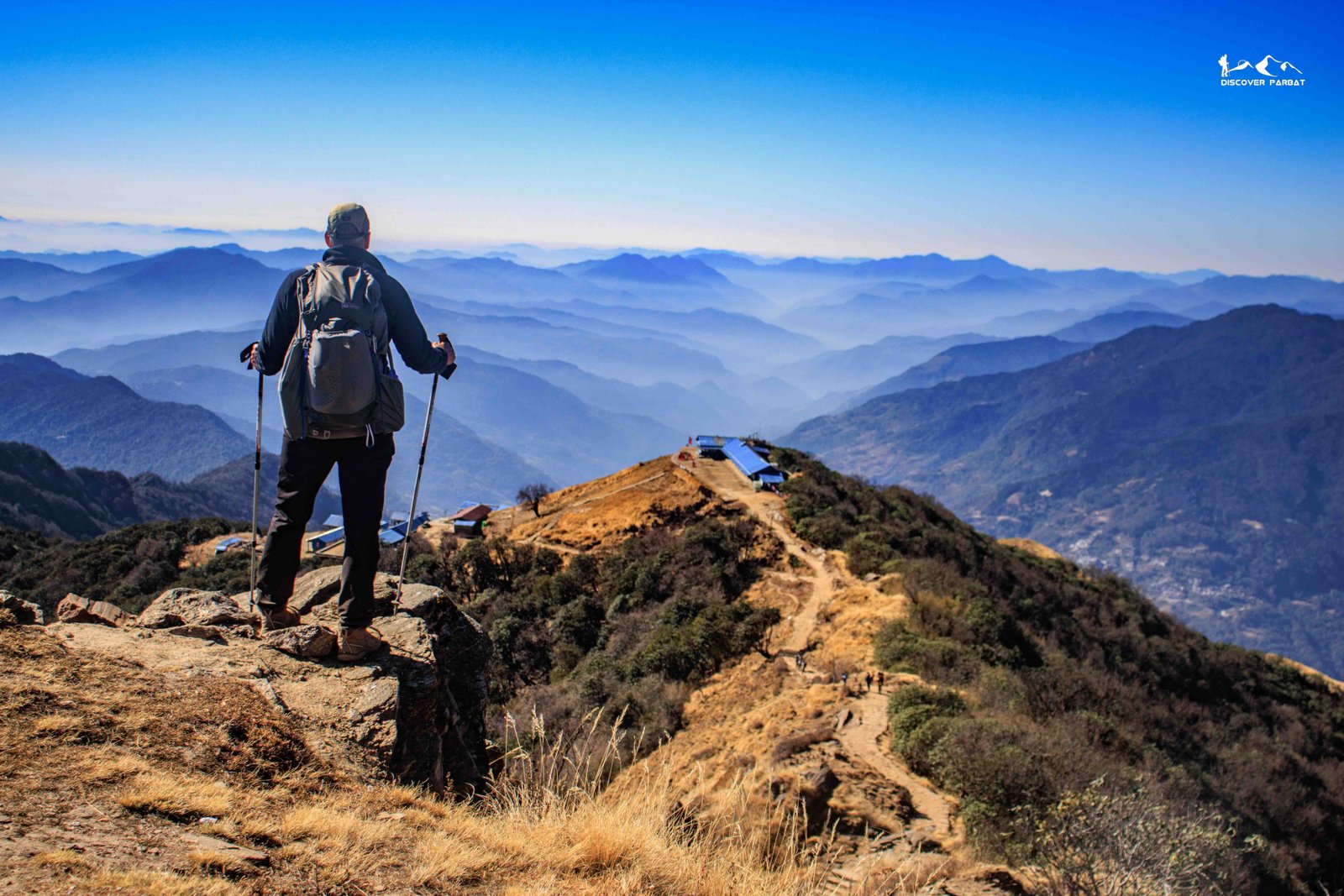
The most beautiful and clear skies, lush green grasslands, and visible mountain peaks return after August, though wildfire smoke and other haze can still show up in the mountains during the pre-monsoon months.
Nepal is beautiful throughout the year, and each season presents something unique — whether it's stunning mountain views, blooming rhododendron forests, or serene, wildflower-filled trails. So when is the best time to trek in Nepal? October to mid-December is considered the best period, when the weather is settled, the sky is clear, and mountain views are unobstructed.
That said, the best season for you really depends on what you're after — brilliant peaks, fewer crowds, blooming flowers, or lush green trails. This month-by-month breakdown will help you plan your trek at the right time.
Autumn (October to November): The Best Time to Trek in Nepal
Fall is widely regarded as the ideal season for trekking in Nepal, and for good reason.
October: Clear Skies and the Best Mountain Views
The monsoon usually withdraws from Nepal in the last week of September or the first week of October. Once it clears, the sky turns a deep, clean blue with excellent visibility of the peaks. The first three weeks of October offer the best mix of the year — lush greenery, the cleanest air, and gorgeous mountain views. This makes early to mid-October one of the top windows for trekking in Nepal.
November: Excellent, With Slightly Cooler Air
By November, the mountains remain open and the views are still great, although some days may bring a slight haze. It's still considered one of the best months to trek. Temperatures also begin to fall consistently from November onward, so don't forget to pack proper layers.
Early Winter (Early to Mid-December): Great Views, Fewer Crowds
December: The Last Good Window Before Snowfall
Winter snowfall in Nepal typically begins between mid-December and early January. This means the weather stays much like November right up until mid-December, making it a great time to hike.
For a quieter trail experience, early December is a great choice — trekker numbers drop noticeably compared to October and November, while mountain views remain among the best of the year. The first half of December offers a great combination of fewer crowds and still-excellent scenery.
Winter (Mid-December to February): Snow, Shorter Days, and Perfect Sunrises
Late December to Early January: Snowfall Begins
Once the winter snowfall season sets in, days become mostly cloudy, with more cloud cover building up in the mornings and evenings. However, this cloud cover is far less persistent than during the monsoon, and there are still good chances of catching clear mountain views throughout the day.
January and February: Peak Winter, Best Sunrises and Sunsets
January and February are usually the snowiest months of the year, with snowfall continuing on and off until around mid-March. Because days are shorter during this stretch — roughly mid-November through March — this period offers some of the best sunrise and sunset views of the year, with the sun rising and setting at a lower angle behind the peaks.
From mid-February onward, rhododendrons begin flowering at lower elevations, adding vibrant color to the trails and marking the start of the spring transition.
Spring (March to May): Blooming Trails, But Watch for Haze
March: Snow and Rhododendrons Together
March is also a great month to hike. Snowfall can still occur, but it's usually paired with rhododendrons in full bloom, creating a striking contrast between snow-covered paths and red and pink blossoms.
April: A Season of Two Outcomes
April can be a bit unpredictable. If heavy snowfall continued through late March and early April, conditions stay very similar to March — clear and scenic. But if the weather turns dry, wildfires can occur around the country, adding smoke and haze to the atmosphere and making the peaks harder to see. Rainfall during this period helps clear the haze; without it, views can be disappointing unless you trek closer to or higher up in the mountains, above the haze layer.
May: Green Trails, But Not for Sunrise Views
By May, greenery returns in full strength as spring progresses. However, this isn't the best time for sunrise views. Starting in mid-April, as daylight hours grow longer, the sun rises further north, coming up behind the mountains and casting them in shadow during the early morning. This makes mountain views less dramatic compared to the crisp visibility of October or November. Light afternoon drizzles — typically after 2–3 PM — can also start appearing in May as the pre-monsoon season approaches.
Pre-Monsoon and Monsoon (June to September)
June: Greenery Peaks, Pre-Monsoon Showers Continue
June follows a similar pattern to May, with even more lush vegetation along the trails. Afternoon showers remain likely. In Nepal, the monsoon typically begins around the second week of June.
July and August: Monsoon Season
From mid-June to early September, mountain views are much less likely to be clear due to monsoon cloud cover. Highways can also occasionally be blocked during this period due to landslides. That said, on the rare occasions when the skies clear, the mountain views can be some of the most spectacular of the year. Trails during this time are full of small wildflowers, with frequent rainfall throughout July and August.
September: The Monsoon Winds Down
Rainfall is generally lighter in September than during the peak monsoon months. Clear skies start to appear more frequently from mid-September onward. This is often an under-rated time to trek, offering a beautiful combination of green grasslands, blue skies, layered blue hills on the horizon, and snow-capped peaks in the distance.
Nepal Trekking Seasons Summary: Winter and Spring (October to May) and Fall and Summer (September to October)
The most beautiful and clear skies, lush green grasslands, and visible mountain peaks return after August, though wildfire smoke and other haze can still show up in the mountains during the pre-monsoon months.
Handy Planning Tips for the Trail
- Looking for the best sight of the mountains? Come out in October or the first half of November.
- Looking to reduce the crowds but keep the sightlines? Try the first half of December.
- Looking for optimum sunrise and sunset shots? Trek from mid-November until March, when daylight hours are shorter.
- Want blooming rhododendrons? Head out from mid-February to March.
- Looking for a well-vegetated trail and don't mind some rain? Take May, June, or September.
- Traveling during the monsoon (July–August)? Be ready for rain, fewer mountain sightings, and even trail disruption from landslides — but also the chance to experience dramatic, uncrowded views if the skies clear.
The trails of Nepal are a great place to be at any time of the year — it's just important to know what to expect and plan accordingly.
Ready to Plan Your Trek in Nepal?
Whether you're chasing the clearest mountain views in October or the blooming rhododendrons of March, Discover Parbat can help you plan the perfect trek for the right season. Get in touch with us to start planning your trip.
Planning a trek in Parbat? Tell us your dates and we'll help you choose the right route.
Contact our team