
Less touristy trail with stunning views of the Annapurna Range
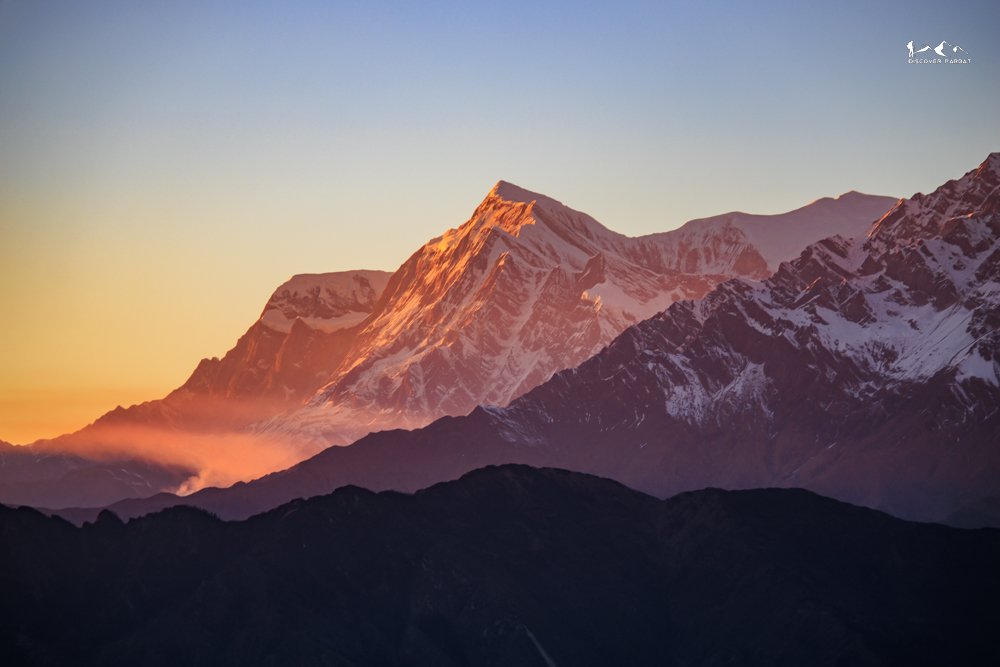
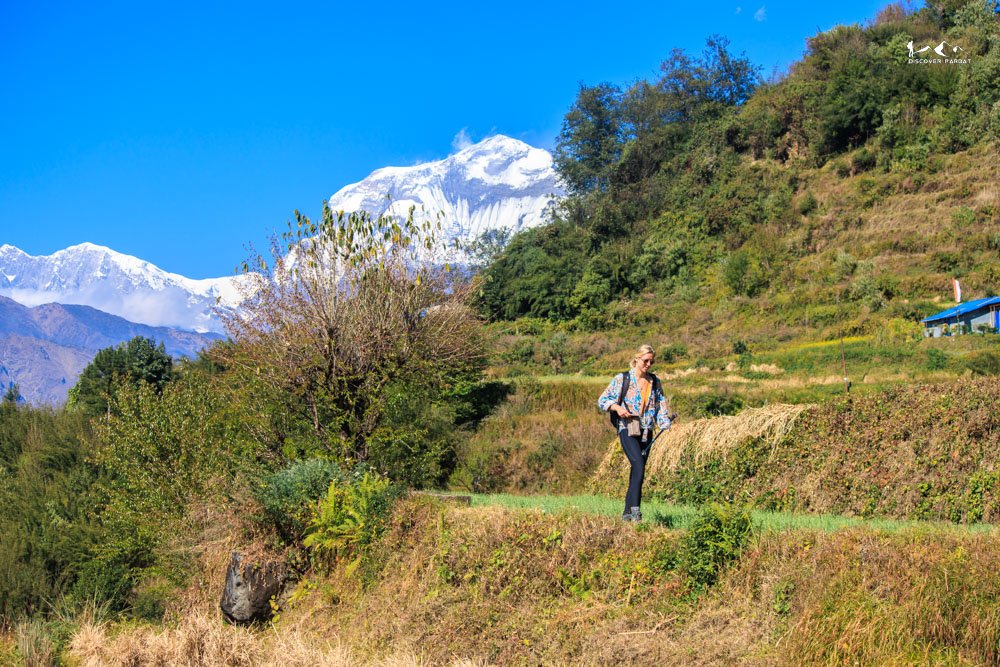
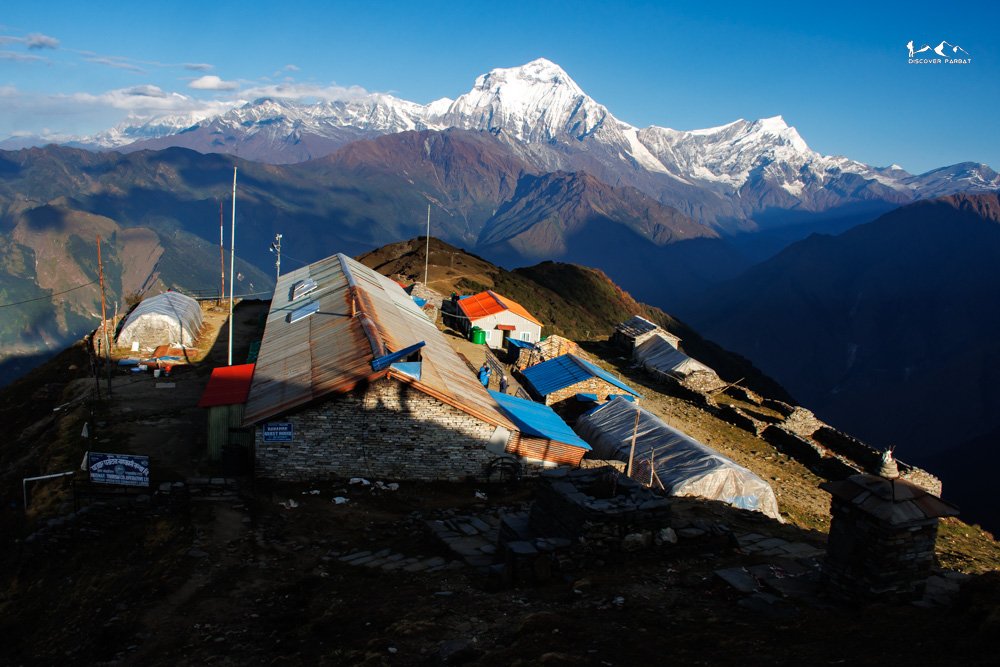
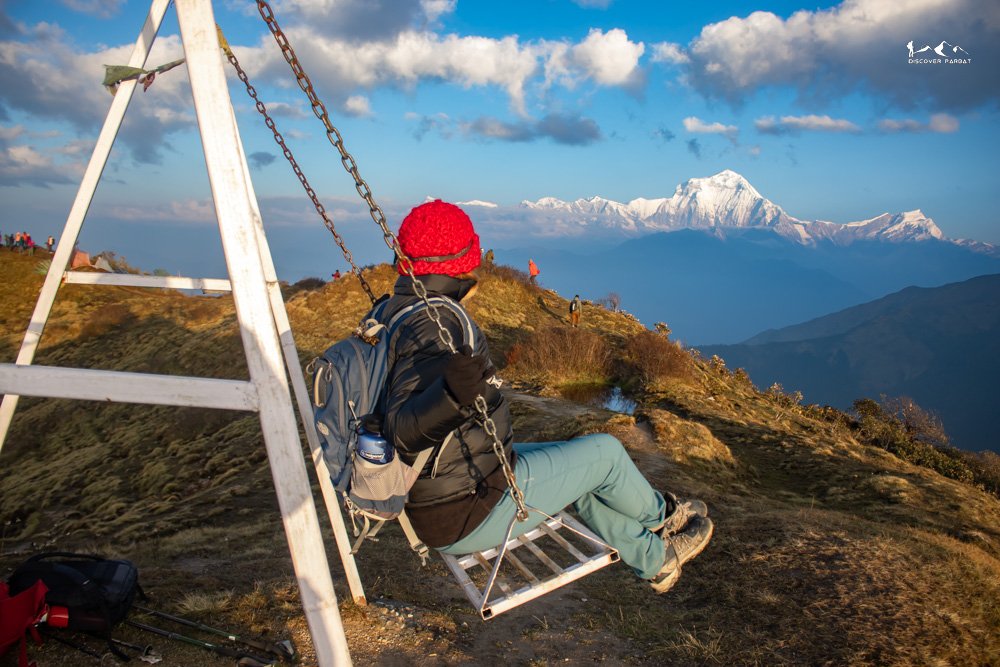
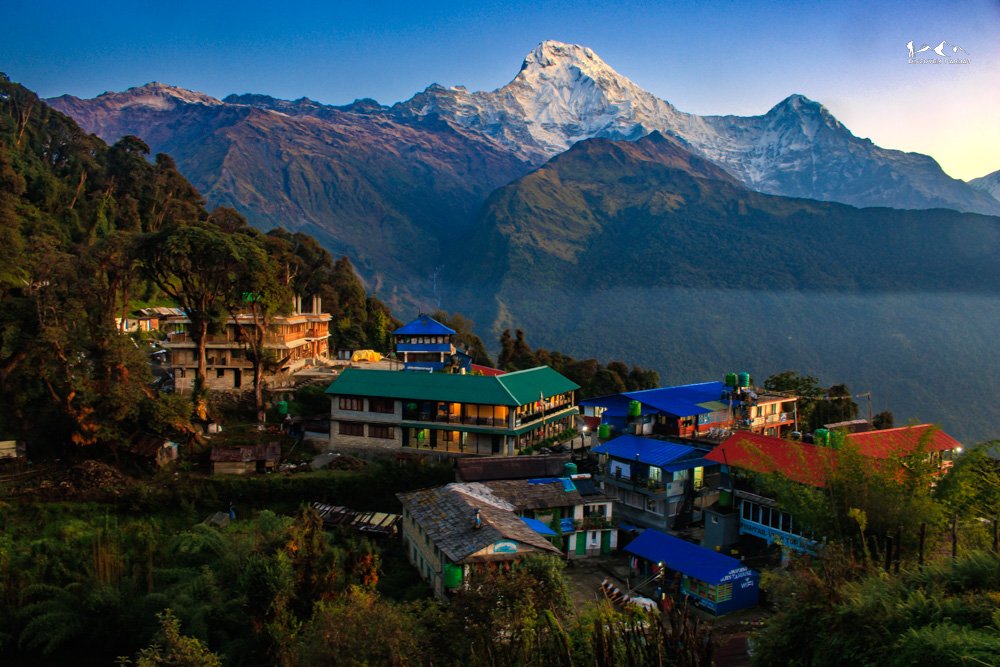
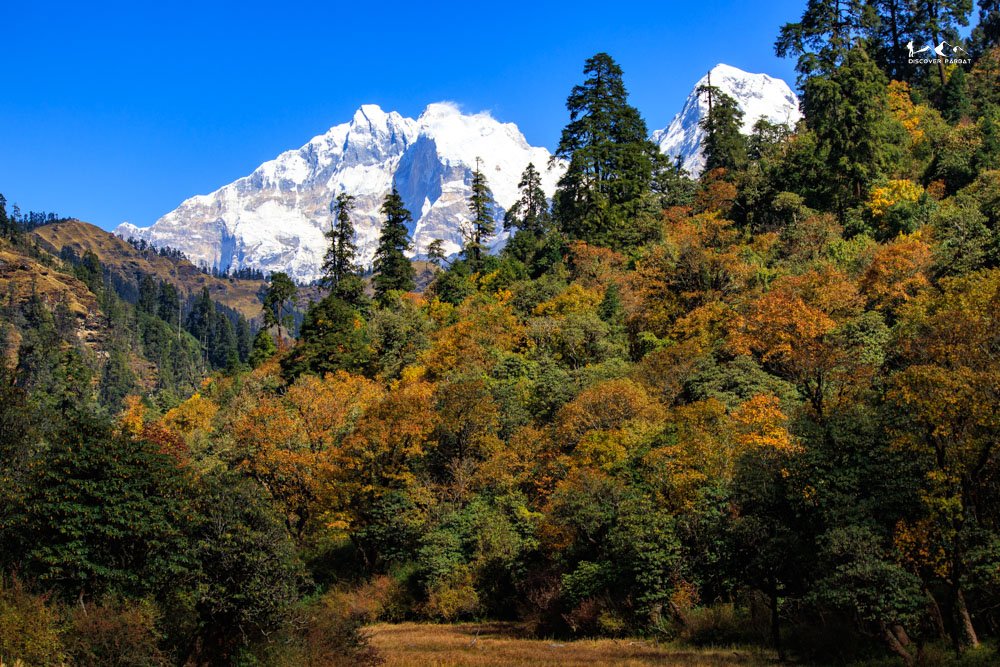
The Khopra Ridge Trek is an 8-day tour through some of the more diverse and less-visited land of the Annapurna and Parbat region in Nepal. It is designed for trekkers seeking the highest of the Himalayan rewards without traversing the longest of Annapurna circuits and is packed with high altitude ridgelines, traditional Gurung and Magar villages and forest trails that the “normal” circuits never come close to, always maintaining four separate chains of eight-thousander peaks visible at a time.
The trip starts with a picturesque drive from Pokhara to Ghandruk, a significant and renowned Gurung community in Nepal. Ghandruk is located at an altitude of approximately 1940 metres, which welcomes trekkers with stone houses with slate roofs and terraced farming fields, with a view of the Annapurna South and Machhapuchhre peaks looming over the Modi Khola valley. Not a very quiet, nondescript village, it's quite busy and visited, but it's the end of the more crowded trekking route for a few days.
The trek is through thick oak and rhododendron woods to Tadapani, a forested ridge-top halt at about 2630m from Ghandruk. Views from here look out onto Annapurna South and Hiunchuli through gaps in the forest canopy, and when the rhododendrons start blooming in March/April, the forest itself becomes part of the landscape. It is also where the hike subtly deviates from the over-trodden Annapurna Base Camp trail and takes off for more under-visited territory.
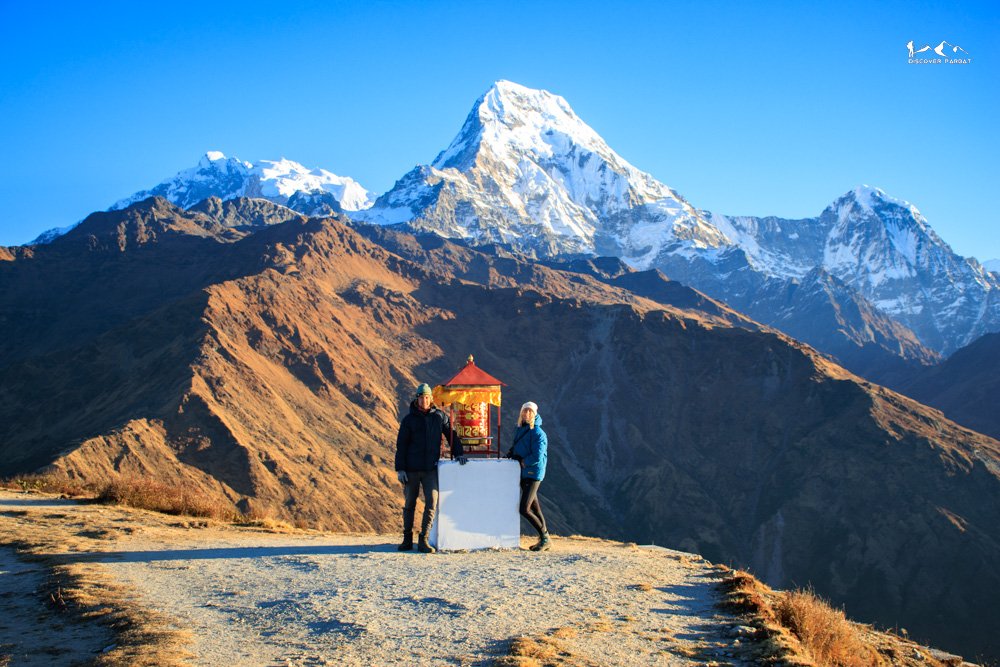
After a long steady ascent through buffalo pastures and undisturbed forest, this difference is apparent at an open ridge at Dobato, some 3,420 metres. Dobato is also a sunrise point, and there is no doubt the background includes Annapurna South, Fang as well as the very distinctive silhouette of the Machapuchhre (Machhapu) from which Poon Hill receives its name. But there is no hint of the foot traffic that surrounds Poon Hill here. Many trekkers make a side trip from here up to the high meadow at Muldai Viewpoint, which is just above 3,640 metres, where the pastures of the yaks spread out below a wider expanse of peaks, including Dhaulagiri becoming visible as well as the familiar Annapurna giants.
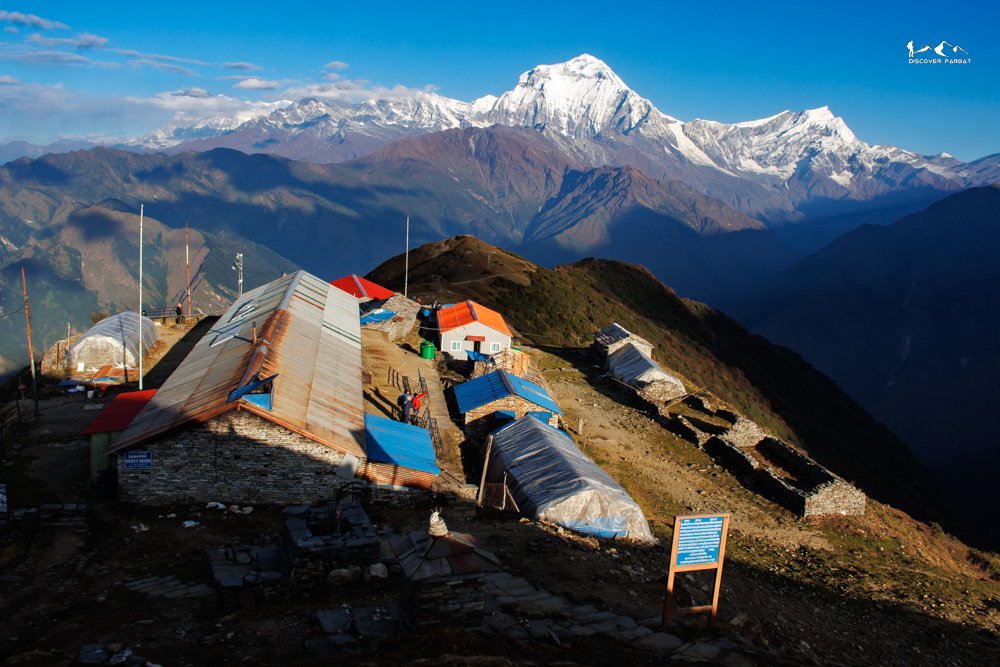
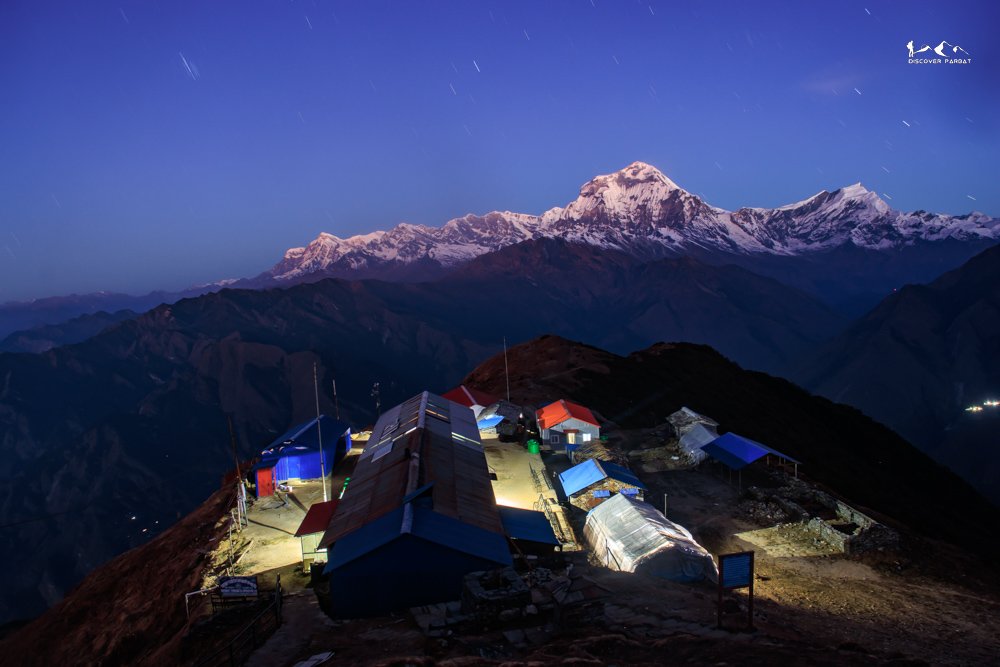
The name of the trek is followed by Khopra Ridge (Khopra Danda), a high shelf above the tree line at about 3660 metres. The sights from the community lodges are huge, on one side spanning the whole length of the Dhaulagiri range and on the other, the Annapurna massif, and there is hardly anyone else on the trail to share it. Situated in the heart of two of the world's grand mountain ranges, with neither being visited by most travelers, Khopra Ridge is one of the most neglected vantage points in the Annapurna region.
The trail descends from the ridge and enters Swanta, a peaceful Gurung and Magar village at 2,200m with terra-cropped fields and plain stone houses for a day. From there the trail returns to more familiar terrain at Ghorepani, a popular trekking village at 2860m with international trekkers and bustling teahouses. An early morning trek to Poon Hill at 3,210 metres is still one of the best trekking rituals in Nepal and headlamps gather before dawn to gaze at the Dhaulagiri and Tukuche, Nilgiri, the Annapurna range, Machhapuchhre and Lamjung Himal, even when part of a group.
This trip from Ghorepani is different from the norm because this is where it is going next. Instead of retracing its steps back to the main trailheads, it continues north, through the district of Parbat, to Kokhe Danda, the highest point at 3,303-metres, in the district which is still relatively unknown to the mass trekking market. The panorama from Kokhe Danda is arguably even better than Poon Hill, with Dhaulagiri and the Annapurna range still visible and the view now extending to the east to show the 4 range panorama of the Himalayan giants of Manaslu and the Langtang range, which very few visitors to Nepal get to see, let alone on foot with little else around.
The descent passes through the traditional village of Lespar where Magar and Gurung rhythms of rural life remain largely untouched by tourism, stone pathways, terraced farms, simple and sincere teahouses instead of a trekking "circuit.The descent then passes through the traditional village of Lespar where Magar and Gurung rhythms of rural life remain largely untouched by tourism and stone pathways, terraced farms, simple and sincere teahouses replacing a sense of a trekking "circuit". The last leg goes on to Banau, followed by a comfortable drive back in to Pokhara at the road junction of Kushma at the foot of the high suspension bridge over the Kali Gandaki gorge in Parbat district.
In eight days, the Khopra Ridge Trek takes the hiker from a well-known Gurung port to real Nepalese secret ridgelines, from a community lodge high in the mountains between Dhaulagiri and Annapurna, to one on a hilltop that offers views of Manaslu and Langtang, to Poon Hill to villages the majority of other trekkers in Nepal will never learn of. If you have limited time to travel but crave the best of the Himalaya — and a mostly solitary trail — you won't find anything better to do in a week among the mountains.
You want to experience Poon Hill and Khopra Ridge without the usual tourist crowds
You have 8 days and want a full journey covering diverse landscapes from forest to ridge to village
You enjoy combining iconic viewpoints (Poon Hill) with hidden gems (Kokhe Danda, Muldai)
You love authentic cultural experiences — village homestays, local food, and momo-making sessions
You're looking for a quick 3–4 day option — this trek is designed to be a full 8-day journey
You want luxury teahouse facilities throughout — accommodation is comfortable but simple on this route
Morning drive from Pokhara to Ghandruk, a two and a half hour drive (43KM). We stop for a short tea break at Ghandruk and then start our hike to Tadapani. After two and a half hours, we reach Bhaisikharka where we stop for lunch. We then hike for a further hour on a gradual uphill trail to reach Tadapani. The trail today passes through beautiful Rhododendron forest.
We wake up early in the morning for the sunrise view. During clear weather, we can see Annapurna South, Hiunchuli and Mount Fishtail from here.
After breakfast, we start our hike towards Dobato. The trail again passes through beautiful Rhododendron and Oak forest. Initially it is gradual uphill and a bit steep before reaching Isharu from Meshar. At Isharu, we stop for lunch and then hike for another one and a half hours to reach Dobato, where we stay at Hotel Dobato ViewTop. We can also hike to Muldai for a sunset view.
Today, we wake up early and hike around 25 minutes to reach Muldai Viewpoint for the sunrise view. We can see Dhaulagiri, Annapurna and Mansiri range peaks from here. We then hike back down to the tea house, have breakfast, and start hiking to Khopra Danda.
This is a slightly longer day. After an hour, we reach Bayeli Kharka, mostly trekking along a ridge. Later, we descend to 2,800m and climb up to 3,100m to reach Chhistibung for lunch. From here, it is another 2.5–3 hrs of uphill hiking to Khopra Ridge, where we stay overnight at a Community Lodge.
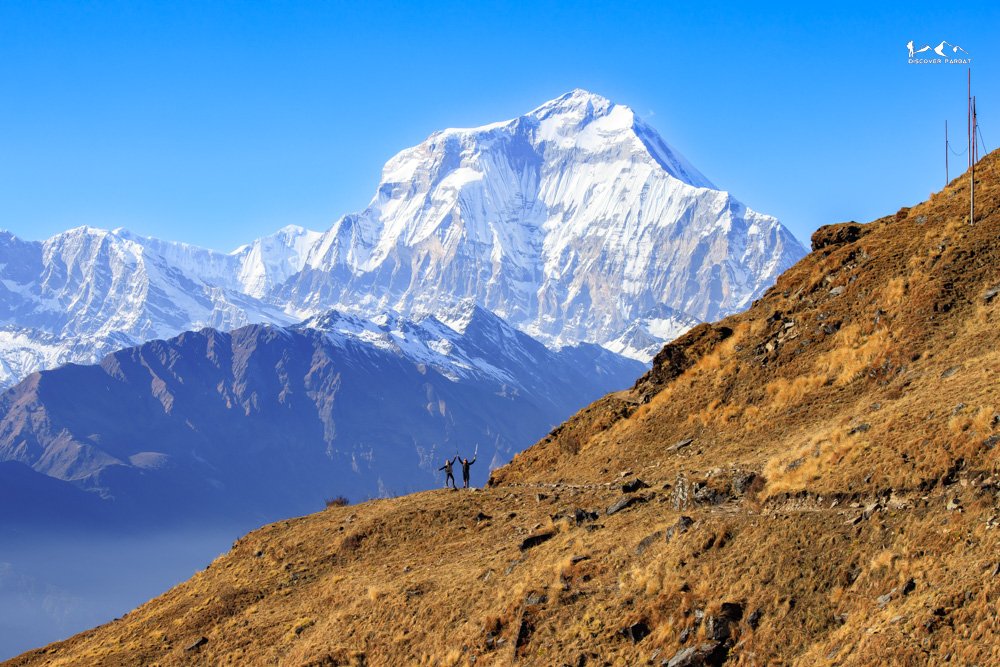
Even though we cannot see the sunrise from Khopra Ridge itself, we enjoy stunning close views of Dhaulagiri on one side of the gorge and Annapurna South on the near side.
After breakfast, we start descending to Swanta Village. Initially, we follow the same trail as yesterday back to Chhistibung, and then descend to Swanta Village. We can have lunch at a stream-side restaurant one hour after Chhistibung, or wait until Swanta.
Since Ghorepani is not that far, we start slightly later today. Initially, we hike down to the river and after crossing a suspension bridge, we start climbing back up. We pass through the village of Chitre, sometimes hiking along the road before eventually reaching stone steps that lead all the way up to Ghorepani.
Today, unlike others, we don't start early in the morning for Poon Hill — we go after breakfast instead. It is an hour's uphill climb on stone steps, and by the time we reach Poon Hill it will be almost empty, so we have the entire viewpoint to ourselves. Later, we descend to Phulbari for lunch and then climb up to Kokhe Danda through a beautiful Rhododendron forest.
We wake up early for sunrise and the first sunrays over the Dhaulagiri and Annapurna range peaks. On a clear day, views extend all the way to Langtang Lirung and even Numbur peak in the Lower Everest region.
After breakfast, we start our hike to Lespar. Initially mostly flat or gradual downhill to Dhima Danda, then we descend to Jaljala and follow stone steps all the way down to Lespar. After lunch, we walk around to explore the village. In the evening, we can have a Momo making session with the host at the Homestay.
We enjoy a local breakfast in the morning. After that, we start our hike to Banau via Haljure. Initially an hour uphill, then mostly flat until Haljure, followed by another hour's descent to Banau. From Banau, we take a taxi or jeep back to Pokhara with a stop at Kushma — a total drive of about two and a half hours.
Yes — the trek is rated Moderate and is accessible to both beginners and experienced trekkers with a reasonable level of fitness. Day 3 is the longest and most demanding (7 hours, including a descent and re-ascent before Khopra Ridge), but the pace is manageable. If you can walk comfortably for 5–7 hours over consecutive days, you'll be well suited to this route.
The standard Poon Hill circuit is one of Nepal's busiest treks. This route includes Poon Hill but approaches it from a quieter direction and then continues into the hidden trails of Khopra Ridge, Kokhe Danda, and Parbat — areas that most trekkers never see. You get the iconic viewpoint without the crowds, plus several days of genuinely off-the-beaten-path trekking that the standard route simply doesn't offer.
Muldai is a viewpoint just above Dobato at around 3,650m, and it's absolutely worth the 25-minute pre-breakfast hike on Day 3. On clear mornings you get a sweeping panorama stretching from Dhaulagiri to the Annapurna and Manaslu ranges — some trekkers consider it even better than Poon Hill for the view-to-crowd ratio. We've built it into the itinerary as a sunrise stop on Day 3.
We arrange private transport from Pokhara to Ghandruk at the start (around 2.5 hours). On the final day, we descend to Banau and take a taxi or jeep back to Pokhara via Kushma — roughly another 2.5 hours. Both transfers are included in the trek cost. No public buses or connections to arrange on your end.
Accommodation varies by night. Most stops are comfortable teahouses with private rooms and shared bathrooms. Khopra Ridge has a Community Lodge which is simple but welcoming. The final night at Lespar is a genuine family homestay — warm, personal, and one of the highlights of the trip. Hot showers may be available at lower stops for a small fee. Bring a sleeping bag liner for added warmth.
October and November are peak season — post-monsoon clarity makes the mountain views exceptional and the trails are dry and firm. March to May is equally good, with rhododendrons in full bloom through the forest sections from Ghandruk to Dobato. December offers crisp visibility and very few trekkers, making it an underrated time to go. June to September brings monsoon rain and is generally not recommended for this route.
Yes — an Annapurna Conservation Area Permit (ACAP) and a TIMS card are both required. These are included in your trek cost and arranged by us in Pokhara before departure. You don't need to visit any permit offices yourself.
Teahouse menus cover the usual Himalayan staples — dal bhat, noodles, pasta, eggs, soups, and seasonal vegetables. At the Lespar homestay on Day 7, meals are home-cooked by your host family, and the evening includes a momo-making session. Three meals per day are included throughout. If you have dietary requirements, let us know in advance and we'll make sure each stop is informed.
Key items: sturdy trekking boots, warm layers including a down or fleece jacket (nights at Dobato and Khopra Ridge reach near-freezing), a waterproof outer shell, trekking poles (helpful on the longer descent days), a headlamp, reusable water bottle, sunscreen, and a daypack of 20–25L. A sleeping bag liner is useful for homestay and community lodge nights. We'll send a full packing list after booking.
If you need to return early for any reason, there is no refund on the remaining trek cost. However, we will arrange comfortable accommodation for you in Pokhara for the number of nights that remain on your itinerary — at no extra charge. Please see our full Cancellation Policy for complete details.